

On This Day in Politics: October 11, 1972
On October 11, 1972, the Federal Republic of Germany and the People's Republic of China agreed to establish diplomatic relations during Foreign Minister Walter Scheel's visit to Beijing. The agreement created an official relationship between governments that had previously maintained economic contacts without exchanging full diplomatic representation. It belonged to a period in which Cold War alignments were becoming less rigid, even while major political divisions endured. For Bonn, the decision expanded the reach of a foreign policy increasingly willing to negotiate across ideological boundaries. For Beijing, it added another important European partner to a widening network of international relationships.
Germany's division formed part of the background. The Federal Republic was the western German state, distinct from the German Democratic Republic in the Soviet bloc. Establishing relations with Beijing therefore involved a particular German government rather than a reunited Germany. China's own dispute over representation also shaped the diplomatic setting. After 1949, Bonn had avoided recognizing either the People's Republic or the authorities on Taiwan, pursuing a policy of noncommitment toward both. That position left room for the later agreement without the prior recognition of Taipei that complicated some other countries' decisions. The October visit brought this prolonged distance to a formal end.
Trade had already provided a practical connection. The split between Beijing and Moscow changed the economic and strategic environment, and West Germany became an important trading partner for the People's Republic. Commercial exchanges, however, could not substitute for a permanent government channel. Diplomatic relations supplied an institutional framework for direct discussions, representation and the management of disagreements. The agreement on October 11 did not instantly produce all the machinery associated with that relationship. West Germany's embassy in Beijing opened on December 1, a subsequent administrative step. Keeping those dates separate shows how a political decision could precede the establishment of its permanent working arrangements.
The opening was significant without requiring the two governments to share a political system or a common account of international affairs. In later decades, economic exchange and official contacts expanded considerably, building on the foundation established in 1972. Those later developments were not fully contained in the original agreement and should not be projected backward as its immediate results. The October decision mattered because it made sustained official engagement possible where previous dealings had been limited. It illustrates a central feature of diplomacy: recognizing the need for a working relationship can be a consequential political choice even when differences remain substantial. The enduring channel was the achievement of that day.
Scheel's visit followed lengthy confidential preparations. The agreement formalized a government relationship rather than beginning all contact between the countries.
The Federal Republic was West Germany in 1972. The German Democratic Republic was a separate state, and German reunification remained a later development.
The embassy opened on December 1. That operational milestone followed the October agreement and should not be treated as the same day's ceremony.
Bonn's previous noncommitment toward Beijing and Taipei was part of the diplomatic background. The agreement should not be turned into a claim about a later dispute's resolution.
Later trade and diplomatic dialogue grew on this foundation. Their scale and specific forms were subsequent developments, not provisions automatically established that day.
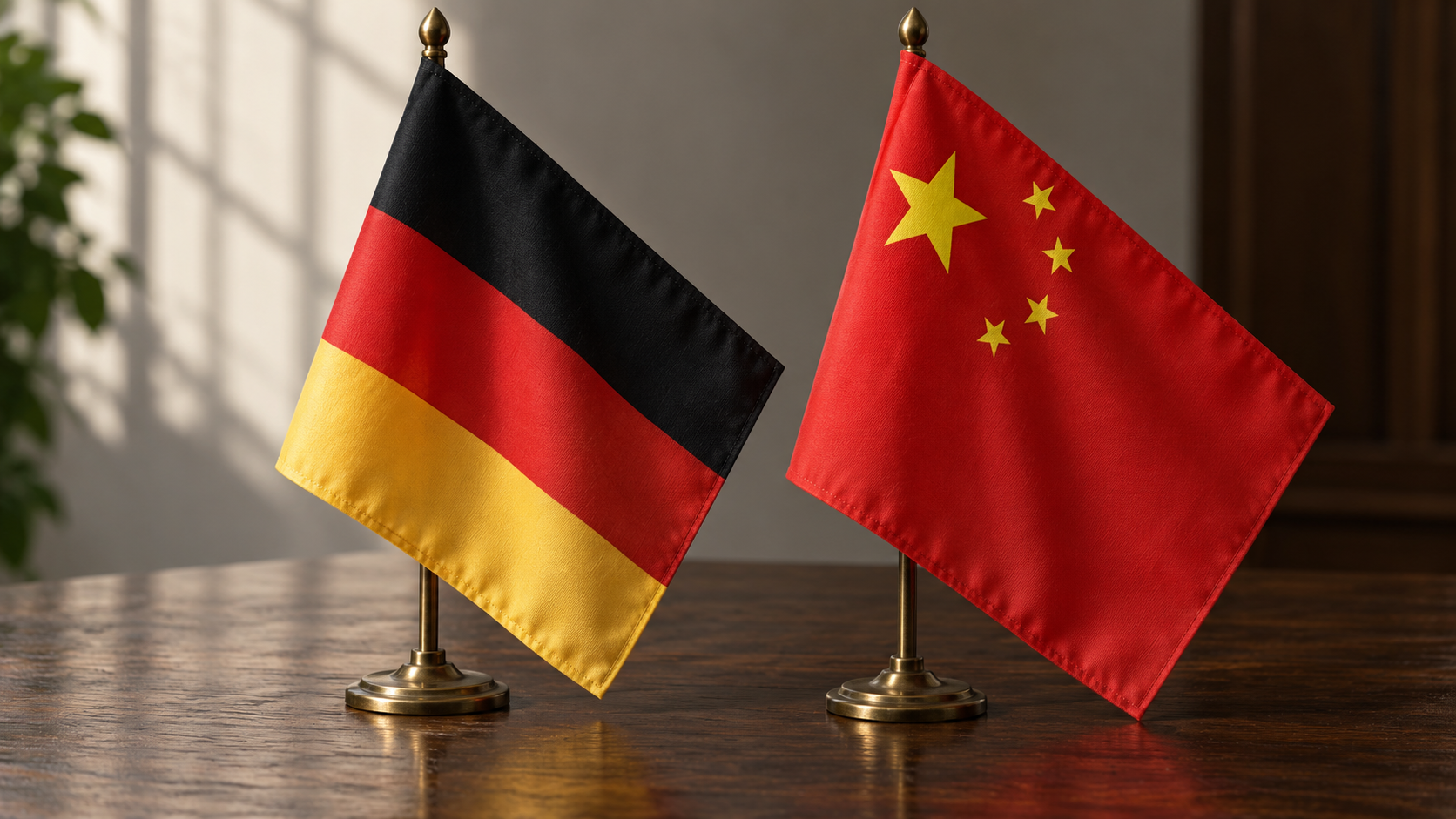
The paired flags are a symbolic reconstruction of the two states' national designs. They do not reproduce the meeting room or a photographed signing ceremony.
Explore more of "On This Day ..."
Discover more events from the same date across news, politics, technology, sports, and other fields. Each link highlights significant moments that shaped history on different fronts.