

On This Day in Pop: January 30, 1969
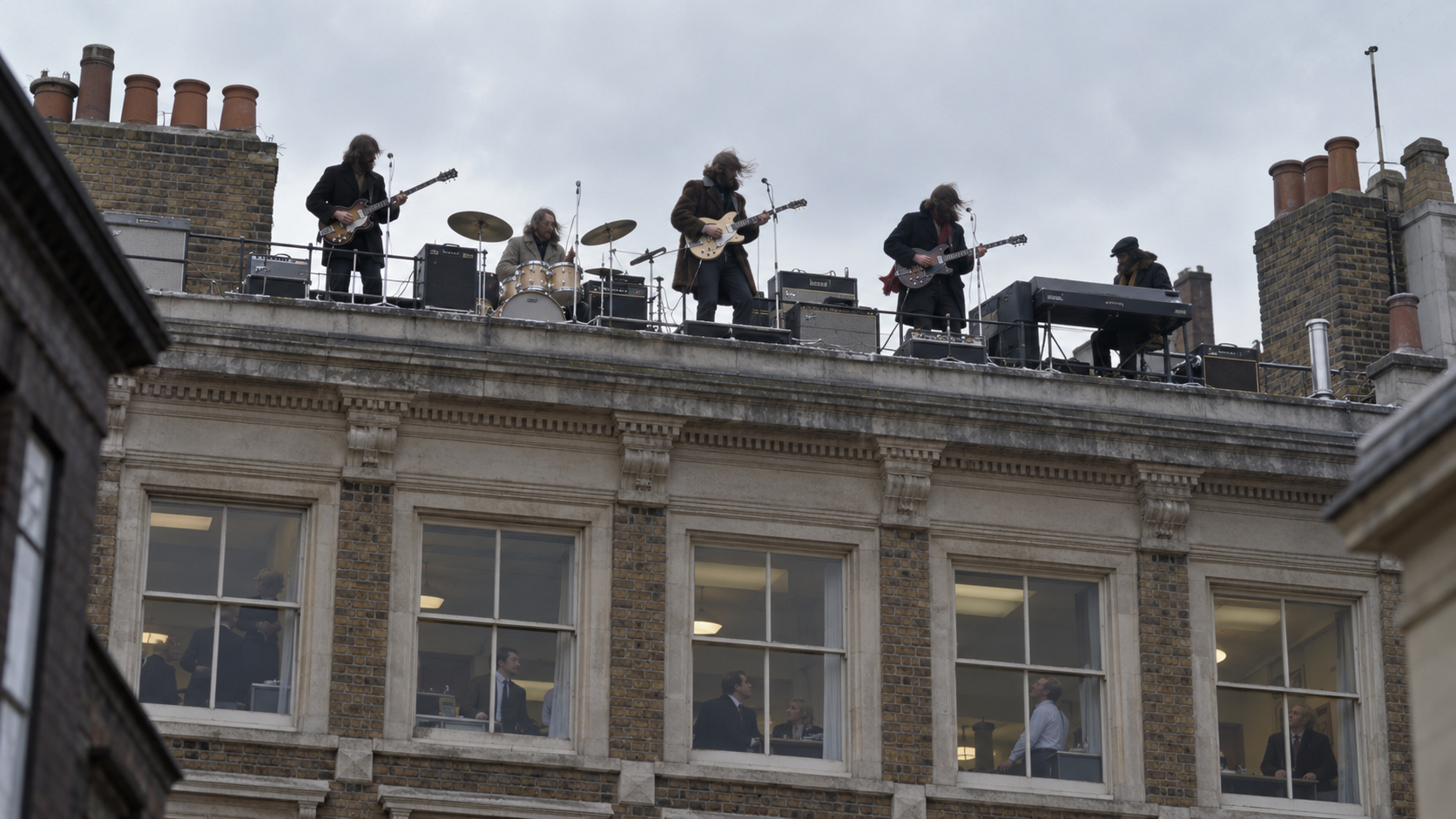
The Beatles climbed onto the roof of Apple Corps at 3 Savile Row in London on January 30, 1969, and began playing without a public announcement. John Lennon, Paul McCartney, George Harrison and Ringo Starr were joined by keyboardist Billy Preston, whose electric piano had energized the sessions. The performance was conceived as a climax for a project intended to show the band creating and rehearsing new music. Film cameras were positioned on the roof, across the street and inside the building, while hidden microphones captured reactions from office workers and pedestrians. What began as a production decision became an unexpected concert above the city.
For roughly forty minutes, the group performed multiple takes of “Get Back,” “Don’t Let Me Down,” “I’ve Got a Feeling,” “One After 909” and “Dig a Pony.” Cold weather, coats, rooftop wind and the sight of musicians playing against chimneys and gray sky gave the scene a directness far removed from an arena show. Crowds formed in the street, traffic slowed and nearby businesses complained about the noise. Metropolitan Police officers entered the building and eventually reached the roof. The musicians continued long enough for Lennon to close with a joke thanking the group on behalf of itself and expressing hope that they had passed the audition.
The rooftop set became the Beatles’ final public live performance, though the band continued recording before its breakup. Portions appeared in the 1970 film Let It Be, which for decades encouraged a gloomy interpretation of the sessions. Peter Jackson’s later Get Back documentary used restored footage and longer sequences to reveal more humor, cooperation and musical problem-solving without erasing real tensions. The performance endures because it combines spontaneity with careful professional skill: the audience was surprised, but the band and film crew were working toward a planned result. It also returned the Beatles to live ensemble playing after years away from touring, making familiar songs feel unfinished and immediate. January 30 marks a farewell no one on the street knew was a farewell, preserved from enough camera angles to let later generations stand on the roof beside them. The location added a final symbolic layer: Apple was meant to represent the band’s creative independence, yet the company’s offices also embodied financial and managerial complications. Music on the roof briefly cut through those problems with the simplest image possible—a band playing together.
The performance served a film project and was staged without advance notice to the street below.
Preston’s keyboards strengthened the ensemble and helped ease tension during the sessions.
Police intervention ended the set, but the encounter was calmer and more procedural than legend suggests.
It was the group’s last public live appearance, not the final time the Beatles recorded together.
Film and audio preservation allowed later documentaries to revise the mood associated with the sessions.
The rooftop remains an iconic example of a planned media event producing genuine public surprise.
Explore more of "On This Day ..."
Discover more events from the same date across news, politics, technology, sports, and other fields. Each link highlights significant moments that shaped history on different fronts.