

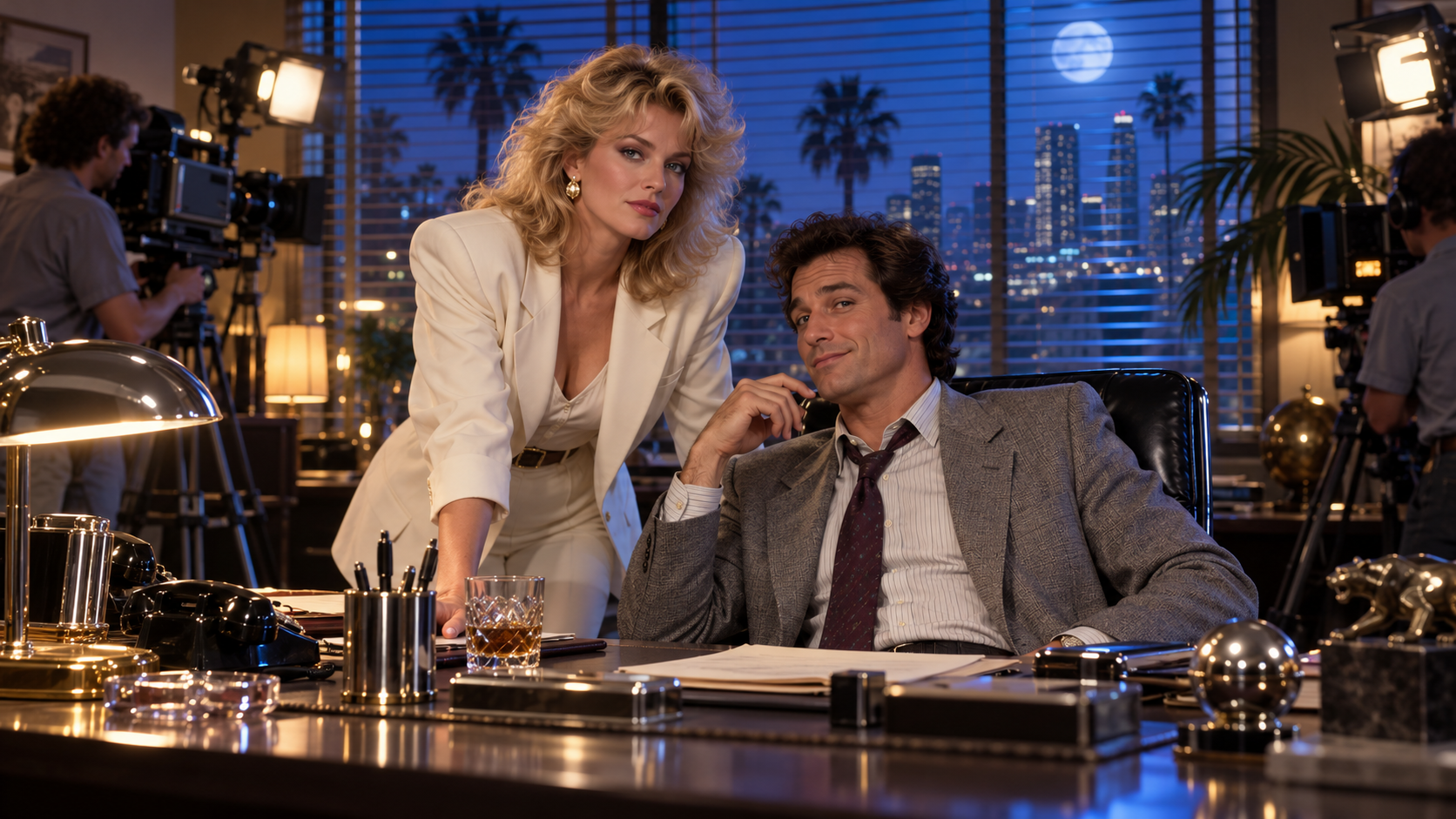
On This Day in Pop: March 3, 1985
On March 3, 1985, ABC premiered Moonlighting, introducing audiences to former model Maddie Hayes, wisecracking detective David Addison and the Blue Moon Detective Agency. Cybill Shepherd and Bruce Willis played the mismatched partners with a mix of romantic tension and verbal combat. Created by Glenn Gordon Caron, the series treated a weekly mystery as scaffolding for rapid dialogue, character friction and experiments with television form. Seen in its own time, the occasion was more than a tidy calendar entry. It emerged from choices by performers, writers, technicians, executives and audiences, each working within the opportunities and constraints of the period. Restoring that setting keeps the story human and specific instead of treating a complicated cultural shift as inevitable.
The premiere arrived when hour-long network dramas were usually expected to stay within recognizable genre borders. Moonlighting borrowed the snap of classic screwball comedy, then folded in noir imagery, musical sequences and direct jokes about television production. Its leads’ chemistry became the central attraction, while the show’s willingness to interrupt plots, acknowledge the audience and stage elaborate fantasy episodes made inconsistency part of its creative risk. The reaction also shows how popular culture gathers momentum. A premiere, broadcast, release or public appearance can feel self-contained on the day, yet its meaning expands through reviews, radio, television, sales, conversation and imitation. Those channels reach people unevenly, but together they can turn one event into a reference point that later work follows, revises or rejects.
Moonlighting helped launch Willis as a star and restored Shepherd to a central place in popular culture. Its influence can be seen in later shows built around unresolved attraction, self-aware storytelling and genre play. Production delays and behind-the-scenes tensions also became part of its legend, but the debut remains a reminder that network television could feel daring when performance, writing and visual invention aligned. That longer view is why the date still matters. It opens a door onto changes involving many contributors, including people whose labor was less visible than the headline names. Recordings, films, photographs and documents allow later audiences to reconsider both the achievement and its limits. Pop history is strongest when celebration is paired with context, and this anniversary leaves room for both. Its afterlife also shows that cultural memory is active: anniversaries, restorations, reissues and fresh criticism keep changing which details receive attention and which assumptions are questioned. Looking back does not mean pretending everyone experienced the moment alike; it means noticing the distance between a public milestone, the industry around it and the private reactions beyond the spotlight. The tension between the immediate event and the story later told about it is part of what makes this episode worth revisiting instead of merely listing.
ABC introduced Maddie Hayes and David Addison in a feature-length pilot that launched the Blue Moon Detective Agency.
The setting and sequence matter because they show how Moonlighting’s television premiere reached the public on this particular date.
The mix of detective plotting, screwball banter and romantic tension gave network audiences a drama that felt unusually playful.
The immediate response traveled through the era’s available channels, from press and broadcast coverage to ticket buyers, listeners and viewers.
The series helped make Bruce Willis a star and influenced decades of genre-blending, self-aware television romance.
Its reputation has kept developing through preservation, scholarship, revival and the interpretations of later audiences.
Explore more of "On This Day ..."
Discover more events from the same date across news, politics, technology, sports, and other fields. Each link highlights significant moments that shaped history on different fronts.