

On This Day in Pop: July 5, 1954
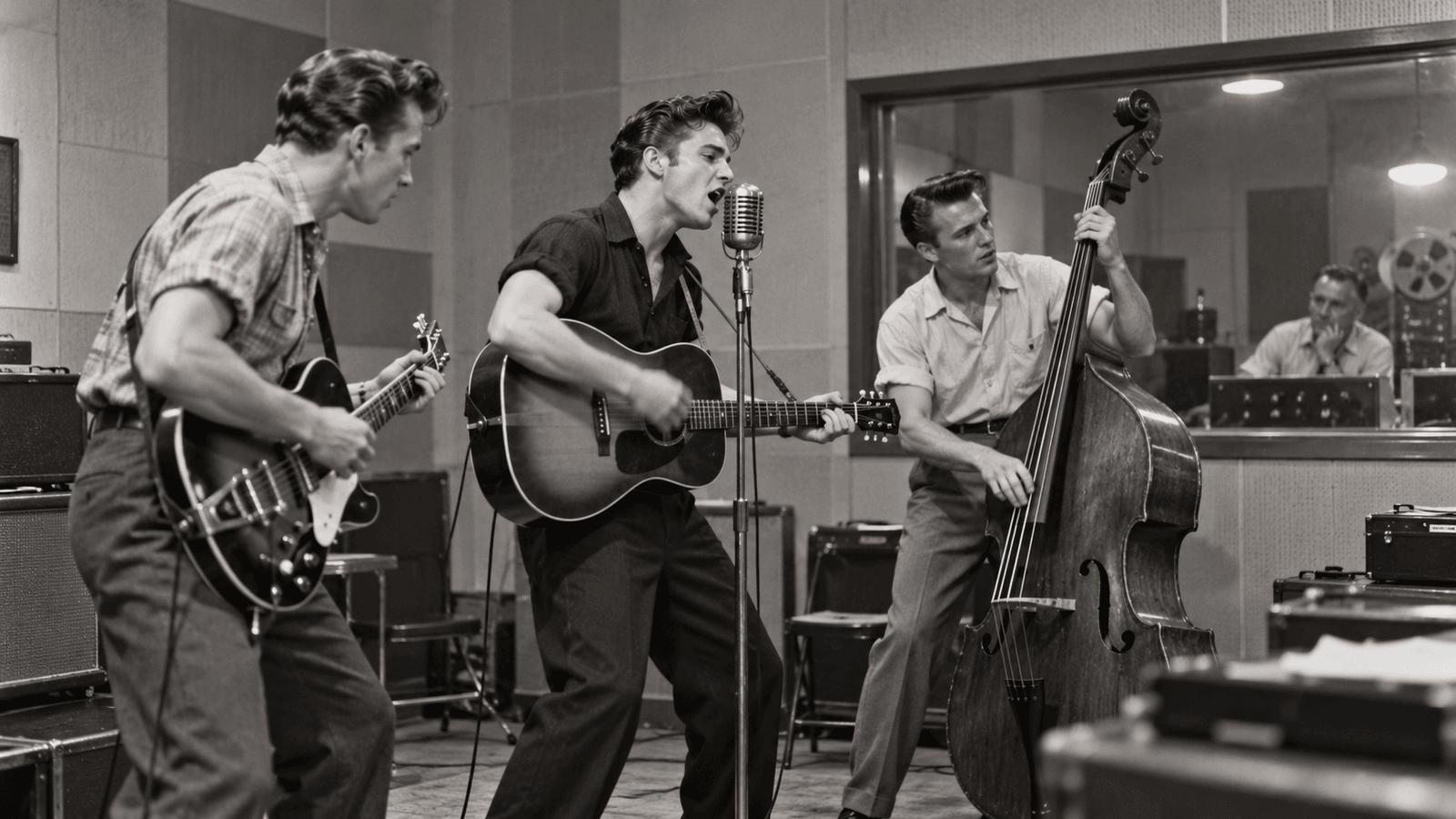
On July 5, 1954, Elvis Presley entered Memphis Recording Service with guitarist Scotty Moore and bassist Bill Black for a session supervised by Sun Records owner Sam Phillips. The planned performances had not produced the sound Phillips wanted. During a break, Presley began playing Arthur Crudup’s blues song That’s All Right in a loose, accelerated style. Moore and Black joined him, and Phillips asked them to repeat it so he could record. The arrangement was spare: acoustic rhythm, electric guitar, upright bass and Presley’s voice, with tape echo adding space. A country trio had reworked a Black blues recording without treating genre boundaries as fixed. Phillips gave the acetate to Memphis disc jockey Dewey Phillips, whose broadcast generated immediate local requests.
The session mattered because it captured a meeting point among rhythm and blues, country, gospel and the commercial category soon called rock and roll. Presley did not invent those sources, and the unequal market that elevated a white singer must remain visible beside his talent. Yet the record’s nervous momentum and vocal freedom sounded unlike the smoother pop dominating national radio. Moore’s concise guitar answers, Black’s percussive bass and Phillips’s studio instincts were essential to the result. The musicians followed That’s All Right with a similarly transformed version of Blue Moon of Kentucky, giving the single two sides that moved in opposite directions across the same cultural border.
Sun released the record later that month, and Presley began performing with Moore and Black around the South before signing with RCA in 1955. Television appearances, hit records and films turned him into an international symbol whose image often overshadowed the collaborative and interracial musical networks behind his rise. Returning to the July 5 tape restores the scale of the original discovery: three players in a small studio, an engineer-producer listening closely, and an informal moment recognized as usable. The recording entered the National Recording Registry and remains a standard starting point for histories of rock. Its importance lies not in a myth of creation from nothing, but in the audible spark produced when musicians treated inherited forms as material for a new shared sound.
Remembering elvis presley records that’s all right at sun studio on July 5 is valuable because anniversaries turn a familiar cultural object back into a specific decision, release or broadcast. The surrounding technology, business and audience conditions explain why the moment could happen then, while its later uses show that meaning never stops changing. Seen at that scale, the date is not trivia. It is a checkpoint between creation and memory: a place to separate what occurred from the legend accumulated around it and to ask why the work still attracts attention. That perspective also restores the labor of collaborators, distributors and audiences whose choices helped a single event travel beyond its first setting. Cultural history becomes clearer when the remembered icon is reconnected to the systems and people that made it visible.
Elvis Presley recorded That's All Right with Scotty Moore and Bill Black at Sun Studio on July 5, 1954.
The remembered moment placed Elvis Finds His Sound inside the technology, audience habits and creative choices of 1954. Those conditions explain why it could happen then and why contemporary reactions differed from later memory.
The performance emerged during a break and was built from a faster reworking of Arthur Crudup's blues song.
Its immediate importance came from the way audiences, distributors and other creators responded. The event gained force beyond its first release or appearance as people repeated, debated and reinterpreted it.
Local radio response helped launch Presley's professional recording career and a foundational rock-and-roll single.
Over time, the event became a reference point for later work in popular culture. Its legacy includes both the achievement itself and the changing arguments about what should be celebrated, questioned or rediscovered.
Explore more of "On This Day ..."
Discover more events from the same date across news, politics, technology, sports, and other fields. Each link highlights significant moments that shaped history on different fronts.