

On This Day in Pop: July 14, 1969
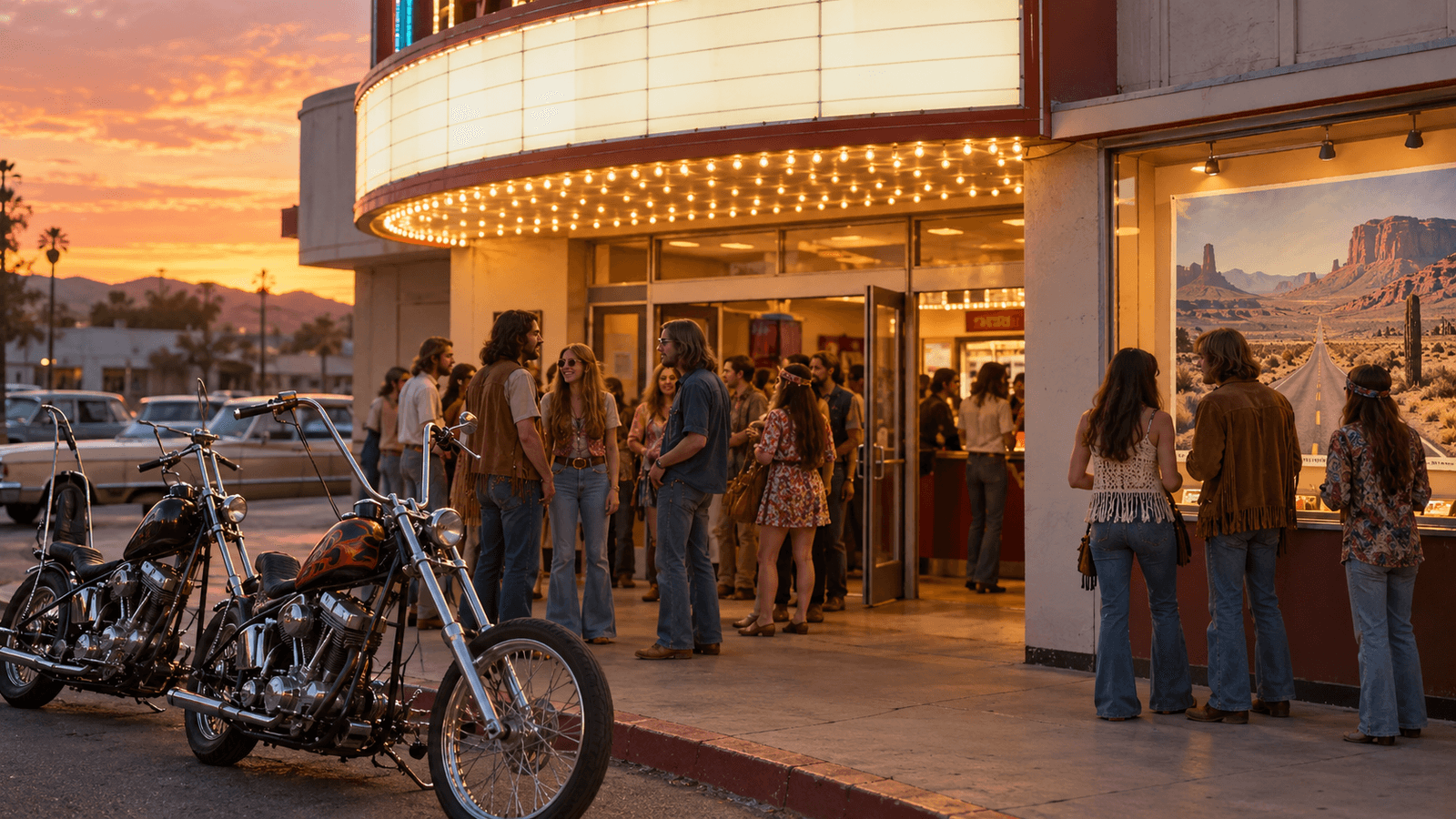
On July 14, 1969, Easy Rider opened in American theaters after attracting attention at the Cannes Film Festival. Peter Fonda and Dennis Hopper played Wyatt and Billy, motorcyclists who cross the American Southwest after a drug sale, while Jack Nicholson appeared as George Hanson, a lawyer who joins part of their journey. Hopper directed from a screenplay credited to Hopper, Fonda and Terry Southern. Shot on locations with a small budget, the film used natural light, improvised moments, abrupt flash-forward transitions and a soundtrack built from existing rock recordings. Its open roads promised freedom, but the story steadily exposed hostility waiting beyond the counterculture’s temporary communities.
The release mattered because its enormous return showed studios that younger audiences would support films made outside established formulas. Easy Rider did not present a program for political change; it offered an unstable mixture of liberation, masculinity, commerce, drugs and violence. That ambiguity let different viewers see celebration, warning or both. Using familiar records by Steppenwolf, the Byrds, Jimi Hendrix and others also helped change the relationship between movies and popular music. Songs functioned as narrative atmosphere rather than orchestral decoration, making the soundtrack part of how audiences understood landscape and identity.
The film’s success helped accelerate the New Hollywood era, when studios gave greater freedom to directors and producers who claimed to understand the youth market. Hopper won the Cannes prize for a first film, Nicholson received an Academy Award nomination and the movie entered the National Film Registry. Later criticism has examined its treatment of women, Indigenous imagery and the self-mythology of its white male wanderers. Those limitations sit beside its formal influence and historical force. July 14 marks the opening of a road movie that made independence commercially visible while ending its dream of escape in sudden violence. The contradiction remains central: the film sold rebellion to a mass audience and warned that American freedom was never as open as its highways appeared.
Remembering easy rider opens in u.s. theaters on July 14 is valuable because anniversaries turn a familiar cultural object back into a specific decision, release or broadcast. The surrounding technology, business and audience conditions explain why the moment could happen then, while its later uses show that meaning never stops changing. Seen at that scale, the date is not trivia. It is a checkpoint between creation and memory: a place to separate what occurred from the legend accumulated around it and to ask why the work still attracts attention. That perspective also restores the labor of collaborators, distributors and audiences whose choices helped a single event travel beyond its first setting. Cultural history becomes clearer when the remembered icon is reconnected to the systems and people that made it visible.
Easy Rider opened in the United States on July 14, 1969 after screening at Cannes.
The remembered moment placed Easy Rider Opens inside the technology, audience habits and creative choices of 1969. Those conditions explain why it could happen then and why contemporary reactions differed from later memory.
Its low-budget road story paired location filmmaking with an influential soundtrack of existing rock songs.
Its immediate importance came from the way audiences, distributors and other creators responded. The event gained force beyond its first release or appearance as people repeated, debated and reinterpreted it.
The film's box-office success helped open studio doors to the director-driven New Hollywood era.
Over time, the event became a reference point for later work in popular culture. Its legacy includes both the achievement itself and the changing arguments about what should be celebrated, questioned or rediscovered.
Explore more of "On This Day ..."
Discover more events from the same date across news, politics, technology, sports, and other fields. Each link highlights significant moments that shaped history on different fronts.