

On This Day in Pop: July 26, 1951
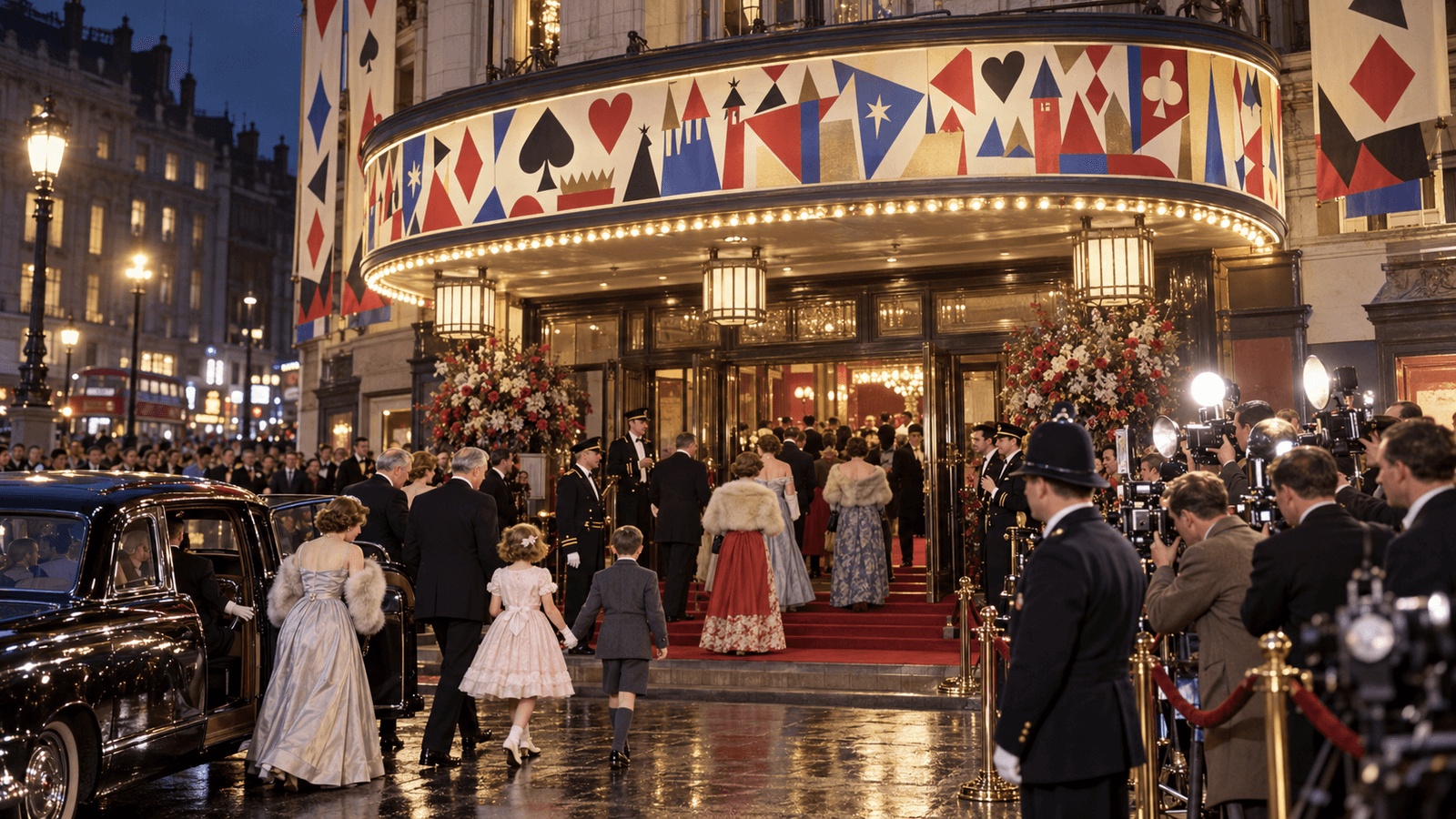
On July 26, 1951, Walt Disney’s Alice in Wonderland received its world premiere at London’s Leicester Square Theatre. The animated feature combined characters and episodes from Lewis Carroll’s Alice’s Adventures in Wonderland and Through the Looking-Glass. Kathryn Beaumont voiced Alice, with Ed Wynn, Sterling Holloway, Verna Felton and other performers creating an unusually crowded comic world. Directors Clyde Geronimi, Wilfred Jackson and Hamilton Luske supervised a production whose visual development drew strongly from Mary Blair’s bold color and simplified shapes. More than half a million drawings were created, and live-action reference helped animators study movement before translating it into the film’s elastic logic.
The premiere mattered because Carroll’s episodic wordplay resisted the clear quest and emotional goal Disney features usually favored. The film answered with constant transformation, songs and abrupt encounters rather than a single villain-driven plot. Contemporary response was mixed, and some British critics and Carroll admirers thought the adaptation too American or insufficiently faithful. The initial theatrical run disappointed compared with studio expectations. Yet its very refusal to settle into conventional narrative later became a strength, especially for audiences drawn to psychedelic imagery, nonsensical language and a heroine trying to impose reason on a world that changes rules mid-sentence.
Television broadcasts and later theatrical reissues helped Alice in Wonderland find a much larger audience, and its designs became central to merchandise, theme-park attractions and Disney’s visual identity. The film’s afterlife shows how release-day judgment can differ from long cultural memory. It also highlights the labor of artists such as Blair, whose influence became more widely recognized over time. July 26 marks the public arrival of a film that the studio once struggled to classify and audiences later treated as inevitable. Its Wonderland is not an escape into order; it is a chain of styles, voices and unstable meanings, which may be why each generation discovers a different path through it.
Remembering disney’s alice in wonderland premieres in london on July 26 is valuable because anniversaries turn a familiar cultural object back into a specific decision, release or broadcast. The surrounding technology, business and audience conditions explain why the moment could happen then, while its later uses show that meaning never stops changing. Seen at that scale, the date is not trivia. It is a checkpoint between creation and memory: a place to separate what occurred from the legend accumulated around it and to ask why the work still attracts attention. That perspective also restores the labor of collaborators, distributors and audiences whose choices helped a single event travel beyond its first setting. Cultural history becomes clearer when the remembered icon is reconnected to the systems and people that made it visible.
Disney's Alice in Wonderland premiered in London on July 26, 1951.
The remembered moment placed Alice Enters Wonderland inside the technology, audience habits and creative choices of 1951. Those conditions explain why it could happen then and why contemporary reactions differed from later memory.
The feature combined both major Alice books and used extensive live-action reference and hand-drawn animation.
Its immediate importance came from the way audiences, distributors and other creators responded. The event gained force beyond its first release or appearance as people repeated, debated and reinterpreted it.
Mixed initial reception gave way to a major afterlife through television, reissues and theme-park culture.
Over time, the event became a reference point for later work in popular culture. Its legacy includes both the achievement itself and the changing arguments about what should be celebrated, questioned or rediscovered.
Explore more of "On This Day ..."
Discover more events from the same date across news, politics, technology, sports, and other fields. Each link highlights significant moments that shaped history on different fronts.