

On This Day in Pop: July 27, 1940
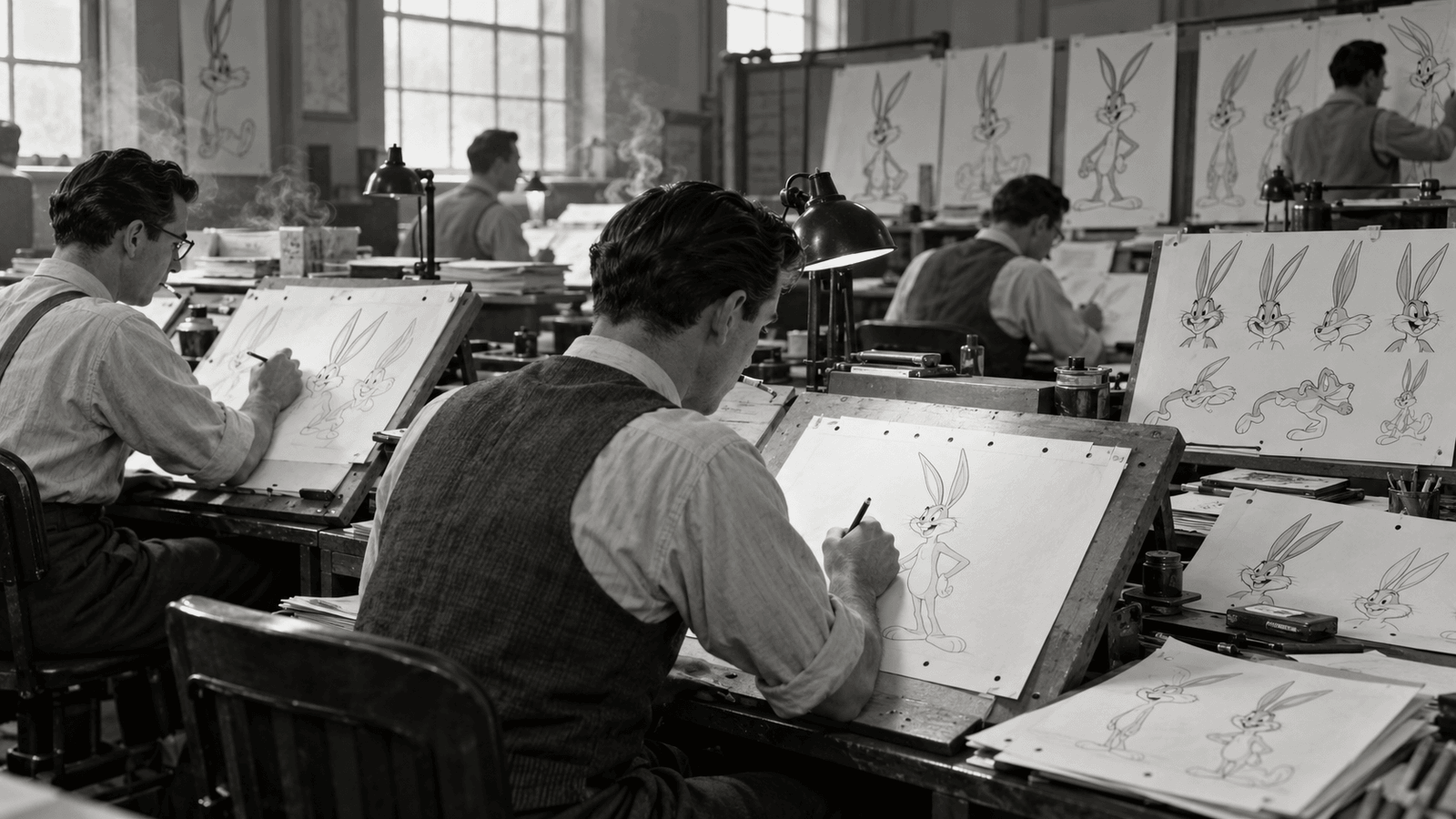
On July 27, 1940, Warner Bros. released the Merrie Melodies short A Wild Hare, widely recognized as the first appearance of the fully formed Bugs Bunny. Rabbit characters had appeared in earlier studio cartoons, but director Tex Avery, animator Bob Givens and their colleagues clarified the design and attitude audiences would remember. Mel Blanc supplied the voice, while Arthur Q. Bryan played the hunter later known as Elmer Fudd. Bugs emerges from his hole, coolly eats a carrot and asks the armed pursuer a casual question. The joke depends on reversal: the target controls the encounter, and calm intelligence defeats anxious force.
The debut mattered because Bugs possessed more than a collection of gags. His relaxed timing, Brooklyn-inflected speech and willingness to address the audience made him seem aware of the cartoon’s rules. He usually retaliated after provocation, giving mischief a rough moral structure, but his pleasure in performance could also make him gloriously excessive. A Wild Hare established the hunter-and-prey dynamic that later directors would vary across music, opera, westerns and wartime propaganda. The short received an Academy Award nomination, evidence that the studio had found a character capable of carrying both broad comedy and precise craft.
Bugs Bunny became the leading star of Warner Bros. animation, appeared in scores of theatrical shorts and eventually served as a corporate mascot. Directors including Chuck Jones, Friz Freleng and Robert McKimson emphasized different aspects of the character, proving that a strong screen identity can survive reinterpretation. Some wartime and racial caricatures in the broader catalog now require context or withdrawal, reminding viewers that beloved animation also carries the prejudices of its production era. July 27 marks the moment a rabbit stopped behaving like prey and entered popular culture with perfect composure. The character’s enduring appeal lies in that first reversal: power arrives looking nervous, and Bugs answers as if he has already read the script.
Remembering a wild hare introduces the definitive bugs bunny on July 27 is valuable because anniversaries turn a familiar cultural object back into a specific decision, release or broadcast. The surrounding technology, business and audience conditions explain why the moment could happen then, while its later uses show that meaning never stops changing. Seen at that scale, the date is not trivia. It is a checkpoint between creation and memory: a place to separate what occurred from the legend accumulated around it and to ask why the work still attracts attention. That perspective also restores the labor of collaborators, distributors and audiences whose choices helped a single event travel beyond its first setting. Cultural history becomes clearer when the remembered icon is reconnected to the systems and people that made it visible.
Warner Bros. released A Wild Hare on July 27, 1940.
The remembered moment placed Bugs Bunny Debuts inside the technology, audience habits and creative choices of 1940. Those conditions explain why it could happen then and why contemporary reactions differed from later memory.
The short is widely treated as the debut of the definitive Bugs Bunny design, voice and personality.
Its immediate importance came from the way audiences, distributors and other creators responded. The event gained force beyond its first release or appearance as people repeated, debated and reinterpreted it.
Its confident hunter-and-prey reversal became the foundation for decades of animated comedy.
Over time, the event became a reference point for later work in popular culture. Its legacy includes both the achievement itself and the changing arguments about what should be celebrated, questioned or rediscovered.
Explore more of "On This Day ..."
Discover more events from the same date across news, politics, technology, sports, and other fields. Each link highlights significant moments that shaped history on different fronts.