

On This Day in Pop: September 28, 1987
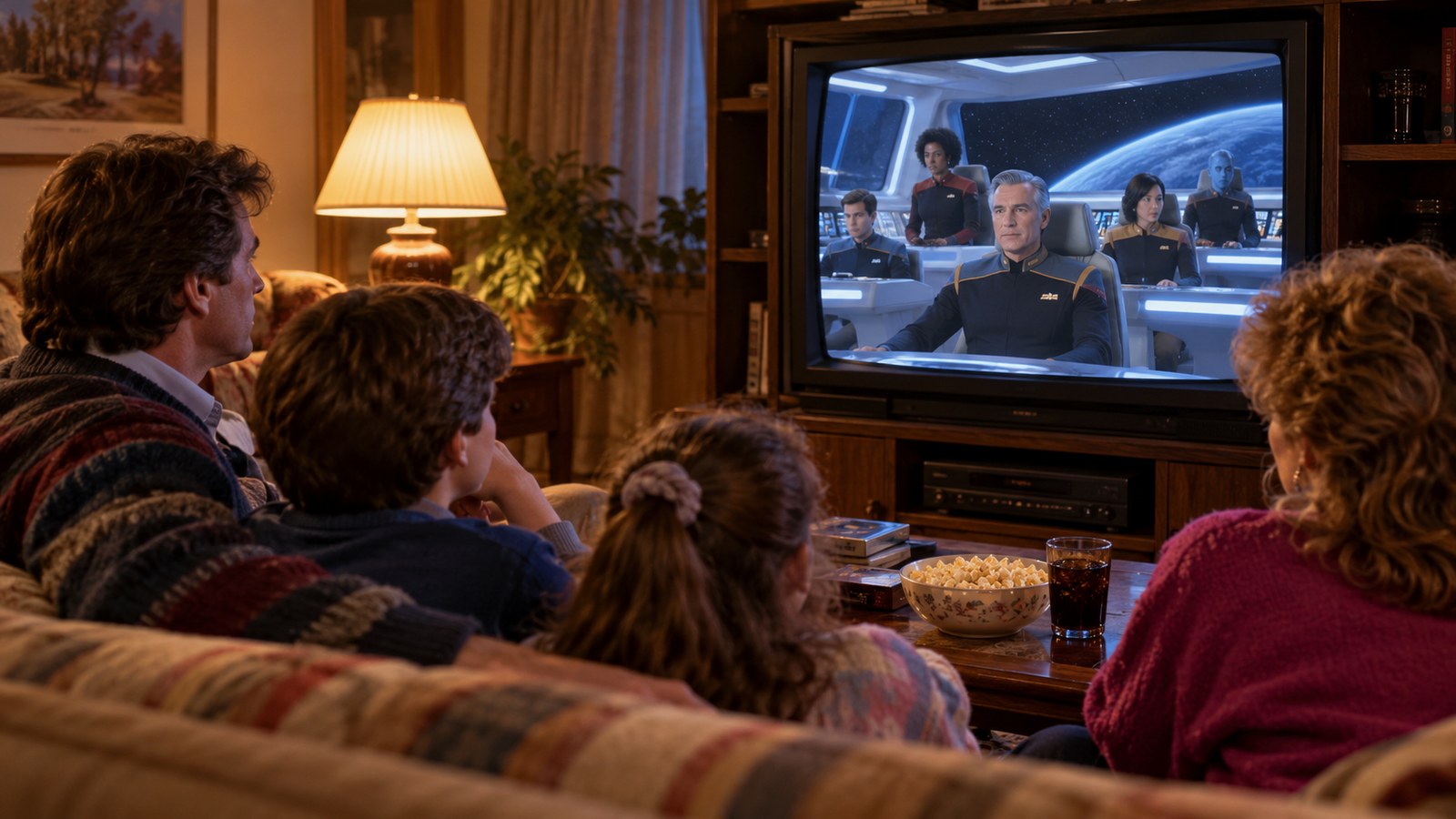
On September 28, 1987, Star Trek: The Next Generation began its first-run syndicated television debut. The two-hour ‘Encounter at Farpoint’ introduced Captain Jean-Luc Picard and a new Enterprise crew operating decades after the original series. A powerful being called Q put humanity on trial, making ethical judgment part of the new show’s premise from its first hour. Paramount bypassed a traditional network and offered the series directly to local stations, using the popularity of original-series reruns to secure broad carriage. Gene Roddenberry’s future emphasized diplomacy, professionalism and a starship designed for families as well as officers. The date captures the event before later reputation made its consequences look inevitable, when audiences encountered a new release, performance, institution or public loss with only the expectations available at the time.
Reviving Star Trek without Kirk and Spock tested whether the idea could outgrow its original characters. Early episodes struggled with tone and production change, but the ensemble and writers gradually found stories suited to Picard’s reflective authority and Data’s curiosity. Popular culture is never made by a famous name alone. Writers, producers, technicians, broadcasters, retailers, venues and audiences shape what becomes visible and what survives. Looking at those conditions turns an anniversary from a list entry into a record of choices, limits and competing interests.
The series ran seven seasons, became a major syndicated success and moved the franchise back into continuous television production. Its cast later led feature films, while characters and plots fed new series across several generations. That afterlife matters because influence does not move in a straight line. Reruns, reissues, new technology, criticism and community memory can change the meaning of a work long after its first appearance. Durable pop history therefore holds creative achievement beside questions of labor, access, power and representation.
September 28 marks the moment Star Trek proved it could renew itself rather than exist only as nostalgia. The gamble created a second foundational crew and established expansion as part of the franchise’s identity. Returning to this September date means separating what participants knew then from what later audiences added. Recordings, photographs, broadcasts and recollections keep the moment active, but they also select and reshape it. That distinction protects against hindsight: a chart position, premiere, publication, concert or memorial may become a neat milestone later, but the people present still faced uncertainty. Reading the moment in both directions—through its original conditions and its accumulated meanings—keeps celebration from replacing history. The distance between the immediate event and its continuing interpretation is what makes this episode worth revisiting.
The Next Generation debuted in syndication the week of September 28, 1987.
On September 28, 1987, Star Trek: The Next Generation began its first-run syndicated television debut. The two-hour 'Encounter at Farpoint' introduced Captain Jean-Luc Picard and a new Enterprise crew operating decades after the original series.
'Encounter at Farpoint' introduced Patrick Stewart's Captain Jean-Luc Picard.
Reviving Star Trek without Kirk and Spock tested whether the idea could outgrow its original characters. Early episodes struggled with tone and production change, but the ensemble and writers gradually found stories suited to Picard's reflective authority and Data's curiosity.
The series ran seven seasons and restored Star Trek as an ongoing television franchise.
The series ran seven seasons, became a major syndicated success and moved the franchise back into continuous television production. Its cast later led feature films, while characters and plots fed new series across several generations.
Explore more of "On This Day ..."
Discover more events from the same date across news, politics, technology, sports, and other fields. Each link highlights significant moments that shaped history on different fronts.