

On This Day in Pop: September 29, 1985
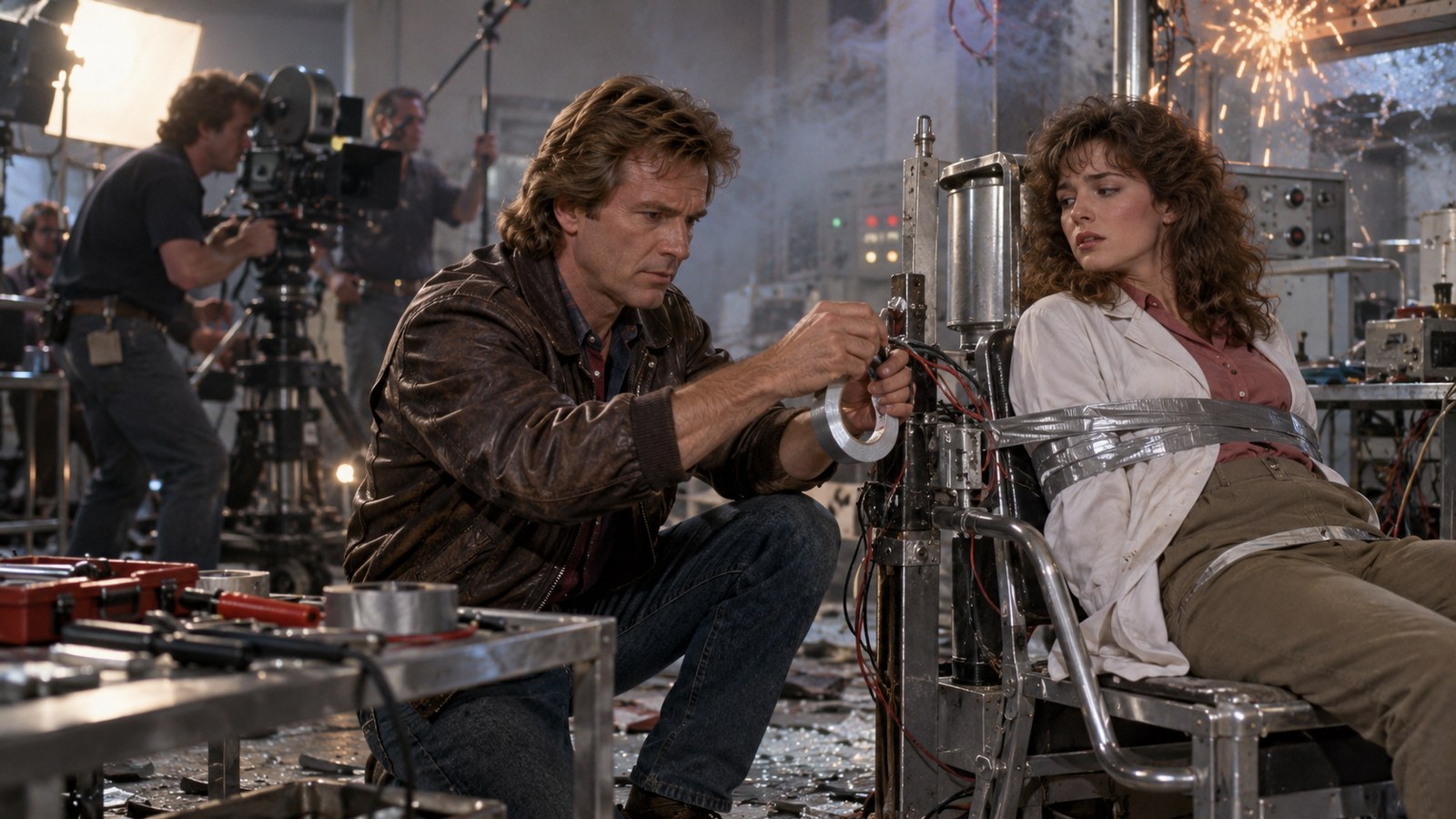
On September 29, 1985, MacGyver premiered on ABC. Richard Dean Anderson introduced a resourceful troubleshooter who preferred observation, scientific knowledge and improvised tools to firearms. The pilot sent him into a damaged underground laboratory, establishing a hero defined by solving physical problems under time pressure. Creator Lee David Zlotoff and executive producer Henry Winkler built stories around practical demonstrations, household materials and a strong aversion to unnecessary violence. Technical advisers helped give inventions enough plausibility to invite viewers to think along. The date captures the event before later reputation made its consequences look inevitable, when audiences encountered a new release, performance, institution or public loss with only the expectations available at the time.
The character offered an alternative to the heavily armed action heroes common in the decade. Ingenuity became spectacle: tape, wire, chemistry or a paper clip could matter more than force, even when episodes stretched real science for dramatic effect. Popular culture is never made by a famous name alone. Writers, producers, technicians, broadcasters, retailers, venues and audiences shape what becomes visible and what survives. Looking at those conditions turns an anniversary from a list entry into a record of choices, limits and competing interests.
MacGyver ran seven seasons and two television movies. The character’s name became a verb for making or repairing something through clever improvisation, a linguistic afterlife stronger than many conventional ratings measures. That afterlife matters because influence does not move in a straight line. Reruns, reissues, new technology, criticism and community memory can change the meaning of a work long after its first appearance. Durable pop history therefore holds creative achievement beside questions of labor, access, power and representation.
September 29 marks the debut of competence as adventure. The show’s durable appeal lies in the satisfying chain from close attention to creative action, encouraging audiences to see ordinary objects as possibilities rather than background. Returning to this September date means separating what participants knew then from what later audiences added. Recordings, photographs, broadcasts and recollections keep the moment active, but they also select and reshape it. That distinction protects against hindsight: a chart position, premiere, publication, concert or memorial may become a neat milestone later, but the people present still faced uncertainty. Reading the moment in both directions—through its original conditions and its accumulated meanings—keeps celebration from replacing history. The distance between the immediate event and its continuing interpretation is what makes this episode worth revisiting.
MacGyver premiered on ABC on September 29, 1985.
On September 29, 1985, MacGyver premiered on ABC. Richard Dean Anderson introduced a resourceful troubleshooter who preferred observation, scientific knowledge and improvised tools to firearms.
Richard Dean Anderson played the nontraditional action hero.
The character offered an alternative to the heavily armed action heroes common in the decade. Ingenuity became spectacle: tape, wire, chemistry or a paper clip could matter more than force, even when episodes stretched real science for dramatic effect.
The character's name entered common speech as a verb for ingenious improvisation.
MacGyver ran seven seasons and two television movies. The character's name became a verb for making or repairing something through clever improvisation, a linguistic afterlife stronger than many conventional ratings measures.
Explore more of "On This Day ..."
Discover more events from the same date across news, politics, technology, sports, and other fields. Each link highlights significant moments that shaped history on different fronts.