

On This Day in Pop: September 30, 1960
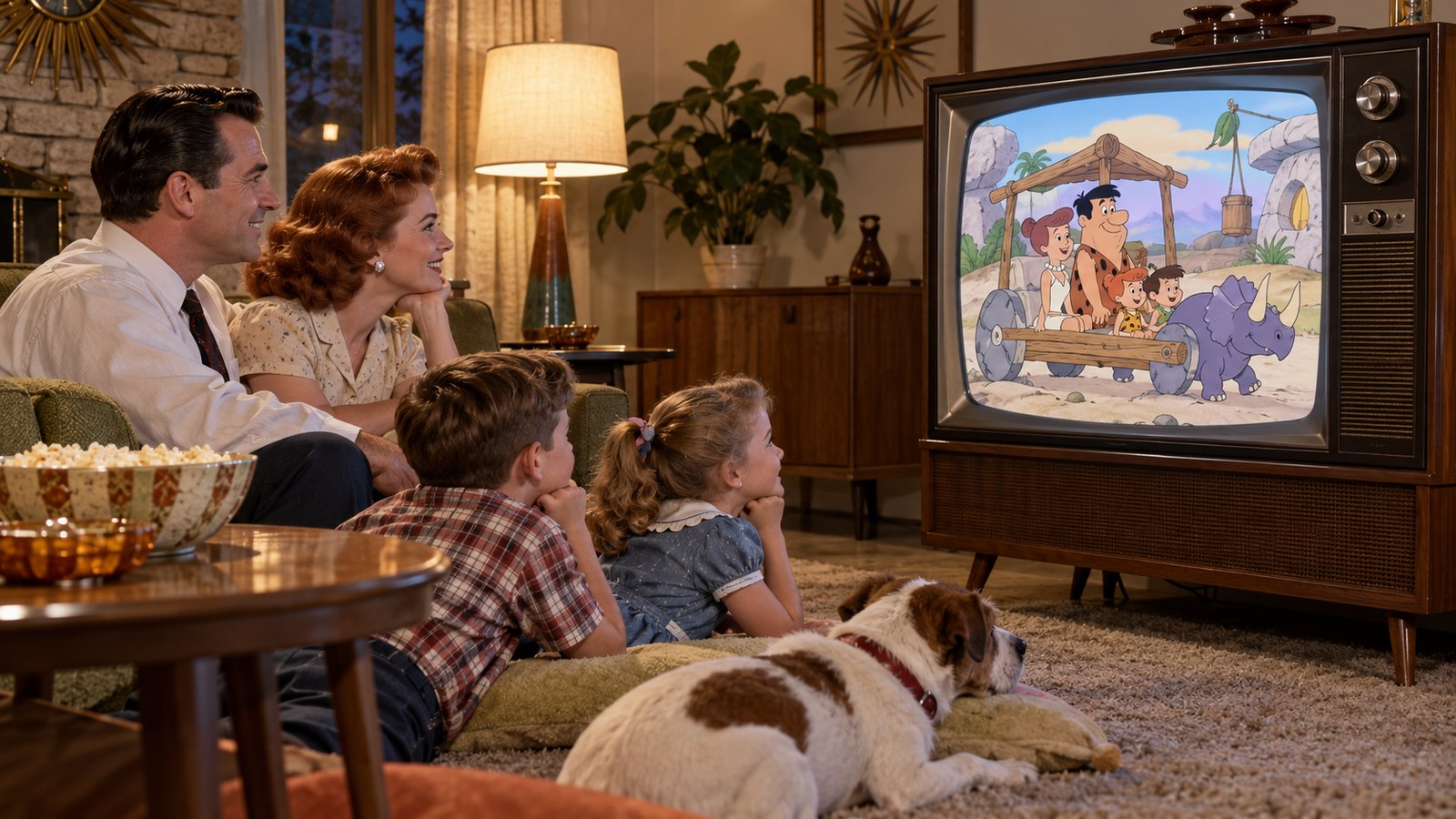
On September 30, 1960, The Flintstones premiered on ABC. ‘The Flintstone Flyer’ introduced Fred and Wilma Flintstone and neighbors Barney and Betty Rubble in a Stone Age suburb filled with animal-powered appliances, bowling nights and modern domestic frustrations. The program was the first animated series scheduled regularly in network prime time. William Hanna and Joseph Barbera adapted the rhythms of live-action family sitcoms to television animation, using limited movement, strong voices and repeatable settings to meet a weekly schedule. Adult-oriented jokes sat beside visual invention accessible to children. The date captures the event before later reputation made its consequences look inevitable, when audiences encountered a new release, performance, institution or public loss with only the expectations available at the time.
Prime-time placement asked audiences to accept animation as more than short theatrical cartoons or children’s programming. The series also translated mid-century consumer life into prehistoric parody, making work, marriage and status recognizable beneath the stone furniture. Popular culture is never made by a famous name alone. Writers, producers, technicians, broadcasters, retailers, venues and audiences shape what becomes visible and what survives. Looking at those conditions turns an anniversary from a list entry into a record of choices, limits and competing interests.
The Flintstones ran six seasons and generated films, spinoffs, merchandise and decades of reruns. Its success established Hanna-Barbera as a television powerhouse and opened a path later animated sitcoms would revise for different audiences. That afterlife matters because influence does not move in a straight line. Reruns, reissues, new technology, criticism and community memory can change the meaning of a work long after its first appearance. Durable pop history therefore holds creative achievement beside questions of labor, access, power and representation.
September 30 marks a shift in both scheduling and form. Bedrock endured because the distant past was really a comic mirror of contemporary America, allowing each new generation to recognize habits inside the stone-age machinery. Returning to this September date means separating what participants knew then from what later audiences added. Recordings, photographs, broadcasts and recollections keep the moment active, but they also select and reshape it. That distinction protects against hindsight: a chart position, premiere, publication, concert or memorial may become a neat milestone later, but the people present still faced uncertainty. Reading the moment in both directions—through its original conditions and its accumulated meanings—keeps celebration from replacing history. The distance between the immediate event and its continuing interpretation is what makes this episode worth revisiting.
The Flintstones premiered on September 30, 1960.
On September 30, 1960, The Flintstones premiered on ABC. 'The Flintstone Flyer' introduced Fred and Wilma Flintstone and neighbors Barney and Betty Rubble in a Stone Age suburb filled with animal-powered appliances, bowling nights and modern domestic frustrations.
It was the first animated series to hold a regular prime-time network slot.
Prime-time placement asked audiences to accept animation as more than short theatrical cartoons or children's programming. The series also translated mid-century consumer life into prehistoric parody, making work, marriage and status recognizable beneath the stone furniture.
The ABC sitcom ran for six seasons.
The Flintstones ran six seasons and generated films, spinoffs, merchandise and decades of reruns. Its success established Hanna-Barbera as a television powerhouse and opened a path later animated sitcoms would revise for different audiences.
Explore more of "On This Day ..."
Discover more events from the same date across news, politics, technology, sports, and other fields. Each link highlights significant moments that shaped history on different fronts.