

On This Day in Pop: October 30, 1938
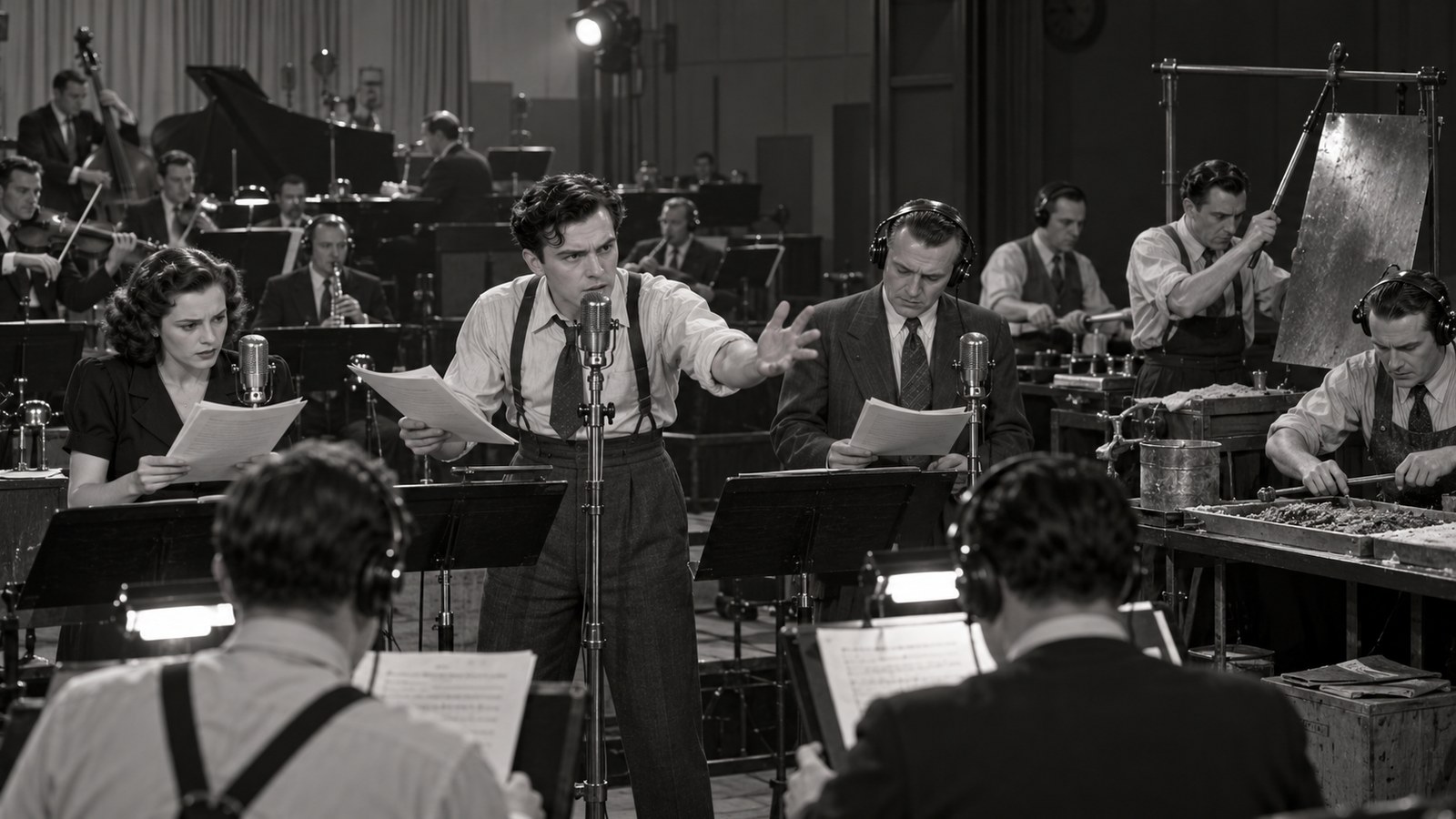
On October 30, 1938, Orson Welles directed and narrated The War of the Worlds on CBS radio. The Mercury Theatre on the Air framed H. G. Wells’s invasion story through dance music interrupted by urgent bulletins and reports from New Jersey. Listeners who joined after the opening announcement could encounter the fiction in the familiar language of breaking news. The low-rated program competed with the popular Chase and Sanborn Hour, and recent European crisis coverage had accustomed Americans to radio interruptions. Howard Koch adapted the novel while Welles led the live performance from New York. The date captures the event before later reputation made its consequences look inevitable, when audiences encountered a new release, performance or institution with only the expectations available at the time.
Some listeners were frightened, but later claims of nationwide mass panic were greatly exaggerated by newspapers and retelling. The gap between actual audience response and the legend is central to understanding competition among media as well as the broadcast itself. Popular culture is never made by a famous name alone. Writers, performers, producers, technicians, broadcasters, retailers, venues and audiences shape what becomes visible and what survives. Their collaboration also determines which experiments reach the public and which disappear before they can build momentum. Looking at those conditions turns an anniversary from a list entry into a record of choices, limits and competing interests.
The controversy made Welles nationally famous and turned the recording into a permanent case study in realism, trust and media effects. The Library of Congress later selected it for the National Recording Registry. That afterlife matters because influence does not move in a straight line. Reruns, reissues, new technology, criticism and community memory can change the meaning of a work long after its first appearance. Durable pop history therefore holds creative achievement beside questions of labor, access, power and representation.
The anniversary remains timely because credible form can briefly overpower context, while repetition can make an exaggerated account feel factual. The broadcast’s history asks audiences to examine both an original message and the story later told about its impact. Returning to this October date means separating what participants knew then from what later audiences added. Recordings, photographs, broadcasts and recollections keep the moment active, but they also select and reshape it. That distinction protects against hindsight: a chart position, premiere, publication, concert or opening may become a neat milestone later, but the people present still faced uncertainty. Reading the moment in both directions—through its original conditions and its accumulated meanings—keeps celebration from replacing history. The distance between the immediate event and its continuing interpretation is what makes this episode worth revisiting.
The broadcast aired on October 30, 1938.
On October 30, 1938, Orson Welles directed and narrated The War of the Worlds on CBS radio. The Mercury Theatre on the Air framed H.
Orson Welles led the Mercury Theatre production.
Some listeners were frightened, but later claims of nationwide mass panic were greatly exaggerated by newspapers and retelling. The gap between actual audience response and the legend is central to understanding competition among media as well as the broadcast itself.
Later research challenged the legend of nationwide mass panic.
The controversy made Welles nationally famous and turned the recording into a permanent case study in realism, trust and media effects. The Library of Congress later selected it for the National Recording Registry.
Explore more of "On This Day ..."
Discover more events from the same date across news, politics, technology, sports, and other fields. Each link highlights significant moments that shaped history on different fronts.