

On This Day in Pop: October 31, 1975
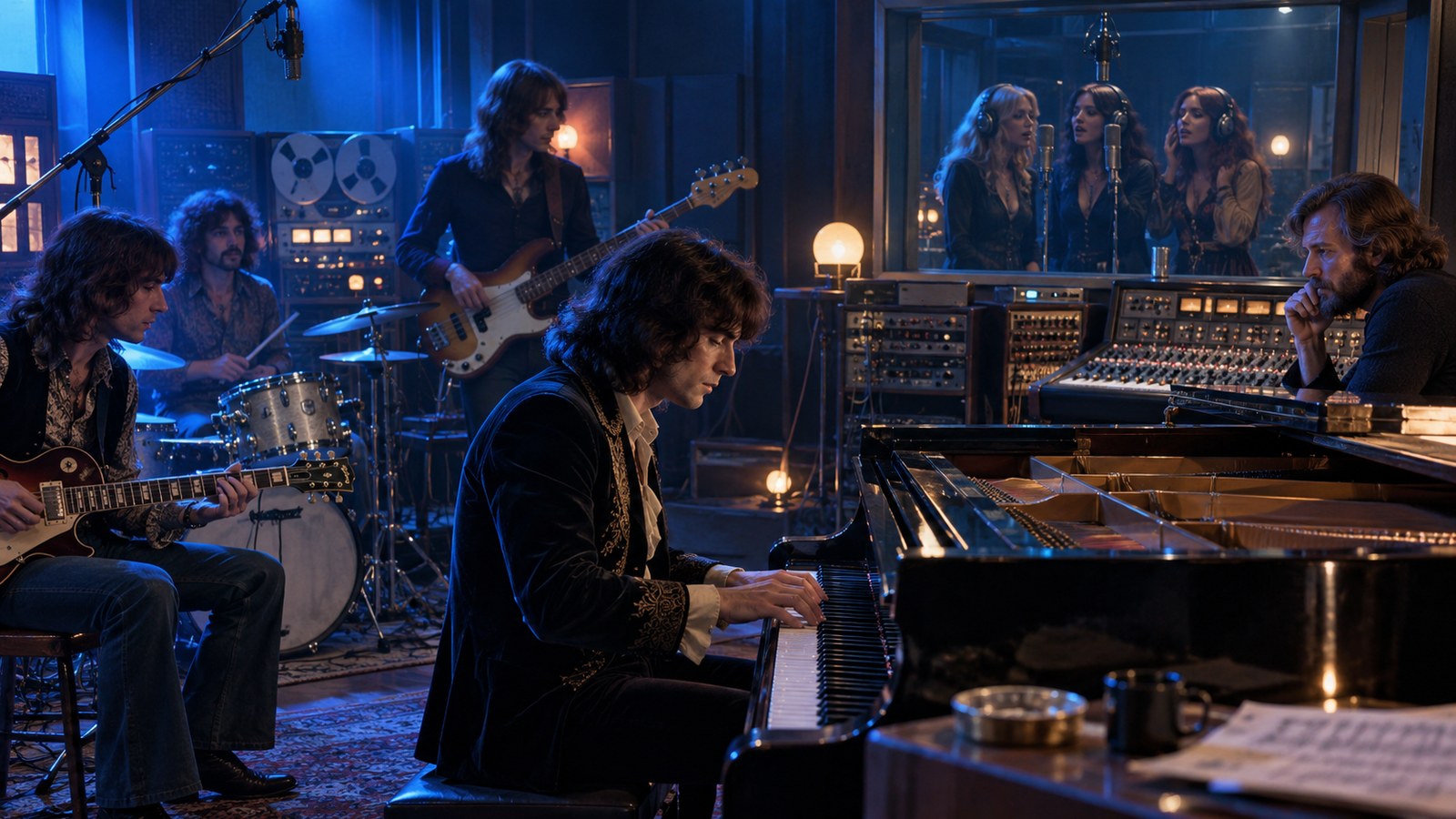
On October 31, 1975, Queen released Bohemian Rhapsody as a single in the United Kingdom. The nearly six-minute recording moved through intimate ballad, layered operatic voices, hard rock and a reflective ending without a conventional chorus. Freddie Mercury’s composition required extensive multitracking by the band and producer Roy Thomas Baker. Its length and structure made record-company executives uncertain about radio play, but disc jockey Kenny Everett repeatedly previewed the complete track. A carefully lit promotional video gave broadcasters a striking visual performance without requiring the touring band in every studio. The date captures the event before later reputation made its consequences look inevitable, when audiences encountered a new release, performance or institution with only the expectations available at the time.
The single tested whether mass audiences would follow a song that refused the usual scale and form of pop radio. Its success made studio construction itself audible, with technology serving arrangement and theatrical imagination rather than simple polish. Popular culture is never made by a famous name alone. Writers, performers, producers, technicians, broadcasters, retailers, venues and audiences shape what becomes visible and what survives. Their collaboration also determines which experiments reach the public and which disappear before they can build momentum. Looking at those conditions turns an anniversary from a list entry into a record of choices, limits and competing interests.
The record spent nine weeks at number one in Britain during its first run and returned to the top after Mercury’s death. Film, television, sports crowds and digital listening carried the song into new contexts. That afterlife matters because influence does not move in a straight line. Reruns, reissues, new technology, criticism and community memory can change the meaning of a work long after its first appearance. Durable pop history therefore holds creative achievement beside questions of labor, access, power and representation.
Release day launched a work whose familiarity has not eliminated its oddness. It remains a demonstration that formal excess can become communal when melody, performance and recording craft make complexity memorable. Returning to this October date means separating what participants knew then from what later audiences added. Recordings, photographs, broadcasts and recollections keep the moment active, but they also select and reshape it. That distinction protects against hindsight: a chart position, premiere, publication, concert or opening may become a neat milestone later, but the people present still faced uncertainty. Reading the moment in both directions—through its original conditions and its accumulated meanings—keeps celebration from replacing history. The distance between the immediate event and its continuing interpretation is what makes this episode worth revisiting.
The U.K. single was released on October 31, 1975.
On October 31, 1975, Queen released Bohemian Rhapsody as a single in the United Kingdom. The nearly six-minute recording moved through intimate ballad, layered operatic voices, hard rock and a reflective ending without a conventional chorus.
Freddie Mercury wrote the song.
The single tested whether mass audiences would follow a song that refused the usual scale and form of pop radio. Its success made studio construction itself audible, with technology serving arrangement and theatrical imagination rather than simple polish.
Its original British chart run spent nine weeks at number one.
The record spent nine weeks at number one in Britain during its first run and returned to the top after Mercury's death. Film, television, sports crowds and digital listening carried the song into new contexts.
Explore more of "On This Day ..."
Discover more events from the same date across news, politics, technology, sports, and other fields. Each link highlights significant moments that shaped history on different fronts.