

On This Day in Pop: November 10, 1969
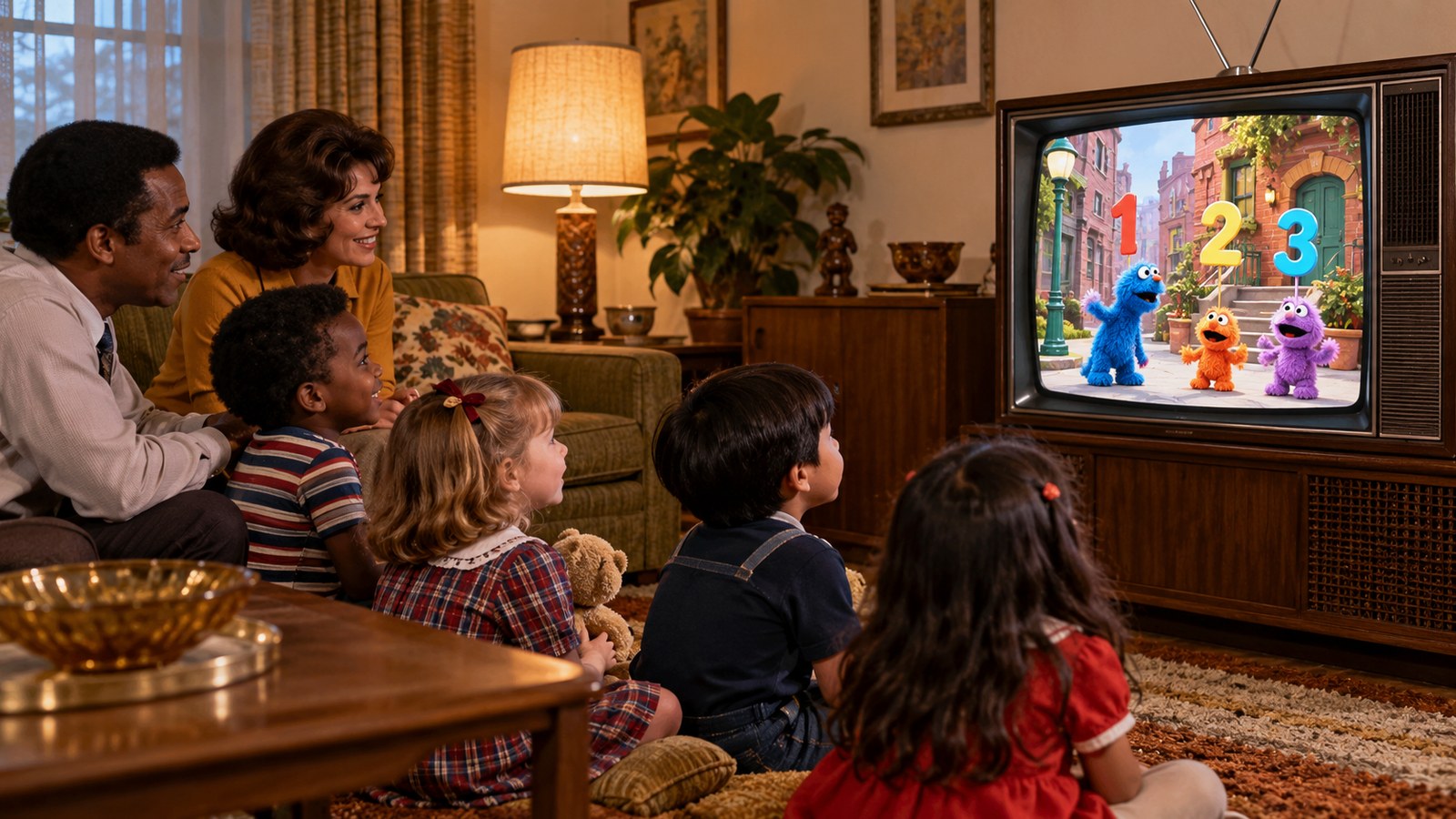
On November 10, 1969, Sesame Street premiered on public television stations across the United States. The first episode guided a child named Sally through an urban neighborhood populated by a diverse human cast, animation and Jim Henson’s puppets. Short segments used repetition, music and humor to teach letters, numbers and social skills. Joan Ganz Cooney and Lloyd Morrisett developed the project through the Children’s Television Workshop, combining educational research with techniques borrowed from commercial advertising. The target audience included preschoolers underserved by existing programs. The date captures the event before later reputation made its consequences look inevitable, when audiences encountered a new release, performance or institution with only the expectations available at the time.
The premiere treated television as a tool for reducing educational inequality rather than merely occupying children. Its integrated neighborhood and experimental pacing were ambitious, though advocates soon pushed the production to deepen Latino representation and women’s roles. Popular culture is never made by a famous name alone. Writers, performers, producers, technicians, broadcasters, retailers, venues and audiences shape what becomes visible and what survives. Their collaboration also determines which experiments reach the public and which disappear before they can build momentum. Looking at those conditions turns an anniversary from a list entry into a record of choices, limits and competing interests.
Research found learning gains among frequent viewers, and the show expanded internationally through adapted co-productions. Characters, songs and phrases moved beyond the classroom into recordings, films, products and shared family memory. That afterlife matters because influence does not move in a straight line. Reruns, reissues, new technology, criticism and community memory can change the meaning of a work long after its first appearance. Durable pop history therefore holds creative achievement beside questions of labor, access, power and representation.
Sesame Street established that rigorous educational design could produce joyful mass entertainment. Its survival depends on continuous revision: the street remains recognizable while lessons, language and community reflect new generations. Returning to this November date means separating what participants knew then from what later audiences added. Recordings, photographs, broadcasts and recollections keep the moment active, but they also select and reshape it. That distinction protects against hindsight: a chart position, premiere, publication, concert or opening may become a neat milestone later, but the people present still faced uncertainty. Reading the moment in both directions—through its original conditions and its accumulated meanings—keeps celebration from replacing history. The distance between the immediate event and its continuing interpretation is what makes this episode worth revisiting.
Sesame Street premiered on November 10, 1969.
On November 10, 1969, Sesame Street premiered on public television stations across the United States. The first episode guided a child named Sally through an urban neighborhood populated by a diverse human cast, animation and Jim Henson's puppets.
The Children's Television Workshop produced it.
The premiere treated television as a tool for reducing educational inequality rather than merely occupying children. Its integrated neighborhood and experimental pacing were ambitious, though advocates soon pushed the production to deepen Latino representation and women's roles.
The first episode introduced Sally to the street.
Research found learning gains among frequent viewers, and the show expanded internationally through adapted co-productions. Characters, songs and phrases moved beyond the classroom into recordings, films, products and shared family memory.
Explore more of "On This Day ..."
Discover more events from the same date across news, politics, technology, sports, and other fields. Each link highlights significant moments that shaped history on different fronts.