

On This Day in Pop: November 23, 1963
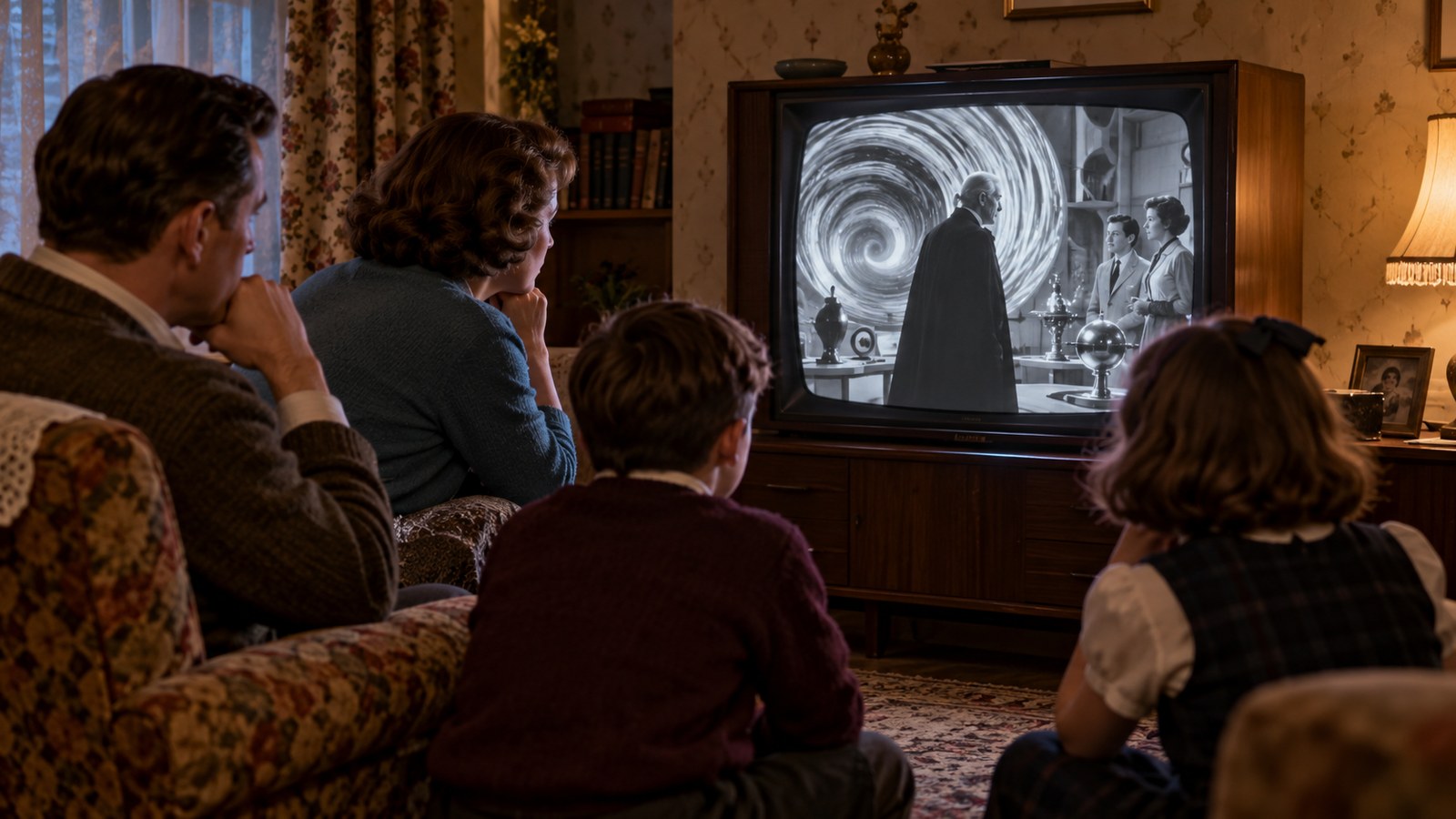
On November 23, 1963, the first episode of Doctor Who aired on BBC Television. An Unearthly Child introduced teachers Ian Chesterton and Barbara Wright, mysterious student Susan and her grandfather, the Doctor, before a police-box-shaped machine carried them into the past. William Hartnell played the guarded first Doctor. Sydney Newman wanted a family program that could use time travel to explore science and history. Verity Lambert produced, Waris Hussein directed and Delia Derbyshire realized Ron Grainer’s electronic theme at the BBC Radiophonic Workshop. The date captures the event before later reputation made its consequences look inevitable, when audiences encountered a new release, performance or institution with only the expectations available at the time.
The premiere mixed educational purpose with an unsettling modern mystery. Its tiny studio resources became an advantage: sound, shadow and a larger interior suggested that imagination could outrun budget. Popular culture is never made by a famous name alone. Writers, performers, producers, technicians, broadcasters, retailers, venues and audiences shape what becomes visible and what survives. Their collaboration also determines which experiments reach the public and which disappear before they can build momentum. Looking at those conditions turns an anniversary from a list entry into a record of choices, limits and competing interests.
Because the broadcast followed coverage of President Kennedy’s assassination, the BBC repeated the first episode before the second. The series expanded through changing actors, companions, formats and production eras into a global institution. That afterlife matters because influence does not move in a straight line. Reruns, reissues, new technology, criticism and community memory can change the meaning of a work long after its first appearance. Durable pop history therefore holds creative achievement beside questions of labor, access, power and representation.
The debut established regeneration before that word existed as a production solution: the central traveler could be reinterpreted. Curiosity, moral argument and a machine disguised as ordinary street furniture proved more durable than any single performer. Returning to this November date means separating what participants knew then from what later audiences added. Recordings, photographs, broadcasts and recollections keep the moment active, but they also select and reshape it. That distinction protects against hindsight: a chart position, premiere, publication, concert or opening may become a neat milestone later, but the people present still faced uncertainty. Reading the moment in both directions—through its original conditions and its accumulated meanings—keeps celebration from replacing history. The distance between the immediate event and its continuing interpretation is what makes this episode worth revisiting.
Doctor Who first aired on November 23, 1963.
On November 23, 1963, the first episode of Doctor Who aired on BBC Television. An Unearthly Child introduced teachers Ian Chesterton and Barbara Wright, mysterious student Susan and her grandfather, the Doctor, before a police-box-shaped machine carried them into the past.
William Hartnell played the first Doctor.
The premiere mixed educational purpose with an unsettling modern mystery. Its tiny studio resources became an advantage: sound, shadow and a larger interior suggested that imagination could outrun budget.
Verity Lambert produced the opening serial.
Because the broadcast followed coverage of President Kennedy's assassination, the BBC repeated the first episode before the second. The series expanded through changing actors, companions, formats and production eras into a global institution.
Explore more of "On This Day ..."
Discover more events from the same date across news, politics, technology, sports, and other fields. Each link highlights significant moments that shaped history on different fronts.