

On This Day in Science: March 9, 2011
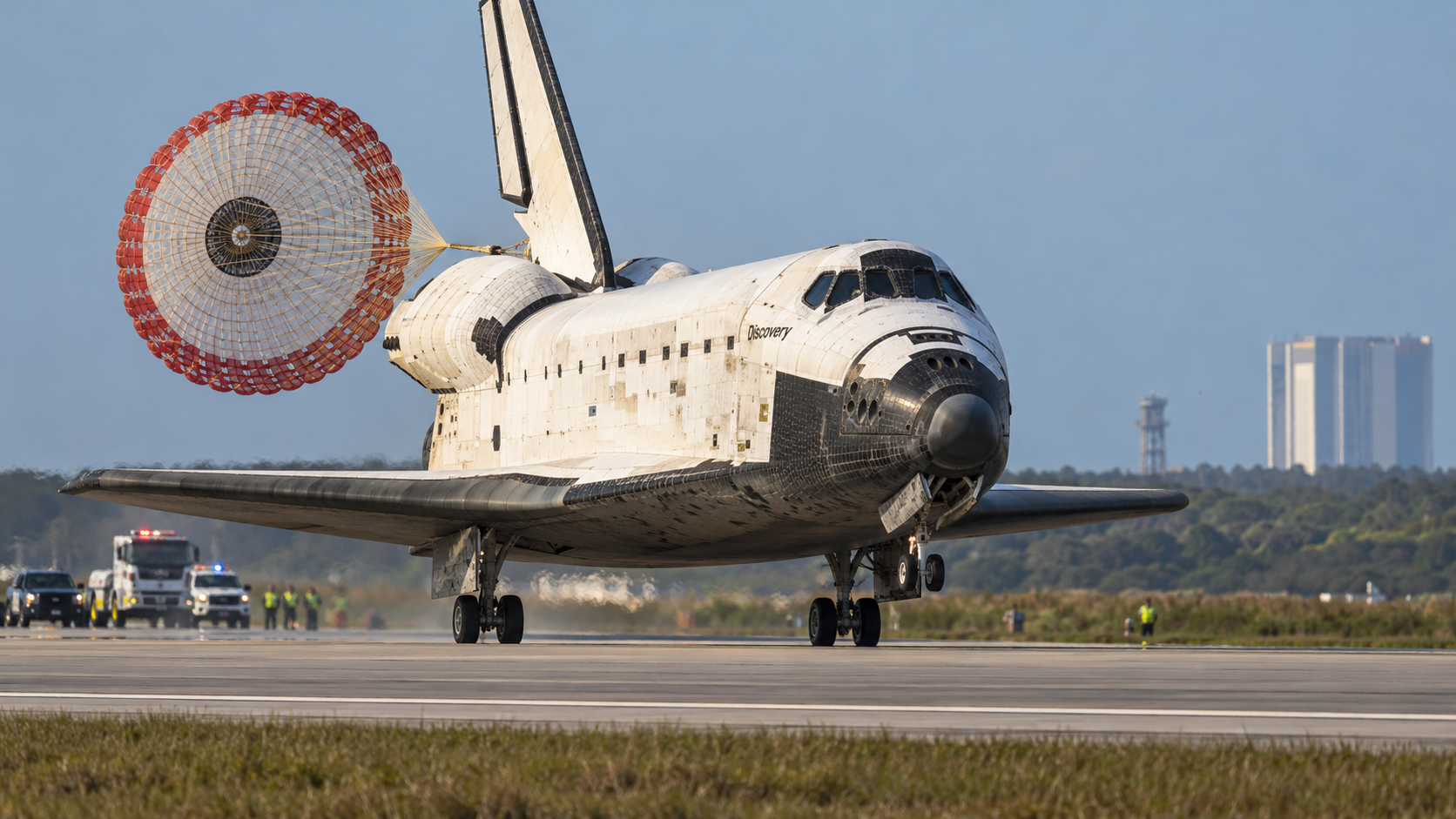
On March 9, 2011, Space Shuttle Discovery touched down at Kennedy Space Center at 11:57 a.m. EST, completing mission STS-133 and its final flight. Commander Steve Lindsey guided the orbiter onto the runway after nearly thirteen days in space. The landing closed a twenty-seven-year career in which Discovery flew thirty-nine missions, more than any other shuttle, and supported research, satellite deployment, repair, and construction of the International Space Station.
STS-133 delivered the Permanent Multipurpose Module Leonardo, an Express Logistics Carrier, spare equipment, and Robonaut 2 to the station. The six-member crew performed two spacewalks and helped prepare the outpost for continued operation after the shuttle era. Discovery’s large payload bay and robotic arm had made it an unusually capable construction and servicing vehicle, but those abilities came with the cost and risk of a complex reusable launch system.
Across its career, Discovery deployed the Hubble Space Telescope, launched the Ulysses solar mission, carried John Glenn back to orbit, and flew both return-to-flight missions after the Challenger and Columbia losses. Each assignment depended on a vast ground network for refurbishment, testing, launch, mission control, and recovery. The orbiter was reusable, yet thousands of components still required inspection and specialized care between flights.
After landing, Discovery was prepared for museum display at the Smithsonian’s Steven F. Udvar-Hazy Center. Its retirement formed part of the broader end of the shuttle program later in 2011. The final touchdown marked both achievement and transition: station science would continue, while NASA shifted crew transportation and deep-space planning toward new vehicles. Discovery’s record remains a material history of what winged orbital spacecraft could do—and what sustaining them demanded. For science history, the episode is also a case study in how evidence moves from an observation or engineered test into a durable body of knowledge. Instruments supplied measurements, specialists debated interpretation, and later work refined what the first result could mean. Archives preserve the early record while new methods let researchers ask different questions of it. That continuing revision is not a weakness in the original achievement; it is the process through which a dated milestone remains scientifically useful. Seen across a longer timeline, the event also shows that scientific milestones are junctions rather than isolated beginnings. Earlier experiments, tools, and institutions made the work possible, while later teams tested its limits and carried the result into new settings. What survives is more than an anniversary fact: it is a traceable chain of evidence, correction, and application that allows one moment to remain relevant as knowledge and technology continue to change. The anniversary also highlights the difference between a first result and a finished understanding. A successful observation can settle one question while opening several harder ones, and even a failed objective can return measurements that reshape later designs. Preserved data, specimens, photographs, and hardware allow new generations to revisit the work with better tools. Science advances through that continuity, where a specific date marks progress without pretending that inquiry stopped there.
Discovery returned to Kennedy after delivering a module, logistics carrier, spares, and Robonaut 2 to the station.
The touchdown completed the orbiter's thirty-ninth mission.
Discovery deployed Hubble, launched planetary and solar payloads, and carried crews to Mir and the ISS.
It also flew the two shuttle return-to-flight missions after national tragedies.
Retirement moved Discovery from an operating spacecraft into the Smithsonian's national collection.
Its final flight helped close the shuttle era while station operations continued.
Explore more of "On This Day ..."
Discover more events from the same date across news, politics, technology, sports, and other fields. Each link highlights significant moments that shaped history on different fronts.