

On This Day in Science: June 8, 1783
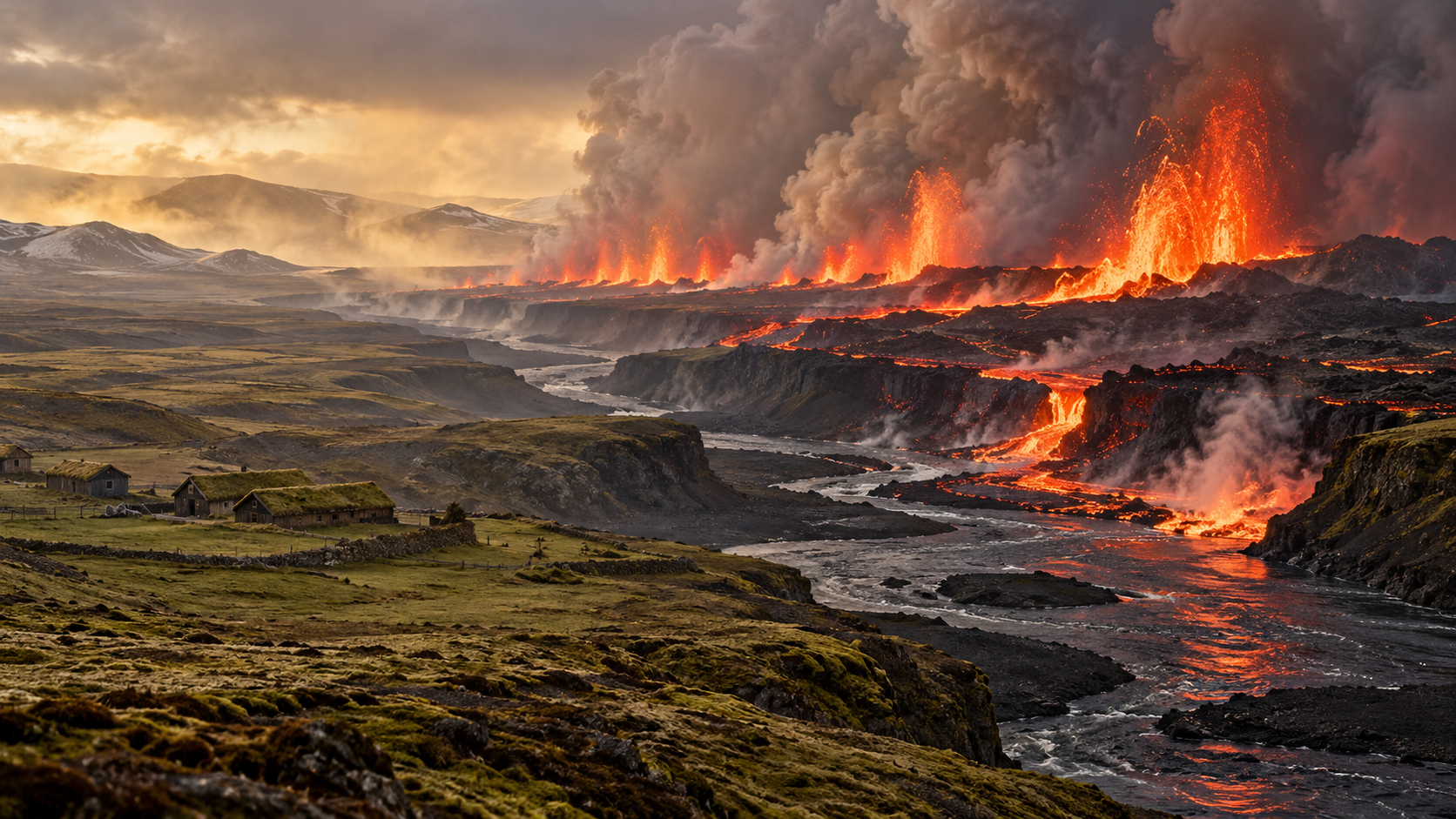
On June 8, 1783, a fissure eruption began in the Síða highlands of southern Iceland. Over the next eight months, the Laki system opened a chain of vents extending for tens of kilometers and produced one of the largest lava eruptions in recorded history. Fire fountains fed enormous flows that followed river valleys and transformed farms and grazing land.
The eruption released vast quantities of sulfur dioxide as well as fluorine-rich ash and gases. A persistent dry fog spread across Iceland and parts of Europe. Fluorine poisoning damaged livestock, while crop failures and the loss of animals contributed to famine and disease in Iceland. The human disaster came through connected volcanic, agricultural, and social processes.
Sulfur aerosols altered sunlight and atmospheric circulation, and contemporary observers recorded haze and unusual weather far from the vents. Researchers continue to reconstruct how much the eruption affected regional climate, harvests, and mortality. The links are complex because other natural variability and historical conditions acted at the same time.
Laki demonstrates that a largely effusive eruption can become a continental environmental crisis without a single towering explosive plume. Modern monitoring of Icelandic fissure systems now combines seismic, gas, satellite, and field measurements to track hazards that move through both lava and atmosphere. Its calendar date is an entry point, not an endpoint. The people involved worked with the instruments, assumptions, and social conditions of their time, and later research has both extended and corrected their conclusions. Separating what was known that day from what became clear afterward protects the history from myth and shows how cumulative evidence turns an episode into lasting scientific knowledge. For science history, the event also shows how evidence moves from an observation or engineered test into a durable body of knowledge. Instruments supplied measurements, specialists debated interpretation, and later work refined what the first result could mean. Archives preserve the early record while new methods let researchers ask different questions of it. That continuing revision is the process through which a dated milestone remains scientifically useful. Seen across a longer timeline, scientific milestones are junctions rather than isolated beginnings. Earlier experiments, tools, and institutions made the work possible, while later teams tested limits and carried the result into new settings. What survives is a traceable chain of evidence, correction, and application that allows one moment to remain relevant as knowledge and technology continue to change. The anniversary highlights the difference between a first result and a finished understanding. A successful observation can settle one question while opening several harder ones, and even a failed objective can reshape later designs. Preserved data, specimens, photographs, and hardware allow new generations to revisit the work with better tools. Science advances through that continuity rather than stopping on a memorable date.
The eruption migrated along a long line of vents in Iceland's volcanic rift zone.
Repeated fire fountains supplied lava flows that covered a vast area.
Sulfur pollution created haze while fluorine contaminated pasture and harmed livestock.
Food loss and disease amplified the disaster for Icelandic communities.
Aerosols affected radiation and weather, but historical climate had several interacting causes.
Researchers compare records, models, and chemical evidence rather than attributing every anomaly to one eruption.
Explore more of "On This Day ..."
Discover more events from the same date across news, politics, technology, sports, and other fields. Each link highlights significant moments that shaped history on different fronts.