

On This Day in Science: August 17, 1970
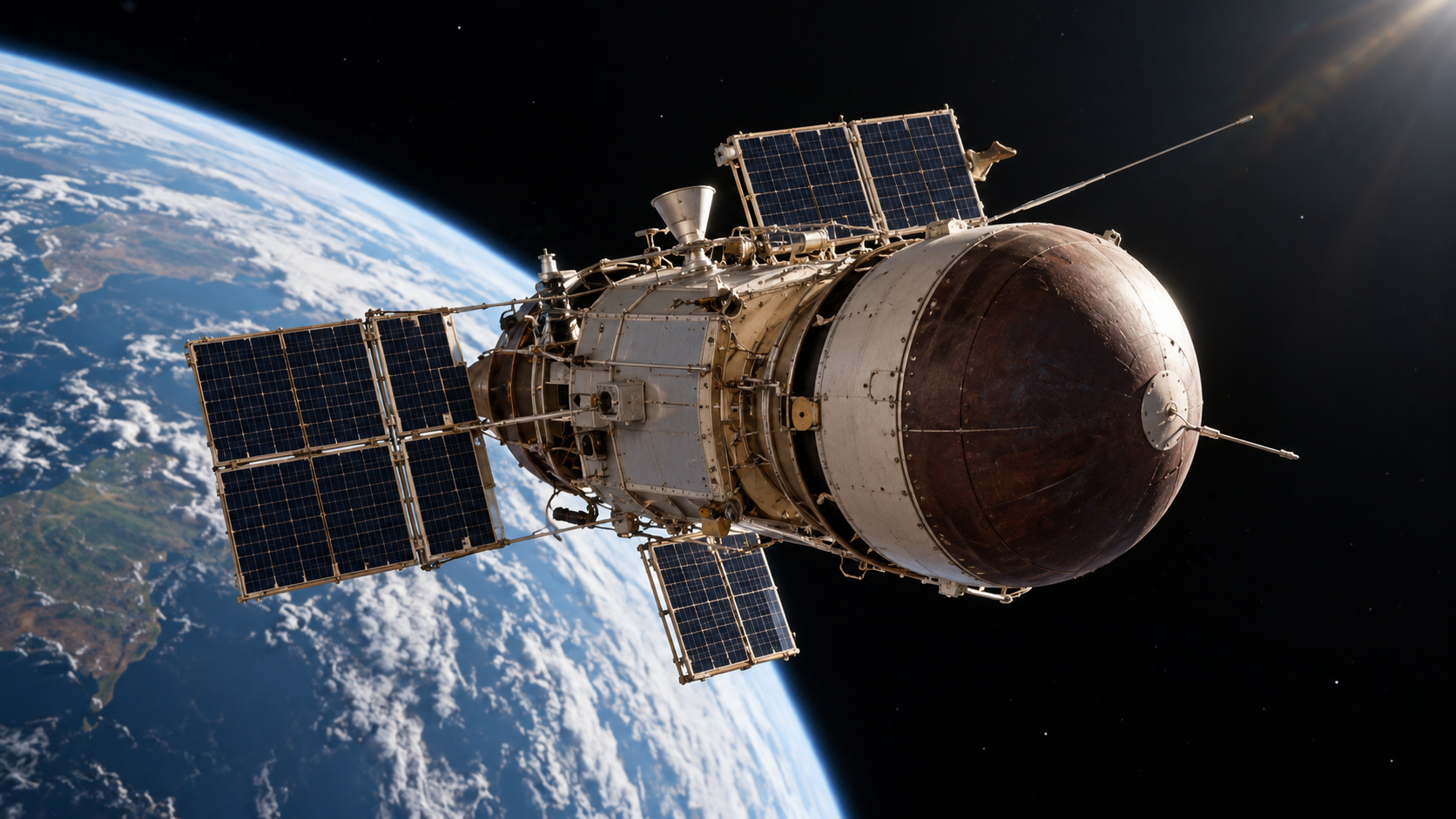
On August 17, 1970, the Soviet Union launched Venera 7 toward Venus from Baikonur. The spacecraft carried an orbiter-like cruise bus and a heavily reinforced spherical descent capsule. Engineers designed the lander to withstand temperatures and pressures far beyond those tolerated by earlier Venera probes.
Venus presented a severe engineering problem. Its carbon-dioxide atmosphere is dense, the surface pressure is roughly ninety times Earth’s, and temperatures are hot enough to melt lead. Venera 7’s capsule used thick walls, insulation, and a parachute system while instruments measured pressure and temperature during descent.
The probe reached Venus in December. Its parachute was damaged and the capsule struck the surface harder than planned, apparently landing on its side. A weak signal continued for about twenty-three minutes after touchdown. Careful later analysis separated those data from background noise and confirmed a surface temperature near 475 degrees Celsius.
The launch began the first mission to return information from the surface of another planet. Venera 7’s limited data were scientifically decisive and guided stronger Soviet landers that later transmitted images and chemical measurements from the hostile Venusian ground. For science history, the event also shows how evidence moves from an observation or engineered test into a durable body of knowledge. Instruments supplied measurements, specialists debated interpretation, and later work refined what the first result could mean. Archives preserve the early record while new methods let researchers ask different questions of it. That continuing revision is the process through which a dated milestone remains scientifically useful. Seen across a longer timeline, scientific milestones are junctions rather than isolated beginnings. Earlier experiments, tools, and institutions made the work possible, while later teams tested limits and carried the result into new settings. What survives is a traceable chain of evidence, correction, and application that allows one moment to remain relevant as knowledge and technology continue to change. The anniversary highlights the difference between a first result and a finished understanding. A successful observation can settle one question while opening several harder ones, and even a failed objective can reshape later designs. Preserved data, specimens, photographs, and hardware allow new generations to revisit the work with better tools. Science advances through that continuity rather than stopping on a memorable date. Its calendar date is an entry point, not an endpoint. The people involved worked with the instruments, assumptions, and social conditions of their time, and later research has both extended and corrected their conclusions. Separating what was known that day from what became clear afterward protects the history from myth and shows how cumulative evidence turns an episode into lasting scientific knowledge.
The spherical capsule was strengthened for a far denser atmosphere than expected earlier.
Insulation protected instruments during the hot descent and surface interval.
Parachute trouble increased the impact speed.
A faint radio signal survived after the capsule reached the ground.
Temperature measurements confirmed an extremely hot Venusian environment.
Later Venera missions built on the design with longer operations and cameras.
Explore more of "On This Day ..."
Discover more events from the same date across news, politics, technology, sports, and other fields. Each link highlights significant moments that shaped history on different fronts.