

On This Day in Science: October 7, 1959
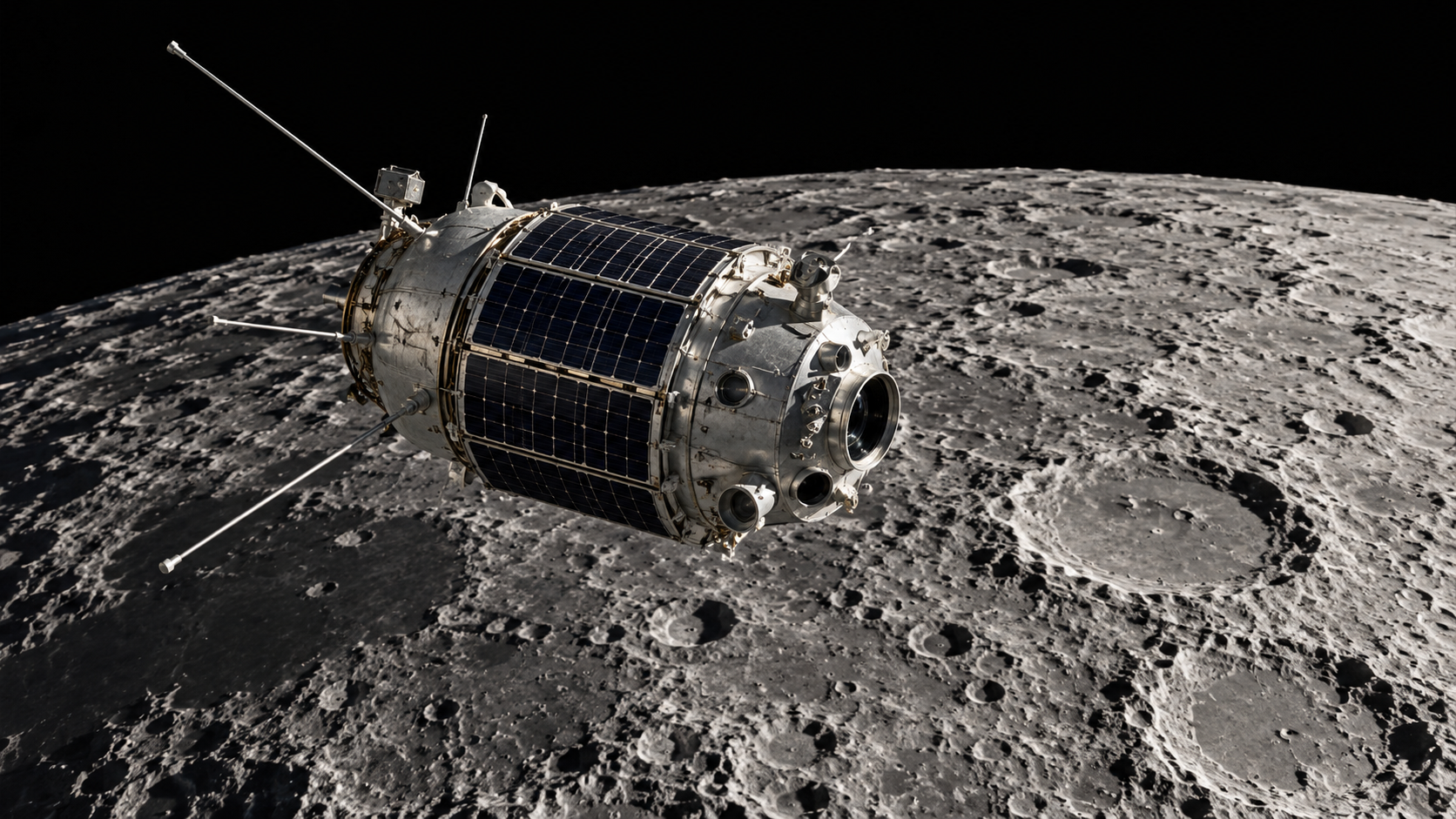
On October 7, 1959, the Soviet spacecraft Luna 3 photographed the far side of the Moon during a looping flight beyond the lunar farside. It was the first time a camera recorded the hemisphere permanently turned away from Earth by the Moon’s synchronous rotation.
The spacecraft used a dual-lens camera and radiation-resistant film. An automatic system developed and fixed the film aboard the probe, scanned the images electronically, and later transmitted them by radio when Luna 3 again had a favorable connection with Soviet receiving stations.
The first images were grainy and covered only part of the hidden hemisphere, but they revealed a striking scarcity of the broad dark maria familiar on the near side. Scientists could begin naming and mapping major far-side features from direct evidence rather than inference.
Luna 3’s improvised imaging chain solved photography, chemical processing, scanning, guidance, and deep-space communications in one compact vehicle. Later lunar orbiters mapped the far side in far greater detail, but the 1959 frames first completed humanity’s visual survey of its nearest world. The anniversary also illustrates how a scientific milestone becomes useful through records that later researchers can inspect. Instruments, notebooks, images, specimens, and engineering reports preserve more than a celebratory date: they show what was actually measured, what remained uncertain, and how conclusions changed as better methods became available. Placed in a longer timeline, the event was a junction rather than a finished answer. Earlier discoveries and technical work made it possible, while later teams tested its limits and applied the result in new settings. That traceable sequence of evidence and revision is what turns one day into a durable part of scientific history. The episode also separates a first demonstration from mature understanding. A successful observation or flight can settle one question while exposing harder problems in reliability, interpretation, safety, and scale. Preserved data allow later generations to revisit the achievement without confusing what was known on the date with what became clear afterward. Its calendar date is an entry point rather than an endpoint. The people involved worked with the tools, assumptions, institutions, and social conditions of their time. Later research has extended some conclusions and corrected others, showing how science advances by keeping evidence open to comparison instead of treating a memorable event as final. What makes the event scientifically important is not only priority, but the ability of others to check, repeat, compare, or build on the result. That process can reveal limitations hidden by the excitement of a first success. It also explains why careful archives and transparent measurements matter as much as the date remembered by the public.
The camera exposed ordinary photographic film behind two lenses.
A sealed automated laboratory processed and scanned the negatives aboard the spacecraft.
The returned frames showed fewer broad basaltic plains than the near side.
Even low-resolution images immediately changed ideas about lunar geography.
Radio transmission turned a brief flyby into a lasting cartographic record.
Orbiters later refined a view Luna 3 had opened for the first time.
Explore more of "On This Day ..."
Discover more events from the same date across news, politics, technology, sports, and other fields. Each link highlights significant moments that shaped history on different fronts.