

On This Day in Science: October 9, 1604
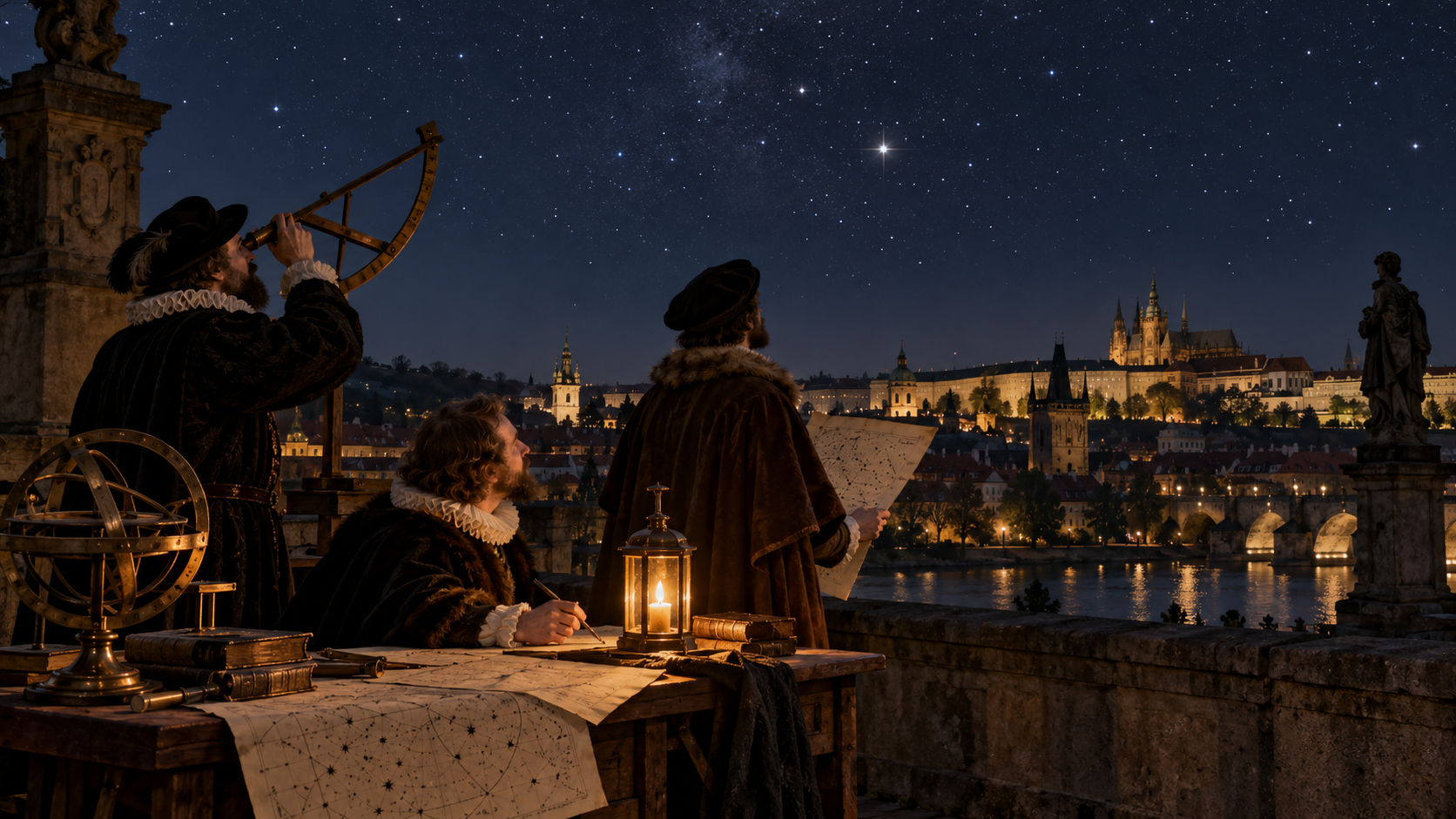
On October 9, 1604, sky watchers in Europe recorded a brilliant new object in the constellation Ophiuchus. The outburst, now known as Supernova 1604 or Kepler’s Supernova, became visible to the unaided eye and eventually grew brighter than most stars and planets.
Johannes Kepler began detailed observations on October 17 after clouds delayed his view. He measured its position and changing brightness for more than a year, publishing an extensive study. The object showed no detectable parallax, placing it among the fixed stars rather than in Earth’s atmosphere.
That conclusion challenged an old Aristotelian idea that the realm of the stars was permanent and unchanging. The event followed Tycho Brahe’s study of another supernova in 1572 and joined telescopic discoveries soon afterward in undermining the traditional division between a changing Earth and immutable heavens.
Modern observations identify the expanding remnant as the debris of a Type Ia supernova roughly twenty thousand light-years away. It remains the most recent supernova known to have been clearly observed within the Milky Way, giving astronomers a rare bridge between historical records and high-energy astrophysics. The episode also separates a first demonstration from mature understanding. A successful observation or flight can settle one question while exposing harder problems in reliability, interpretation, safety, and scale. Preserved data allow later generations to revisit the achievement without confusing what was known on the date with what became clear afterward. Its calendar date is an entry point rather than an endpoint. The people involved worked with the tools, assumptions, institutions, and social conditions of their time. Later research has extended some conclusions and corrected others, showing how science advances by keeping evidence open to comparison instead of treating a memorable event as final. What makes the event scientifically important is not only priority, but the ability of others to check, repeat, compare, or build on the result. That process can reveal limitations hidden by the excitement of a first success. It also explains why careful archives and transparent measurements matter as much as the date remembered by the public. Modern interpretations benefit from evidence that the original participants did not possess. New instruments and analytical methods can recover additional detail, while historical scholarship clarifies questions of credit, context, and consequence. Holding the original achievement and those later corrections together produces a more accurate account than either celebration or dismissal alone. The anniversary also illustrates how a scientific milestone becomes useful through records that later researchers can inspect. Instruments, notebooks, images, specimens, and engineering reports preserve more than a celebratory date: they show what was actually measured, what remained uncertain, and how conclusions changed as better methods became available.
Observers compared the object's position against background stars.
Its lack of measurable shift placed it far beyond the Moon.
Kepler did not make the first sighting but produced the most influential study.
Repeated estimates traced the object's rise and gradual fading.
X-ray and infrared telescopes now image shocked gas and newly forged elements.
The historical light and modern debris describe the same stellar explosion.
Explore more of "On This Day ..."
Discover more events from the same date across news, politics, technology, sports, and other fields. Each link highlights significant moments that shaped history on different fronts.