

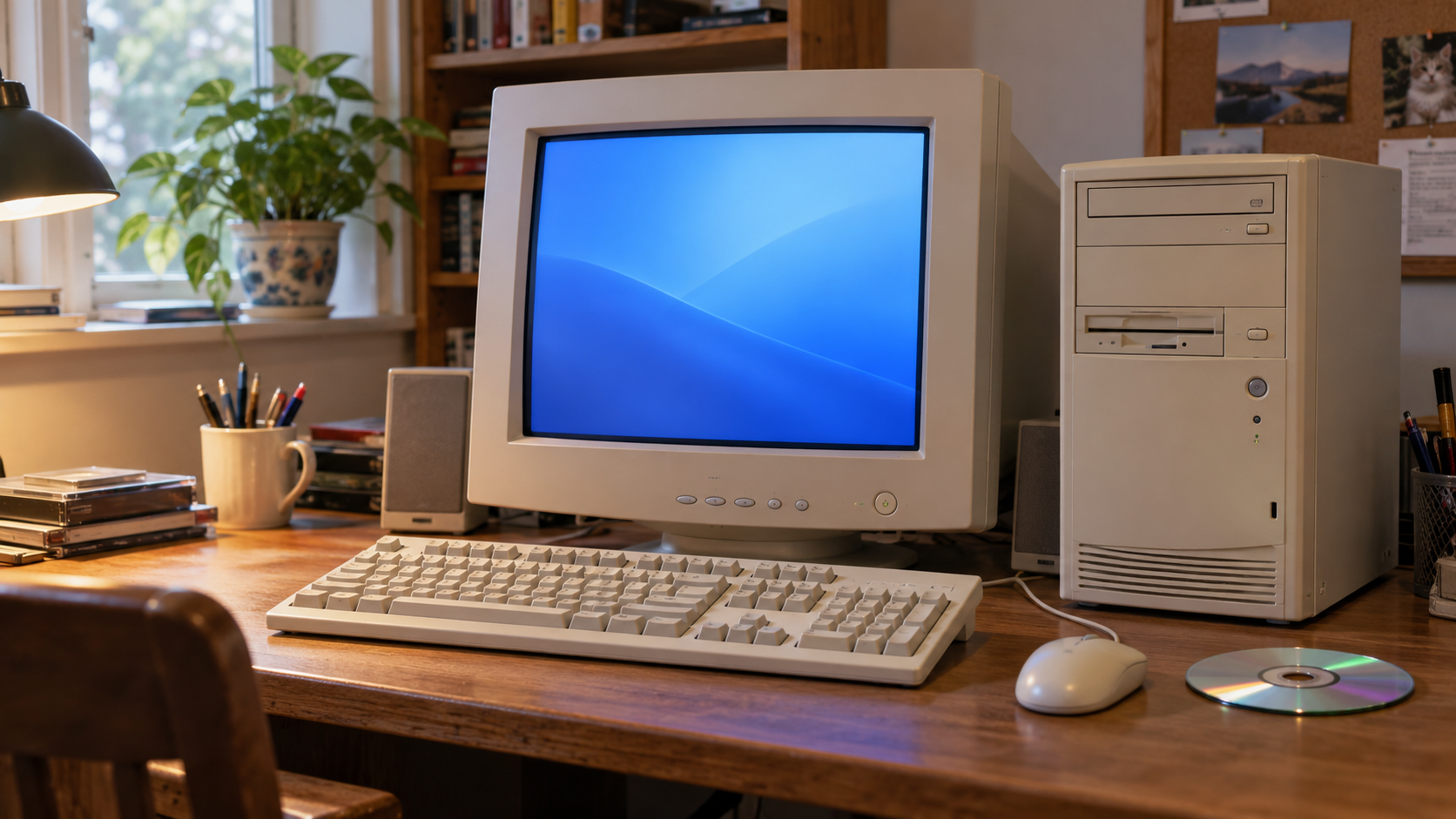
On This Day in Tech: October 25, 2001
On October 25, 2001, Microsoft announced the worldwide availability of Windows XP, launching the operating system for retail customers and new personal computers. The company held a major launch event in New York City, with additional activities in other markets. Home Edition and Professional Edition addressed different audiences while sharing a common technical foundation. The date marks general availability, not the first development build or the beginning of every customer evaluation. Windows XP arrived in a market where personal computers were increasingly used for digital photographs, music, video, networking, and internet access as well as for traditional documents and business applications.
A major architectural change was bringing the Windows NT family foundation into the mainstream home product alongside the professional version. Earlier consumer Windows releases had followed a different lineage. A shared foundation simplified some aspects of development and support while giving home users access to the newer architecture. That did not mean every older program or peripheral would work without adjustment. Manufacturers needed suitable drivers, software vendors had to test their applications, and users needed hardware capable of running the new system satisfactorily. An operating system’s practical reliability depended on the behavior of this wider collection of components, not simply on its central design.
Windows XP presented a redesigned visual appearance and tools intended to make common activities easier to find and manage. Home Edition emphasized personal media, communications, and household networking, while Professional added features suited to business administration and remote access. Buying an upgrade still required decisions about backing up files, checking compatibility, transferring settings, and choosing whether existing hardware was adequate. Microsoft and computer makers promoted new machines and upgrade arrangements around the launch. Those commercial efforts were part of bringing the platform to users, but a public demonstration and a successful everyday deployment remained different tests of a complex software system.
The operating system remained in use for many years and received updates and service packs that changed its practical behavior over time. Its long life also made the eventual end of routine support an important issue for organizations that depended on old applications or equipment. Historical popularity should not be read as a recommendation to use an unsupported system on today’s networks. October 25 is significant because it introduced a widely adopted platform that linked consumer and professional computing more closely. The milestone demonstrates both the influence of a major software release and the lasting responsibilities that follow it: compatibility, maintenance, security updates, and planned migration continue long after the launch celebration has ended.
Windows XP reached general availability on October 25, 2001. Microsoft introduced Home and Professional editions through a worldwide product launch.
The consumer product moved to the NT family foundation. That architectural change was distinct from the visible redesign of the desktop.
Drivers, applications, and hardware still required compatibility checks. An operating system operates within a much wider technical ecosystem.
Home and Professional editions emphasized different needs. Upgrading involved backups, settings, and practical deployment decisions as well as buying software.
Service packs and updates changed the system over its long lifetime. Later versions should not be confused with its original launch-day state.
Its history highlights long-term maintenance and migration obligations. Widespread past use does not make unsupported software appropriate for present-day connected systems.
Explore more of "On This Day ..."
Discover more events from the same date across news, politics, technology, sports, and other fields. Each link highlights significant moments that shaped history on different fronts.