

On This Day in Tech: October 26, 2012
On October 26, 2012, Windows 8 became generally available, bringing a major redesign of Microsoft’s operating system to consumers and businesses. A launch presentation in New York the previous day had introduced the release, but October 26 was the date customers could begin obtaining it through the worldwide retail and hardware launch. The software arrived alongside a broad range of computers and tablets designed to support different ways of working. Its most conspicuous change was a touch-oriented Start screen, but the release also involved application distribution, operating-system integration, and a renewed effort to connect conventional personal computing with emerging tablet use.
The interface replaced the familiar Start menu with a screen of tiles and emphasized interactions suited to fingers as well as keyboards and mice. Applications designed for the new environment could present information through tiles and use full-screen layouts. The traditional desktop remained available, creating a system with two distinct interaction styles. That combination reflected a difficult design problem: an established computer platform had to support existing programs and working habits while making room for devices without a permanently attached keyboard. A layout comfortable on a touch display was not automatically familiar or efficient for someone using a mouse on a conventional desktop monitor.
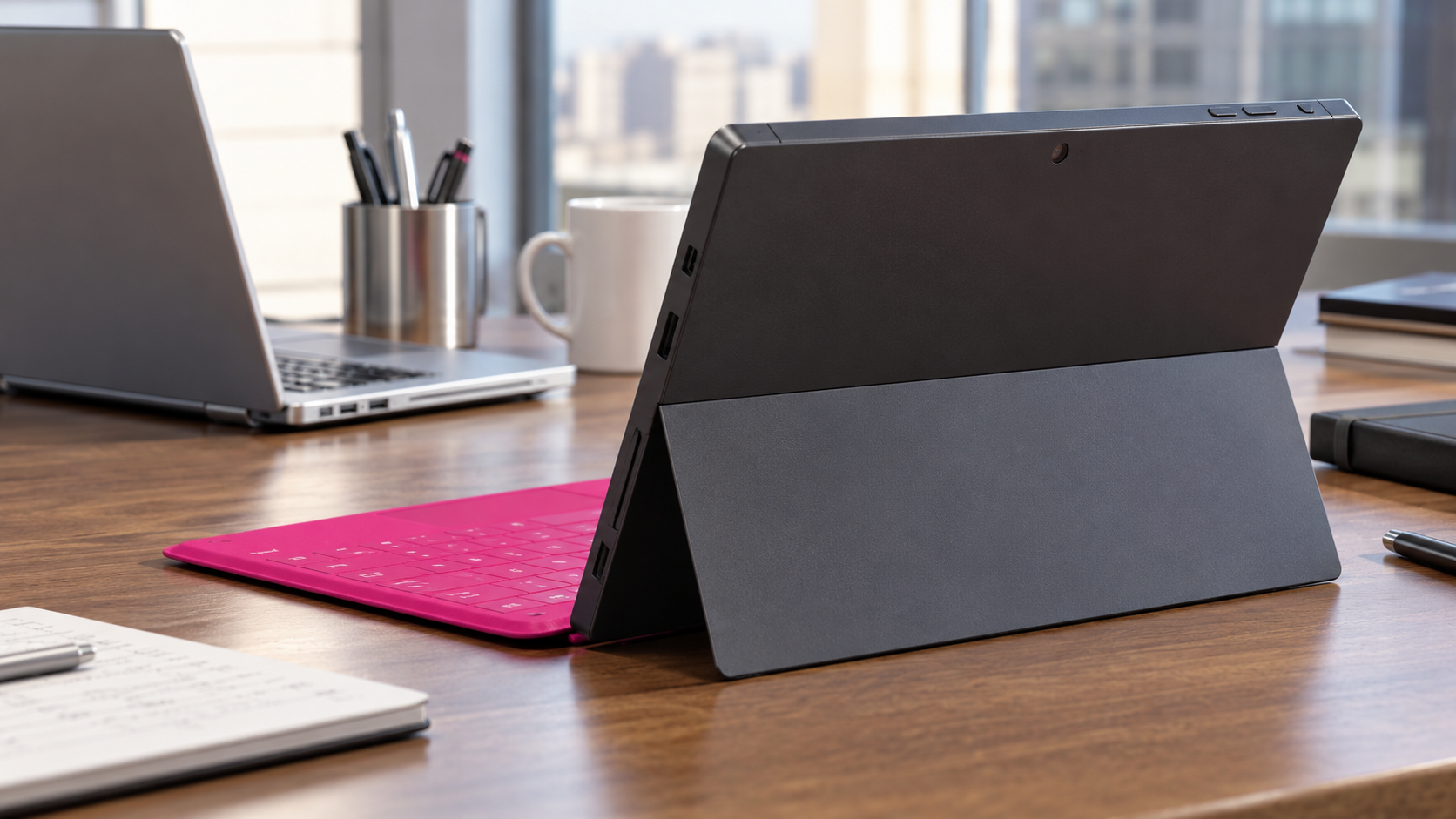
The Windows Store provided a new route for obtaining applications built for the updated environment. Hardware partners offered laptops, convertible computers, and tablets, while Microsoft’s own Surface line made the company’s hardware ambitions more visible. Important distinctions existed within that launch. Windows 8 for compatible PC processors was not interchangeable with Windows RT, the related system for ARM-based hardware. The original Surface with Windows RT could not run ordinary third-party desktop programs written for traditional Windows PCs. Buyers and administrators therefore had to examine architecture, application availability, peripheral support, and their actual workflow rather than assuming every device with a Windows appearance had the same capabilities.
The release became a prominent example of the challenges involved in changing a widely used interface. Later updates and successor versions revised parts of the experience, responding to practical use across different kinds of computers. Those later changes should not be confused with the original launch configuration. October 26 marks a significant attempt to make one established software ecosystem accommodate both touch-first devices and older desktop expectations. Its historical importance includes the effort to integrate new interaction methods, an application marketplace, and varied hardware designs. The lesson is not that one input method must replace all others, but that compatibility includes how people navigate and understand software as well as which programs can technically execute.
Windows 8 reached general availability on October 26, 2012. The previous day's presentation and the retail availability date are separate events.
A tile-based Start screen emphasized touch, while the traditional desktop remained. The system had to accommodate both new devices and established working habits.
The Windows Store introduced a new application-distribution route. Hardware partners offered a wide range of tablets, laptops, and convertible systems.
Windows RT on ARM was not equivalent to Windows 8 on a traditional PC. Ordinary third-party desktop applications could not simply be installed on the original RT tablet.
Later updates revised the experience. The launch remains a notable case of attempting a large interface transition across an established platform.
Usability and compatibility involve people as well as processors. A technically supported program and an understandable everyday workflow are different requirements.
Explore more of "On This Day ..."
Discover more events from the same date across news, politics, technology, sports, and other fields. Each link highlights significant moments that shaped history on different fronts.