

On This Day in Tech: October 24, 1861
On October 24, 1861, the first transcontinental telegraph connection in the United States was completed, linking existing eastern and western networks through Salt Lake City. The new line allowed messages to cross the continent electrically rather than depending on the entire journey being carried by horse, stagecoach, or ship. Construction crews had worked toward one another across difficult terrain, extending poles and wire over long distances. Completion was a network milestone rather than the invention of telegraphy itself. Established systems already served many communities; the achievement was joining those systems across a continental gap and making communication between the coasts much faster.
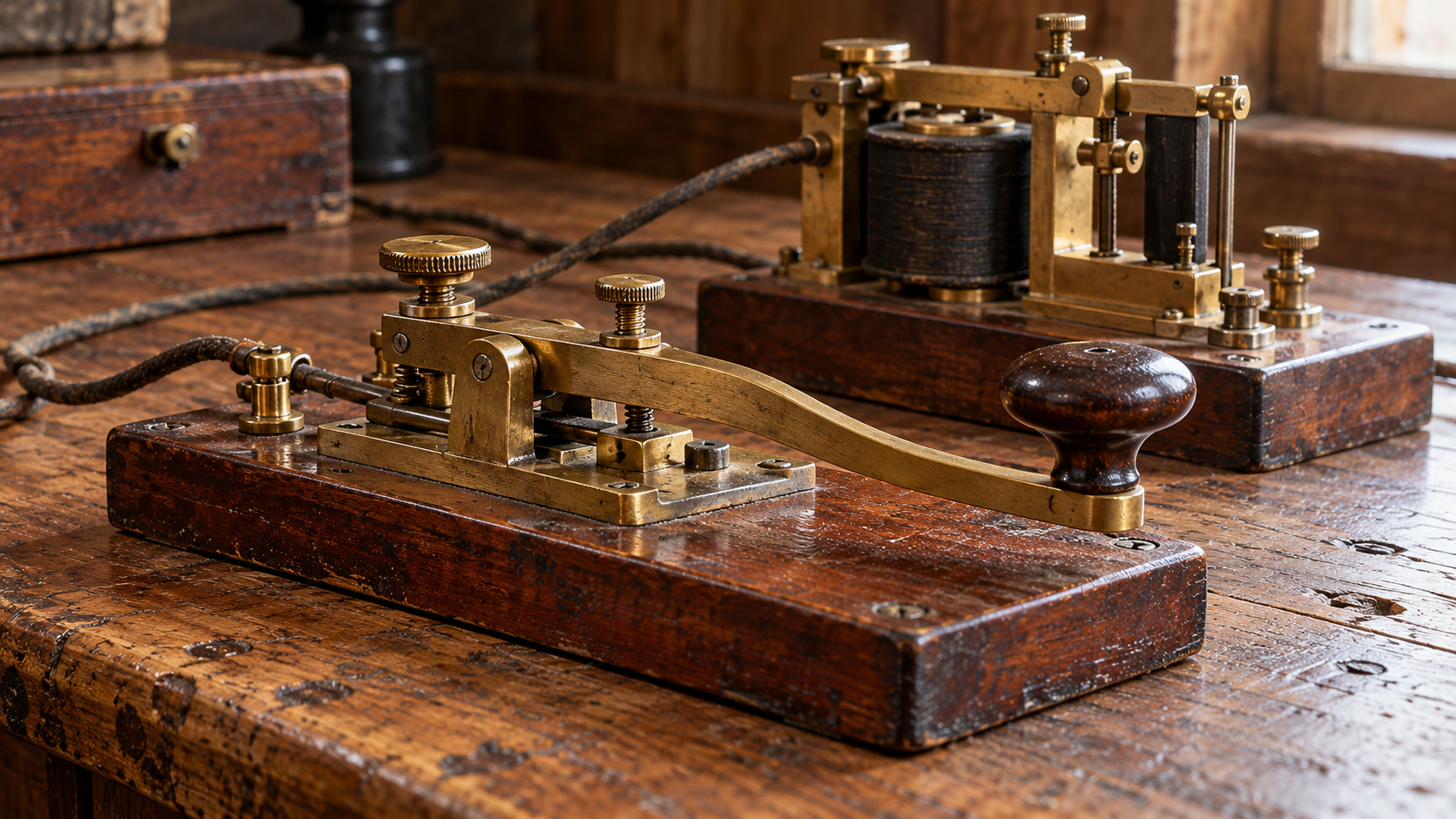
Telegraphy converted an operator’s actions into changes in an electrical circuit. A key opened and closed the circuit in patterns, and receiving equipment enabled another operator to interpret the coded message. The system transmitted symbolic information rather than the sound of a person’s voice. Long routes required power sources, instruments, relay arrangements, maintained wire, and staffed offices. The practical service also included accepting a customer’s message, identifying its destination, routing it, and delivering the resulting text. Speed along the wire mattered, but useful communication depended on this chain of equipment and human work at both ends and at intermediate points.
The overland connection crossed a landscape where supplies, labor, weather, and access presented continuing problems. Building the route was only the start of the maintenance obligation. Storms or damage could interrupt service, requiring workers to locate and repair faults across substantial distances. The line was completed during the Civil War, when rapid information had particular political and military importance. It also changed the economics of carrying urgent written messages overland, helping bring the brief Pony Express era to an end. The telegraph did not make physical transportation unnecessary: letters, goods, people, and documents still needed to travel, and some places remained far from a telegraph office.
The new connection altered expectations about how quickly distant events could become known. Government decisions, business instructions, and newspaper reports could reach recipients in a time frame no horse relay could match. Yet access was mediated by commercial offices, operating hours, cost, and the people who encoded and handled messages. October 24 marks an important stage in the creation of a connected national information infrastructure, not a modern internet appearing in nineteenth-century form. Its enduring technological lesson is the value of connecting separate local systems through a common long-distance service. The wire mattered because it linked organizations, procedures, and communities that could now act on information arriving from far beyond their immediate surroundings.
Telegraph networks already existed on both sides of the continent. The October 24, 1861 completion joined them through a new overland connection.
Salt Lake City became the meeting point of the construction effort. The milestone concerned a continental network, not the invention of telegraph equipment.
Keys, receiving instruments, circuits, power, and trained operators carried coded text. This was electrical telegraphy rather than voice telephony.
A long wire required continuing maintenance and repair. Costs and office access still limited how people used the service.
Rapid coast-to-coast messages changed news, administration, and business. The connection also helped displace urgent horse-relay communication.
Physical transportation remained necessary. The broader achievement was joining local networks into a service spanning a much larger geographic area.
Explore more of "On This Day ..."
Discover more events from the same date across news, politics, technology, sports, and other fields. Each link highlights significant moments that shaped history on different fronts.