

On This Day in Tech: October 27, 1904
On October 27, 1904, New York City’s first Interborough Rapid Transit subway opened, beginning service on a route of about nine miles with twenty-eight stations. The line connected City Hall with upper Manhattan through a system designed to move large numbers of passengers beneath busy streets. New York already had other forms of urban transportation, including elevated railways, so the opening was not the city’s first rail journey. Its importance was the operation of an integrated underground rapid-transit line. Tunnels, electric trains, platforms, entrances, tracks, signals, and power equipment had to function together before a passenger could make a useful trip.
Much of the route was constructed using cut-and-cover methods, opening a trench from the street and then restoring the surface above the completed structure. That approach presented difficult questions involving utilities, traffic, adjacent buildings, and the daily activity of a crowded city. Station locations and entrances had to connect the underground railway with the streets people actually used. The system was therefore an urban engineering project as well as a train design project. Its success depended on constructing a continuous route through an already developed environment, not simply finding an empty corridor where rails could be laid without affecting existing activities.
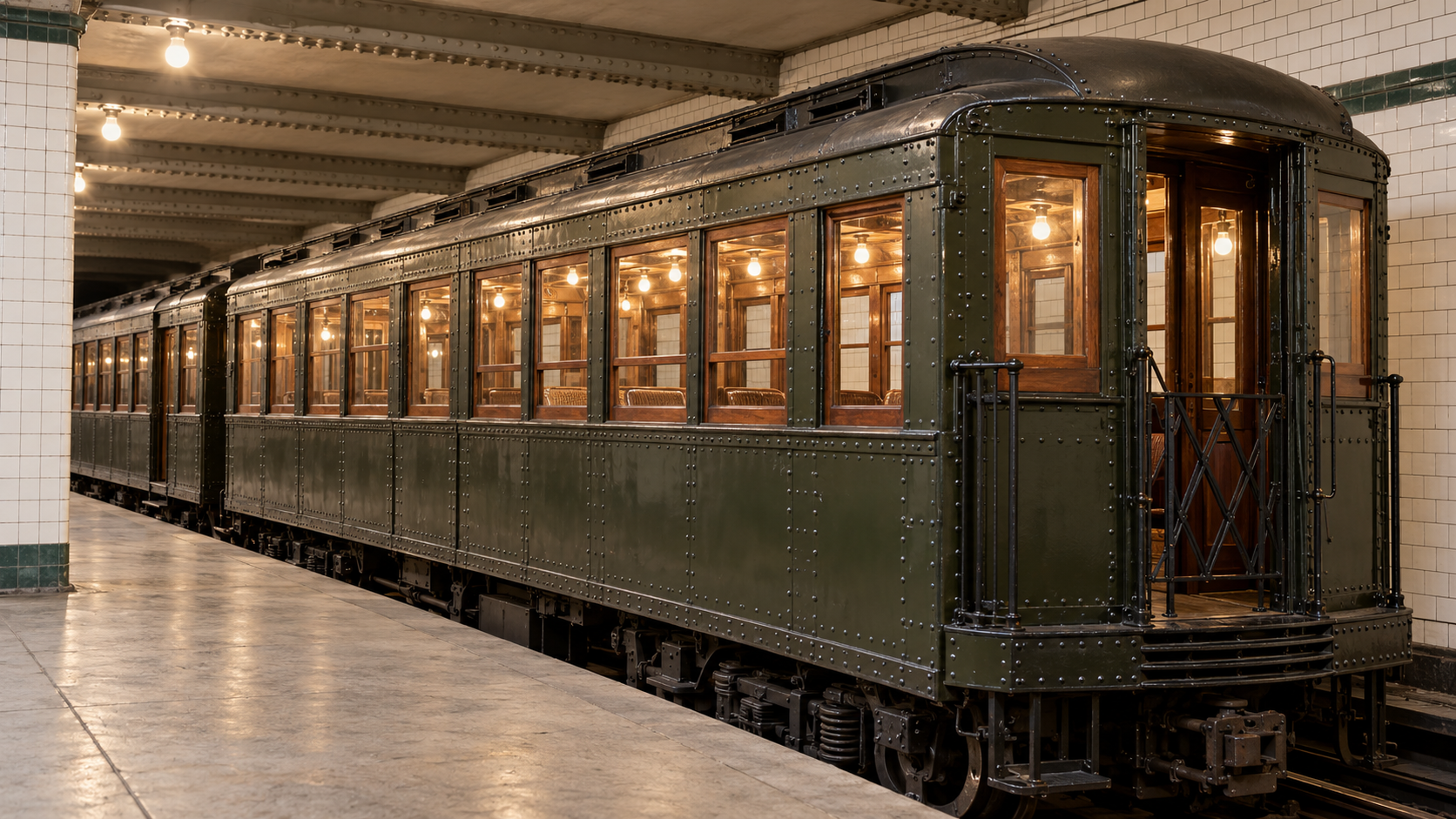
Electric traction offered advantages for enclosed urban tunnels, but required substantial supporting infrastructure. Power generation and distribution, substations, conductors, and motors formed a system that had to deliver dependable service under changing loads. Trains needed control equipment, braking systems, and procedures that allowed many movements to share the route safely. The original fleet included early car designs reflecting a transition toward stronger all-steel construction. Preserved vehicles illustrate the riveted metalwork, window arrangements, and relatively compact dimensions of the period. They should not be confused with later stainless-steel subway cars or with museum-platform features added long after the original line opened.
The subway subsequently expanded far beyond its initial route, becoming central to the city’s daily movement and development. Expansion and modernization required continuing work on capacity, maintenance, accessibility, equipment replacement, and connections among services. The October opening did not solve every transportation problem or provide equal access to every neighborhood. It did demonstrate the usefulness of combining electrical and civil engineering in a high-capacity public service. October 27 marks the start of that operating system, rather than the invention of underground railways worldwide. Its lasting technological significance lies in integration: individual vehicles could provide rapid transit only because tunnels, energy, signaling, stations, and coordinated human operations made repeated journeys possible across a dense urban environment.
The original IRT subway opened October 27, 1904. Its first route had twenty-eight stations and extended roughly nine miles through Manhattan.
New York already had elevated and surface transportation. The milestone was an integrated underground rapid-transit service, not the city's first railway.
Cut-and-cover construction had to accommodate streets, utilities, buildings, and daily urban activity. The railway was embedded in an existing city.
Electric trains required power infrastructure, signals, braking equipment, and operating procedures. Useful service depended on the complete system.
The network later expanded and modernized. Its original cars and stations should be distinguished from later vehicles and museum reconstructions.
The opening illustrates integration at urban scale. Repeated safe journeys depended on coordinated infrastructure and people as much as on the trains themselves.
Explore more of "On This Day ..."
Discover more events from the same date across news, politics, technology, sports, and other fields. Each link highlights significant moments that shaped history on different fronts.