

On This Day in Tech: November 29, 1972
November 29, 1972, is the date associated with Atari’s announcement of Pong, the coin-operated electronic table-tennis game developed in California. Engineer Allan Alcorn built the game for the young company founded by Nolan Bushnell and Ted Dabney. Players used rotary controls to move simple paddles and keep a bouncing square in play. This anniversary concerns the arcade product’s commercial introduction, not the invention of electronic games or the first time anyone tried its prototype. Development and local testing preceded the announcement, and surviving accounts do not establish that every early cabinet was manufactured, delivered, or installed on a single day.
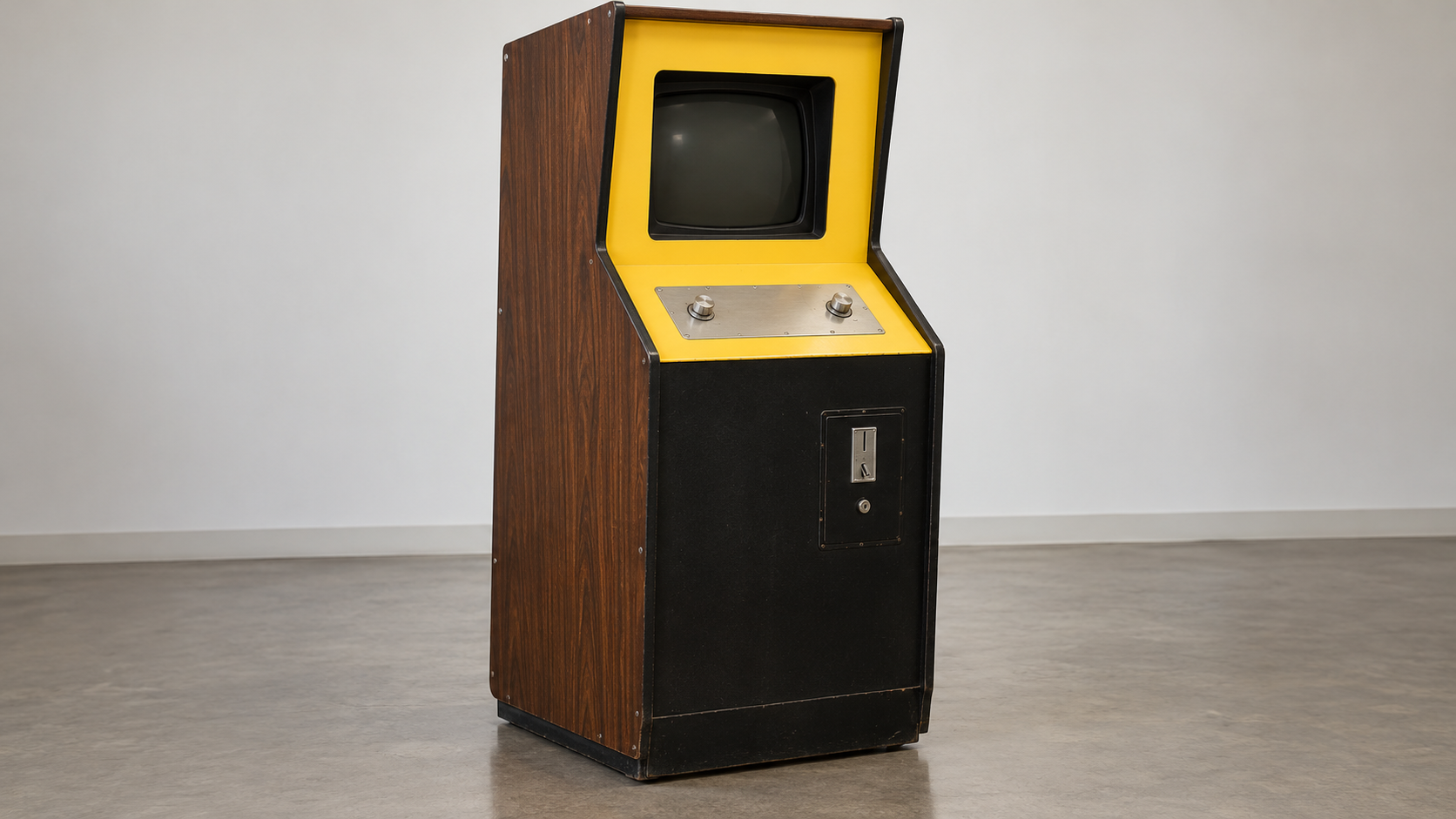
Pong made its challenge understandable almost immediately. Two players faced one another across a minimal visual field, with no elaborate story or instruction system to learn before the competition began. The cabinet joined a television display, dedicated electronic circuitry, physical controls, and a coin mechanism into a machine suitable for public venues. Its engineering differed from a modern computer running a downloadable game application. Alcorn worked with electronic logic to generate motion, detect encounters, manage play, and produce the feedback that made the small set of on-screen elements feel responsive. Apparent simplicity for the player depended on deliberate technical decisions.
Testing at Andy Capp’s Tavern in Sunnyvale helped demonstrate that people would pay to play. The prototype’s popularity is part of the lead-up to the commercial game rather than an event that should automatically be assigned to November 29. Pong also had predecessors: earlier electronic games existed, and the Magnavox Odyssey home system already offered a television tennis game. Calling Pong the first video game would therefore erase important developments that came before it. Its prominence rested instead on the attention it attracted, its suitability for repeated public play, and the business opportunity it helped reveal to manufacturers and operators.
Atari and competing companies subsequently expanded the arcade market, while a home version of Pong arrived in 1975. That later living-room product should not be confused with the original upright coin-operated cabinet. The broader legacy was a practical demonstration that an electronic game could become a widely recognizable commercial entertainment product. It also showed how an accessible control scheme and immediate feedback could matter as much as visual complexity. November 29 serves as a useful marker in that transition, provided the date is not asked to stand for the entire history of development, testing, and distribution. Pong’s lasting place in technology history comes from connecting a manageable engineering design with an experience that players wanted to repeat.
Museums date Atari's Pong announcement or introduction to November 29, 1972. Earlier prototype testing was a separate development stage.
Allan Alcorn engineered the game at Atari. The company's founders were Nolan Bushnell and Ted Dabney.
Rotary controls gave each player a direct way to position a paddle. A small visual vocabulary made the basic objective easy to understand.
Pong was not the first electronic game, and television tennis existed before it. Its importance should not depend on an inaccurate invention claim.
The home version appeared in 1975. Photographs of that product do not document the original 1972 arcade cabinet.
The exact sequence of early cabinet deliveries should not be reduced to one anniversary date. Commercial adoption grew through manufacturing, distribution, and repeated play.
Explore more of "On This Day ..."
Discover more events from the same date across news, politics, technology, sports, and other fields. Each link highlights significant moments that shaped history on different fronts.