

On This Day in Tech: December 4, 1996
On December 4, 1996, NASA launched Mars Pathfinder aboard a Delta II rocket from Cape Canaveral Air Force Station in Florida. Managed by the Jet Propulsion Laboratory, the mission carried a lander and the small Sojourner rover toward Mars. It was intended to demonstrate a comparatively economical way to deliver scientific equipment and a mobile robot to the planet’s surface. The launch began an interplanetary journey, not a landing or a rover drive. Pathfinder would reach Mars in July 1997, after months of cruise operations and navigation work that remained ahead when the rocket left the Florida launch site.
The mission followed a long gap in successful American surface exploration after Viking. Pathfinder pursued a smaller technology-demonstration approach, testing whether a compact spacecraft and rover could produce useful results within tighter resource limits. Its entry and landing system combined atmospheric braking, a parachute, rockets, and airbags to protect the lander during its final arrival. This arrangement differed from both the Viking landing system and the sky-crane method developed for much larger rovers later. Those distinctions matter because Mars exploration has not depended on a single landing technique repeatedly enlarged without fundamental changes to suit the payload.
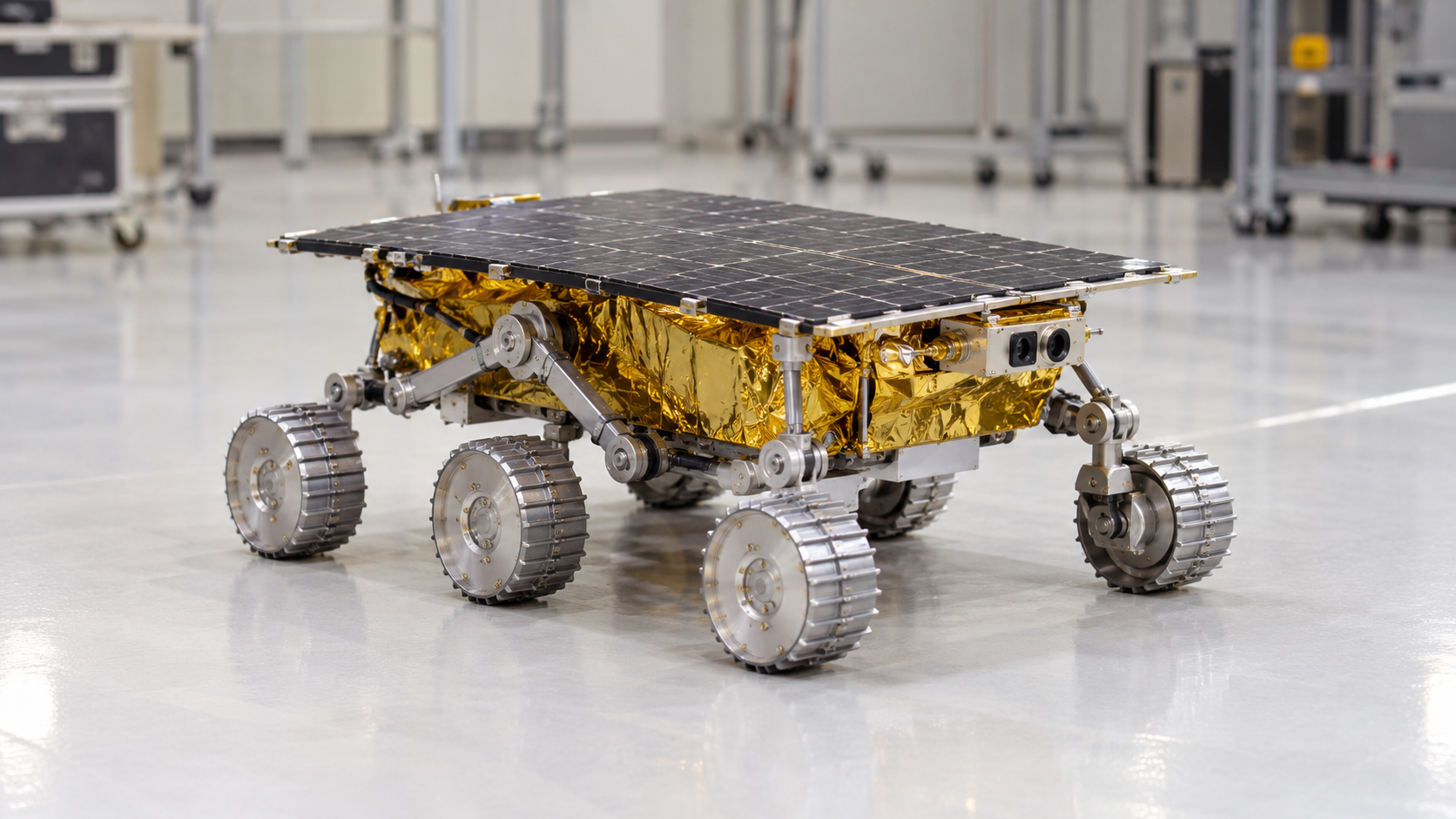
Sojourner added mobility to the experiment. Its six wheels and compact suspension allowed it to travel away from the lander to inspect nearby materials. Solar cells supplied power, and the rover communicated through the lander rather than operating as an independent interplanetary transmitter. The lander also provided its own observations, including images and measurements of local atmospheric conditions. Mission planners had to coordinate these elements with limits on energy, communications, operating time, and the terrain accessible to a very small vehicle. A useful rover therefore required more than wheels: it needed a supporting spacecraft and a workable plan for gathering and returning information.
Pathfinder landed in Ares Vallis on July 4, 1997, and Sojourner subsequently became the first successfully operated rover on Mars. Both the lander and rover exceeded their planned operating periods, returning images and measurements while demonstrating unfamiliar ways of landing and exploring. Their success did not prove that every future payload could use the same design, but it supplied practical experience with surface mobility and mission operations. December 4 marks the departure that made that later achievement possible. The launch belongs to a sequence of separate engineering milestones, from delivery into space through cruise, arrival, deployment, and useful exploration, each of which had to work before the mission’s promise became a result.
The December 4 event was the launch from Florida. The landing in Ares Vallis occurred on July 4, 1997.
Pathfinder combined a stationary lander with the mobile Sojourner rover. Each component had its own role in the mission.
Airbags were part of a larger entry and landing sequence, not a substitute for every other method of slowing the spacecraft.
Sojourner relied on the lander for its communications link to Earth. Mobility did not make it a completely independent mission.
The rover demonstrated practical surface exploration at a small scale. Much larger later rovers required different equipment and landing solutions.
Both vehicles outlasted their planned operating periods. Their engineering value included lessons about deployment, driving, communications, and coordinated operations.
Explore more of "On This Day ..."
Discover more events from the same date across news, politics, technology, sports, and other fields. Each link highlights significant moments that shaped history on different fronts.