

On This Day in Tech: December 18, 1958
On December 18, 1958, the United States launched Project SCORE aboard an Atlas vehicle from Cape Canaveral, Florida. Developed by the Army Signal Corps as an Advanced Research Projects Agency project, the payload tested whether an orbiting communications package could receive signals from Earth and send them onward. The Air Force provided the Atlas launch vehicle, which entered orbit along with the equipment. SCORE is recognized as the first communications satellite. Its launch demonstrated an early route toward space-based radio relay, but it did not create a permanent global network or put an ordinary telephone exchange into unrestricted worldwide service.
The experiment addressed a basic limitation of terrestrial radio links: geography and Earth’s curvature can prevent two distant stations from communicating directly at a chosen frequency. Equipment above the atmosphere could provide another path, but the satellite and ground stations still needed compatible radios, usable visibility, sufficient power, and a way to control transmissions. SCORE tested both immediate relay and a stored-message approach. In the latter, a recorder retained information until a later command caused it to be sent. This made it possible to separate the time when a message was received from the time and location of its later transmission.
The mission became publicly memorable through a recorded Christmas message from President Dwight Eisenhower. The presidential library dates that satellite goodwill broadcast to December 19, the day after launch. It should therefore be distinguished from the December 18 event commemorated here. The demonstration joined an accessible human voice with a complex chain of recording, launching, commanding, transmitting, and receiving. It was not a live speech delivered by a president traveling in space. Ground recording and reception remained part of the system, while the orbiting hardware carried out the experimental relay functions.
SCORE’s short experimental life left major requirements for later missions: longer-lasting power, improved control, greater capacity, reliable tracking, and networks that could provide service when customers actually needed it. Subsequent communications satellites developed those capabilities through several different designs rather than one direct leap from a Christmas recording to modern global connectivity. The anniversary’s significance lies in a clear engineering demonstration. A message could be treated as information carried through a coordinated space-and-ground system, either relayed promptly or stored for later delivery. December 18 marks the launch that made those tests possible, while the later broadcast supplied a widely understandable example of why orbital communications might matter beyond the small teams building the first equipment.
SCORE expanded the role of an artificial satellite beyond sending a simple beacon. It investigated carrying communications received from the ground and delivering them through a controlled relay.
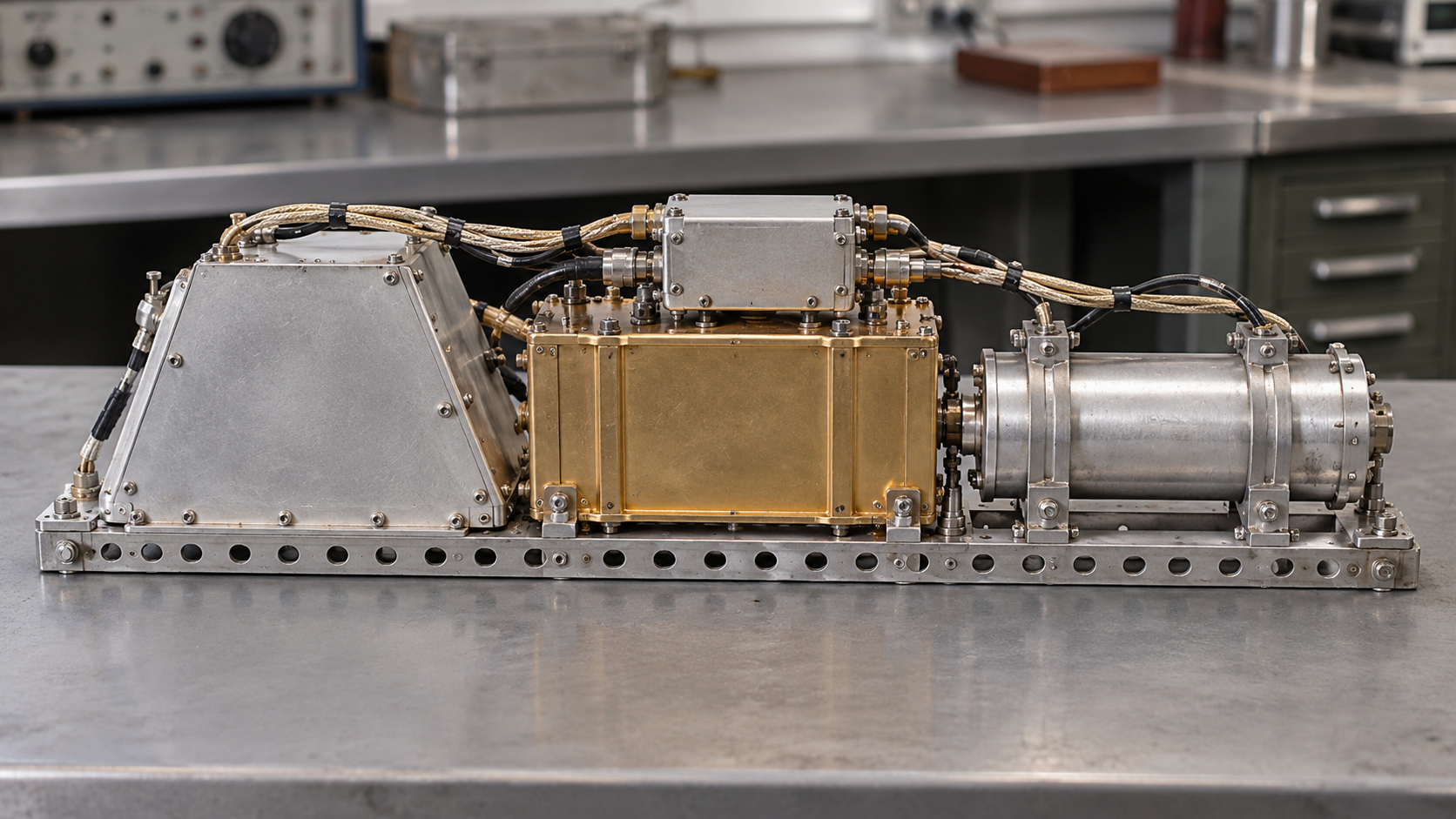
The Smithsonian artifact is a backup electronics payload. Its surviving metal housings and wiring provide a hardware reference without implying that the flown equipment was recovered.
The December 18 launch and December 19 presidential message are separate milestones. Their close timing often causes anniversary summaries to combine them.
Store-and-forward operation makes the recorder part of the communications path. Sender and receiver need not be visible to the satellite at the same moment.
The experiment showed feasibility, not a finished global service. Continuous coverage and substantial capacity required later spacecraft and a larger operational network.
SCORE's public demonstration helped explain a technical idea in familiar terms: an ordinary recorded voice could make a journey through equipment in orbit and be heard back on Earth.
Explore more of "On This Day ..."
Discover more events from the same date across news, politics, technology, sports, and other fields. Each link highlights significant moments that shaped history on different fronts.