

Interlibrary Loan Explainer
Interlibrary loan, commonly shortened to ILL, is the process by which one library requests material from another library for a specific user. It expands access without requiring every library to purchase and store every book, article, recording, or specialized item its community might need. The reader normally works through a home library, which acts as the requesting library. A second institution becomes the lending library if it owns an eligible copy and agrees to supply it. The service may deliver a physical item for temporary use or, when copyright and license terms allow, a digital copy of a journal article or book chapter.
The process usually starts after a catalog search shows that the desired item is not locally available. The user supplies identifying information such as title, author, edition, publication year, or article citation. Library staff verify the request because a small error can point to the wrong work or edition. They also check local subscriptions, electronic holdings, nearby consortium catalogs, and the library’s ILL rules. If borrowing is appropriate, staff use a resource-sharing network or another agreed channel to identify libraries that report owning the item and to send a standardized request. The request carries library identifiers and lending preferences, so the reader does not have to negotiate directly with distant institutions.
Potential lenders evaluate the request against their current holdings and policies. A book shown in a catalog may already be checked out, on reserve, missing, too fragile to ship, or restricted to use inside the building. Electronic books and databases may have licenses that prohibit lending outside the subscribing institution. For a physical loan, the lender sets a due date and any conditions, then ships the item to the requesting library. For an eligible copy request, the lender may provide a secure electronic document rather than mailing a volume. The owning library retains control over how its material travels and may require in-library use. If one lender declines, the request can move to another candidate.
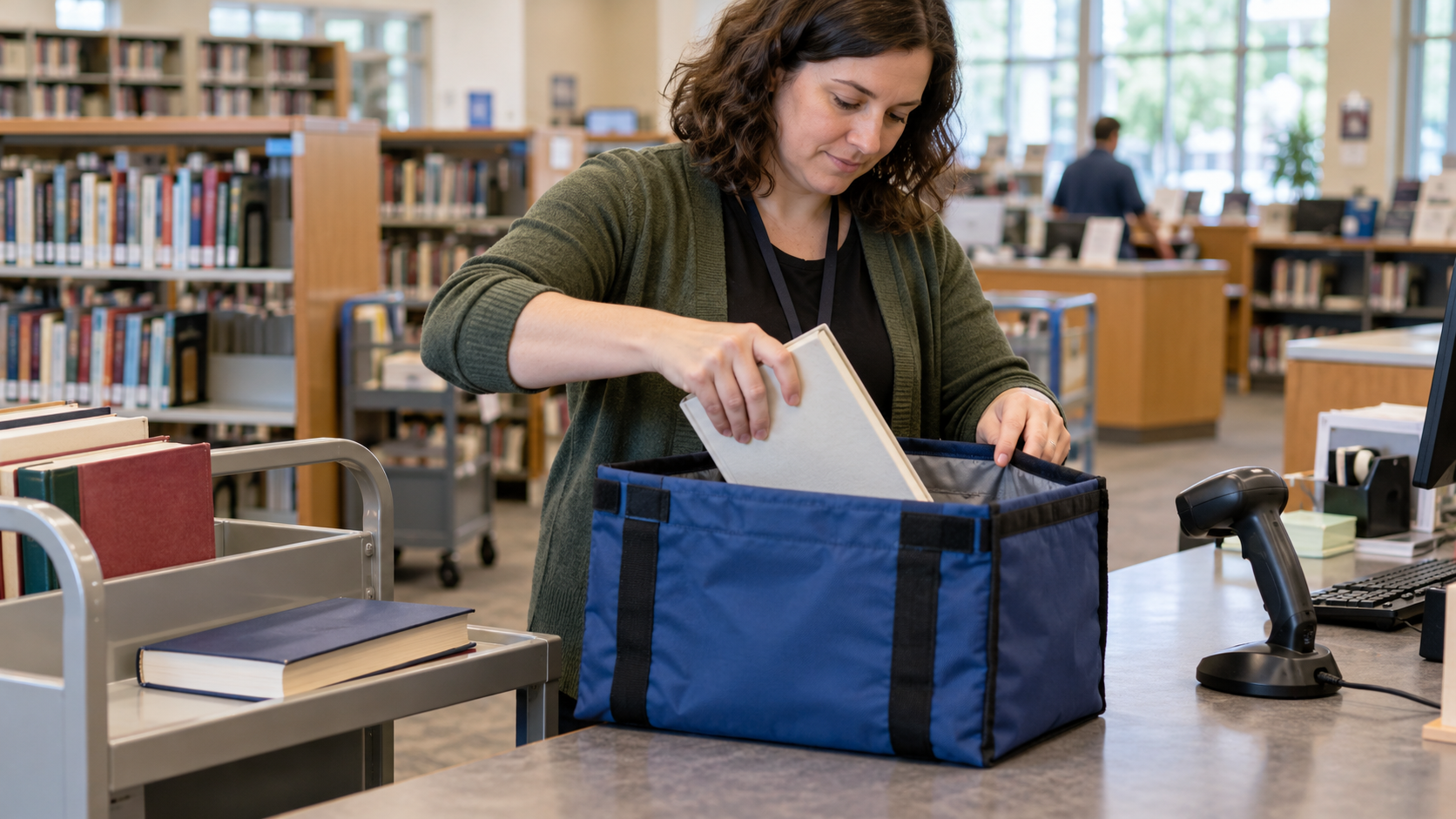
When a physical item arrives, the requesting library creates a temporary circulation record, notifies the user, and lends it under the conditions supplied by the owner. The borrower returns the item to the requesting library, which checks it in, packages it, and sends it back. Renewals are possible only when both libraries’ policies and the item’s status allow them; the local library cannot unilaterally extend another institution’s loan. Some systems track requests automatically, but staff still resolve citations, choose lenders, manage packaging, and communicate special restrictions.
ILL is powerful, but it is not an instant or unlimited substitute for a local collection. Delivery time varies with availability, shipping distance, staffing, and the number of libraries asked. Some materials carry borrowing or copying fees, although many libraries absorb or waive them through reciprocal agreements. Recently published books, textbooks, entire journal issues, rare materials, audiovisual items, and genealogical records may be difficult or impossible to borrow. Copyright law, licensing, privacy practices, and institutional agreements also shape what can be supplied. Users should request early and provide the most complete citation they can.
The system works because libraries treat sharing as a cooperative public service. A small library can give its patrons access to specialized research collections, while a large research library can receive local or regional material it does not own. Shared catalogs and electronic request networks help staff discover holdings and move requests efficiently, but the essential exchange is still library to library. For readers, the practical lesson is simple: an empty local search result is not always the end of the search. Asking the library about ILL can turn a distant holding into a temporary, usable resource while preserving the owning library’s control of its collection.
Interlibrary loan lets one library request eligible material from another for a particular user. Key terms include requesting library, lending library, holdings, resource-sharing network, copy request, loan period, renewal, and reciprocal agreement.
Staff verify the citation, locate possible lenders, and send the request. A lender checks availability and policy, then may ship a physical item or provide an allowed electronic copy. The home library manages pickup, due dates, and return.
The item may be in use, rare, fragile, locally restricted, excluded by a license, or outside the lender's policies. A decline from one institution does not always end the search because the request may be sent to another eligible lender.
Explore more "Explainers"
Discover additional explainers across politics, science, business, technology, and other fields. Each explainer breaks down a complex idea into clear, everyday language—helping you better understand how major concepts, systems, and debates shape the world around us.