

Vacuum Cleaner Explainer
A vacuum cleaner removes loose dirt by creating airflow through a nozzle and a controlled path inside the machine. An electric motor spins a fan, lowering static pressure near the intake relative to the room. Surrounding air moves into the floor tool and carries dust, crumbs, hair, and other particles with it. “Suction” is the pressure difference that starts the movement, while airflow transports debris through the hose or internal duct. A machine can show strong sealed suction yet clean poorly if a narrow tool, clog, or dirty filter prevents enough air from moving across the floor.
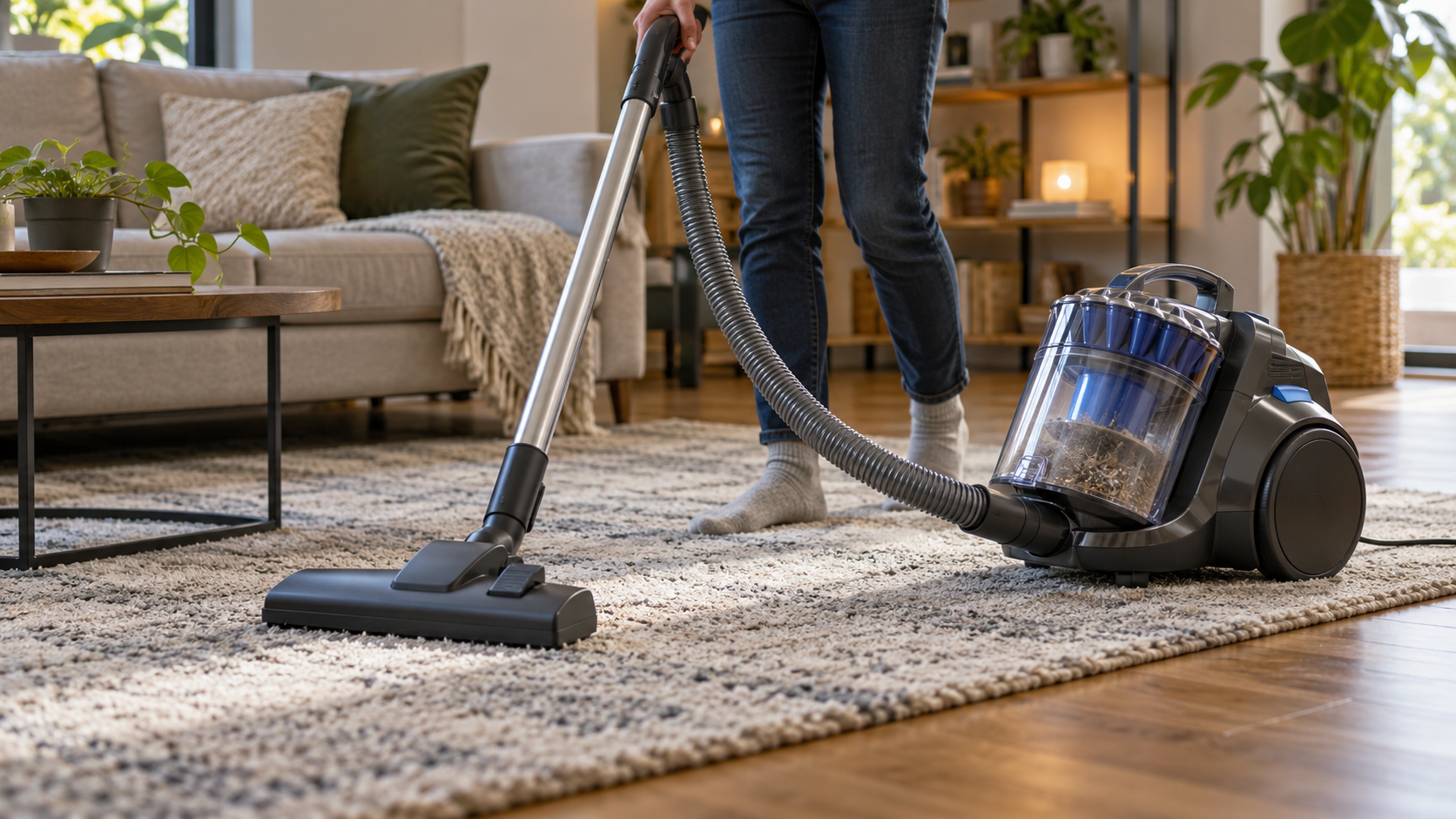
The cleaner then separates particles from the air. In a bagged vacuum, the porous bag is both a collection container and an important filter; air passes through while much of the dirt stays inside. A bagless model often directs air into a circular path so heavier particles experience inertia and fall into a bin. Multiple small cyclones can separate finer material. Neither method is perfect, so downstream filters capture particles that remain. The motor may have its own protective filter, and an exhaust filter reduces dust released back into the room.
A powered brush roll loosens soil from carpet fibers and moves hair toward the intake. Height, suction setting, and brush speed affect contact with different surfaces. A brush that is too low can stall or restrict airflow, while aggressive bristles may damage delicate rugs or scatter hard-floor debris. Straight suction or a soft roller is often preferred for some hard surfaces. Edges, upholstery, and crevices need tools that concentrate airflow without sealing so tightly that the tool becomes hard to move.
Filtration depends on the entire air path, not a label on one filter. A high-efficiency filter cannot capture dust that leaks around a poor gasket or escapes when a bin is emptied. A sealed system directs exhaust through the intended media. As bags fill and filters load, resistance rises and airflow drops. Emptying or replacing them at the recommended point preserves performance. Washable filters must be dried completely before reinstallation; moisture can damage the motor, support odor, or cake fine particles into the material.
Hair wrapped around the brush, a blocked hose, a full bin, damaged seals, and obstructed vents are common causes of weak pickup or overheating. The machine should be unplugged before hands approach a brush, belt, fan path, or electrical component. Fine construction dust, fireplace ash, liquids, hot debris, and hazardous material may require equipment specifically rated for that task. An ordinary household vacuum can spread very fine or harmful dust even when the floor looks cleaner, and combustible dust or hot ash can create a fire hazard.
Vacuuming changes indoor particle levels most effectively when capture and maintenance work together. Slow overlapping passes give the nozzle time to lift embedded debris, and a suitable high-efficiency, well-sealed machine can reduce redistribution. The room may still contain particles from cooking, smoke, outdoor air, fabrics, and activity, so vacuuming is one control rather than complete air purification. The mechanism is a sequence: the brush releases dirt, airflow carries it, inertia or a bag removes the bulk, filters collect the remainder, and the fan returns air to the room.
A vacuum uses a motor-driven fan to move dirty air, a bag or cyclone to separate bulk debris, and filters to capture smaller particles before exhaust. Key terms include pressure difference, airflow, brush roll, bag, cyclone, prefilter, exhaust filter, sealed system, and clog.
Cleaning needs airflow at the floor. A clog, sealed-down nozzle, full bag, loaded filter, or wrong height can reduce moving air even when the hose feels strongly pulled.
Not by itself. Air must pass through the filter instead of leaking around it, and emptying or maintenance can release dust. Look for an appropriate sealed system and follow service instructions.
Explore more "Explainers"
Discover additional explainers across politics, science, business, technology, and other fields. Each explainer breaks down a complex idea into clear, everyday language—helping you better understand how major concepts, systems, and debates shape the world around us.