

Dishwasher Cleaning Explainer
A dishwasher cleans dishes by repeatedly pumping a small volume of water through rotating spray arms. After an initial drain or rinse on some cycles, the machine fills to a controlled level and heats water as needed. A circulation pump forces the water through small angled jets, causing the arms to turn and directing streams across the racks. Detergent dissolves into the wash water, where surfactants, enzymes, builders, and alkalinity help loosen grease, starch, and protein. The same water is recirculated during each phase rather than flowing continuously from the tap.
Food particles fall toward a sump at the bottom. Filters screen material before water returns to the pump, and some machines use a grinder or self-cleaning filter design. At the end of a phase, the dirty water drains and fresh water enters for one or more rinses. Soil sensors may measure cloudiness or other conditions and adjust time, temperature, or water use. A cycle that appears long can still use less water and energy than a quick manual wash because efficient machines trade time for repeated, targeted circulation.
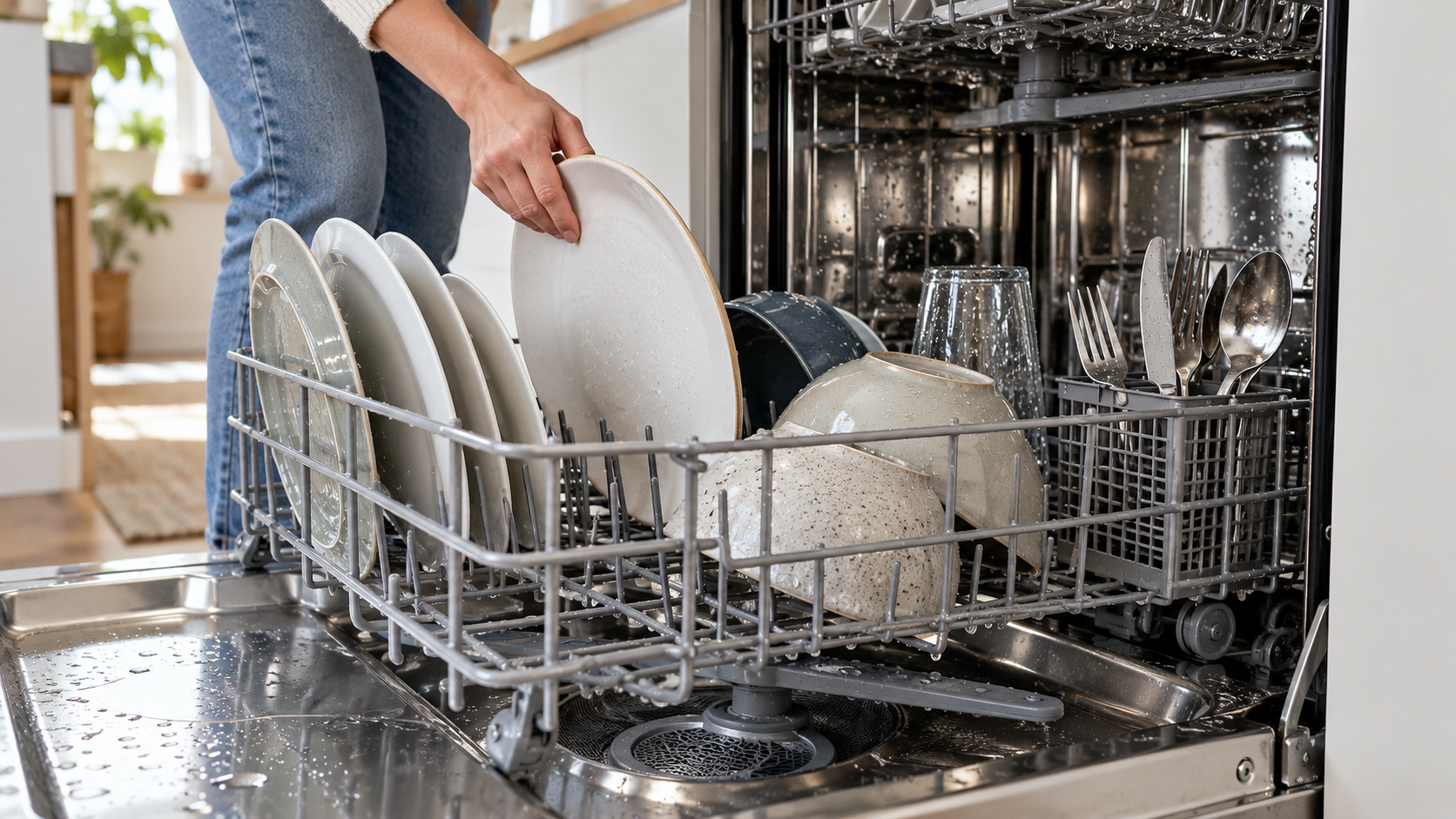
Loading determines whether jets can reach surfaces. Plates should face the center or spray path, bowls need a downward angle, and cups belong upside down enough to drain. Large pans, boards, or utensils must not block a spray arm, detergent dispenser, filter, or smaller items. Nesting spoons and tightly stacked bowls create sheltered areas. Fragile glass, wood, sharp knives, insulated containers, decorated pieces, and some nonstick cookware may require hand washing according to their makers. The racks are a fluid-flow system, not simply storage shelves.
Modern detergent is designed to work with some food soil, so scraping bones and large pieces is important but exhaustive pre-rinsing is often unnecessary unless the machine or local conditions require it. Detergent amount and type should match the machine, cycle, water hardness, and product instructions. Ordinary hand dishwashing liquid makes excessive foam and can leak. Rinse aid reduces surface tension so water sheets off instead of forming droplets, improving drying and spots. Dishwasher salt is used only in machines with a compatible built-in softener.
Drying may use an exposed heater, a stainless tub that encourages condensation, a fan, automatic door opening, or retained heat in the dishes. Plastics often stay wetter because they store less heat than ceramic or glass and may collect water in rims. Unloading the bottom rack first can allow pooled water from upper items to drip onto dry dishes. A clogged filter, blocked arm, depleted rinse aid, low incoming-water temperature, or interrupted cycle can all imitate a detergent failure. Cleaning removable filters and jet holes should follow the manual.
A dishwasher sanitizes only when a cycle is designed, certified, and operated for that purpose; ordinary washing does not make every item sterile. A household machine also cannot safely wash objects that may release hazardous residues. For routine dishes, success comes from the coordinated sequence of spray, chemistry, heat, time, filtration, drainage, and drying. Scrape large debris, load for water access, use automatic-dishwasher detergent, keep the spray arms and filter clear, and choose a cycle suited to the soil instead of treating the longest or hottest option as universally necessary.
A dishwasher pumps heated detergent solution through rotating spray arms, filters debris, drains, rinses, and dries. Key terms include circulation pump, spray arm, sump, filter, soil sensor, detergent enzyme, rinse aid, condensation drying, and sanitize cycle.
Spray must reach every soiled surface and water must drain. Face dishes toward jets, angle bowls downward, prevent nesting, and confirm large items do not block arms, filters, or the detergent door.
Usually scrape large food and follow the machine guidance. Heavy pre-rinsing wastes water and can affect sensor decisions, although dried-on soil or long delays may need a rinse or stronger cycle.
Explore more "Explainers"
Discover additional explainers across politics, science, business, technology, and other fields. Each explainer breaks down a complex idea into clear, everyday language—helping you better understand how major concepts, systems, and debates shape the world around us.