

Home Dehumidifier Explainer
A typical portable dehumidifier removes water from air by using a small refrigeration system. A fan pulls humid room air across a cold evaporator coil. When the air is cooled below its dew point, some water vapor changes into liquid droplets on the coil, much as moisture forms on a cold drink. The droplets fall into a bucket or flow through a drain hose. The now-drier air then passes over the warm condenser coil and returns to the room, usually a little warmer than when it entered.
The sealed refrigerant loop makes this possible. A compressor raises the pressure and temperature of refrigerant vapor. At the condenser, the refrigerant releases heat and condenses. An expansion device then lowers its pressure, allowing it to become cold in the evaporator and absorb heat from incoming air. Because the condenser rejects both the heat taken from the air and the compressor’s electrical energy back into the room, a standalone unit is not an air conditioner. It dries and slightly warms the space rather than moving heat outdoors.
Capacity is commonly expressed as pints of water removed in twenty-four hours under a defined test condition. Actual collection changes with room temperature, relative humidity, airflow, and moisture entering the building. Warm, humid air contains more removable water than cool, moderately humid air. Below a certain temperature, frost can form on the evaporator and block airflow, so controls may pause the compressor for defrost. Desiccant dehumidifiers use a moisture-attracting material instead of a cold coil and can suit different temperature ranges, but portable refrigerant models are more common in homes.
A humidistat measures or estimates relative humidity and cycles the unit toward a selected target. Relative humidity compares the water vapor present with the amount air could hold at that temperature. It changes when temperature changes even if the absolute quantity of moisture does not. Many buildings are comfortable around a moderate range rather than at the lowest possible setting. Over-drying wastes energy and can cause discomfort, while persistent high humidity can encourage condensation, musty odors, dust mites, and mold where moisture and suitable surfaces are present.
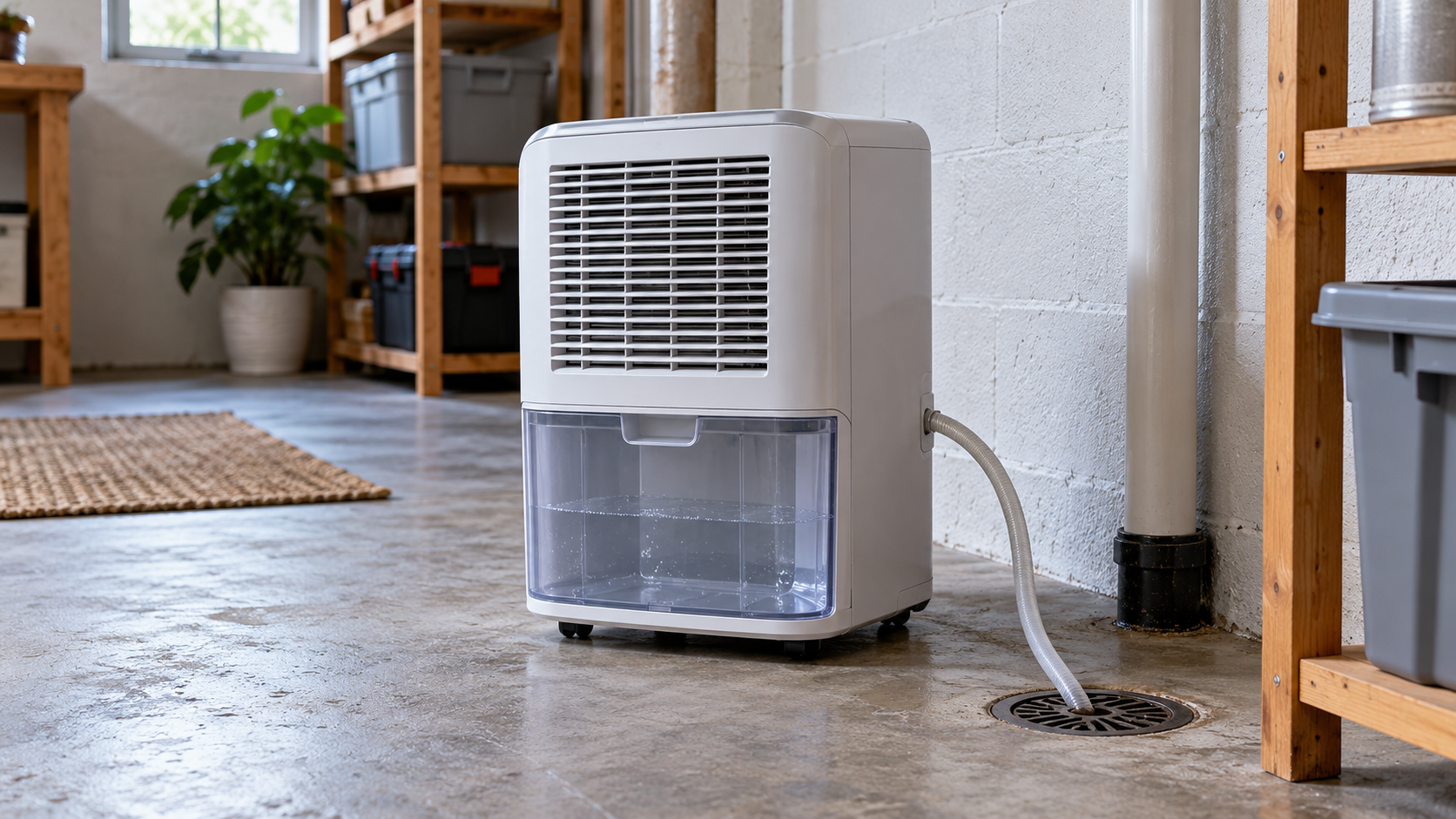
Placement and drainage affect performance. Air inlets and outlets need clearance, doors and windows to the treated area should generally remain closed, and a dirty filter or coil reduces flow. A full bucket switch stops collection before overflow. Continuous drainage requires a hose that slopes to a suitable drain unless a pump is built in. Water should never be routed near electrical connections or across a walkway. The appliance must be connected as its instructions specify, and its coil should not be handled while powered.
Dehumidification treats moisture already in the air; it does not repair the source. Roof or plumbing leaks, poor foundation drainage, unvented combustion, damp crawl spaces, and clothes dryers venting indoors can overwhelm any portable unit. Kitchen and bathroom exhaust, exterior drainage, air sealing, and repairs may reduce the load more effectively. The useful role of a dehumidifier is controlled removal while the building’s moisture sources are also managed. Its bucket provides visible evidence of water collected, but dry surfaces and stable humidity are the real objective.
A refrigerant dehumidifier cools air below its dew point, collects condensate, and reheats the drier air. Key terms include evaporator, condenser, compressor, dew point, condensate, humidistat, relative humidity, defrost, and drainage.
Its condenser returns the heat removed at the cold coil plus the compressor’s electrical energy to the room. The outlet air is therefore usually warmer and drier.
No. It can remove airborne moisture, but plumbing, roof, drainage, or ventilation problems must be corrected or the moisture load will continue.
Explore more "Explainers"
Discover additional explainers across politics, science, business, technology, and other fields. Each explainer breaks down a complex idea into clear, everyday language—helping you better understand how major concepts, systems, and debates shape the world around us.