

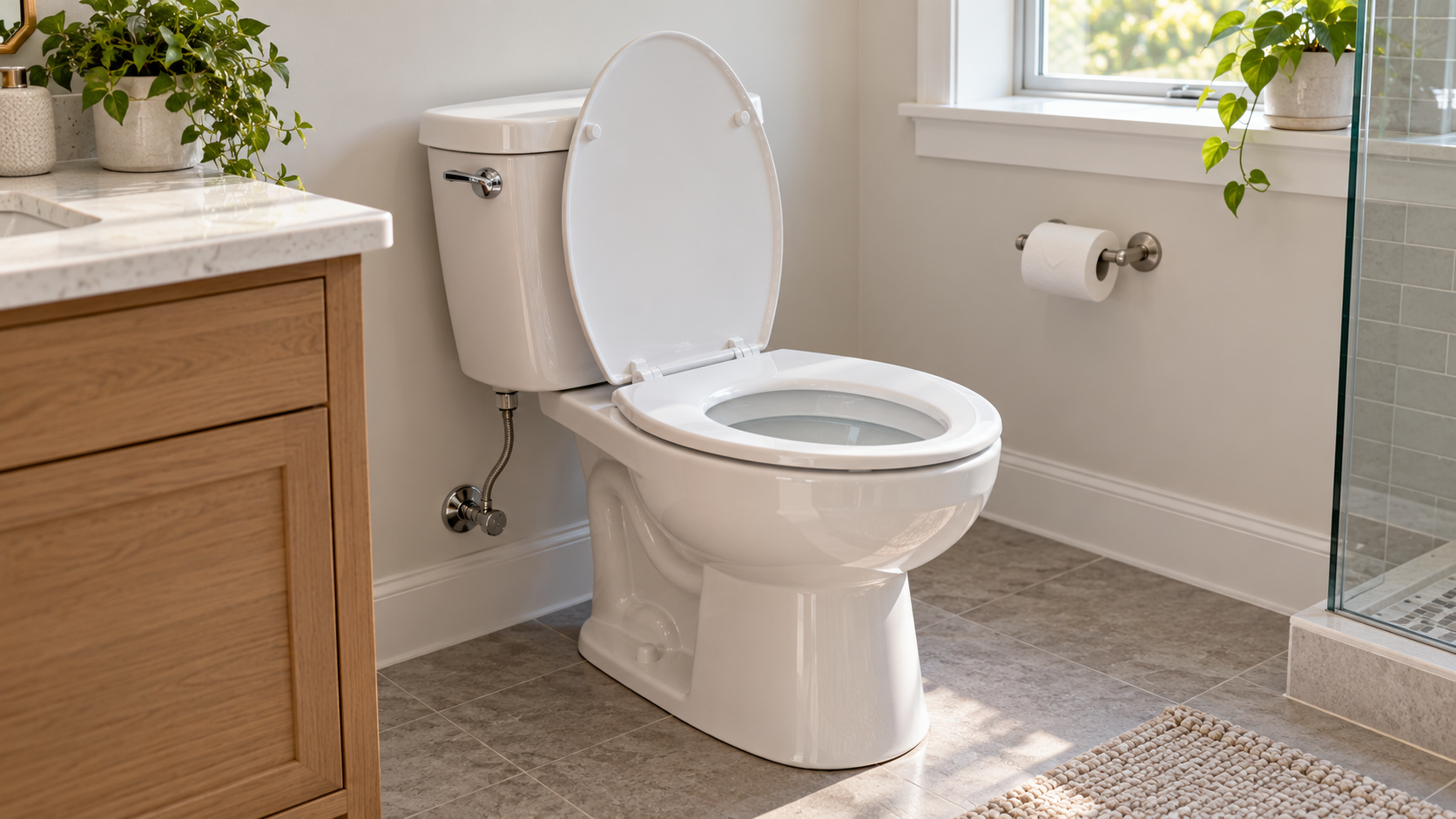
Gravity Toilet Flushing Explainer
A common gravity toilet stores several liters of clean water in its tank. Pressing the handle lifts a flapper or canister valve at the tank outlet. Water then rushes into passages around the bowl rim and often through a larger jet near the bottom. The incoming flow raises the bowl’s water level and pushes water toward the curved trapway built into the porcelain. When the moving column passes the highest part of that bend, it establishes a siphon that draws the bowl contents rapidly into the building drain.
The trapway always holds some water after a normal flush. That standing water forms a seal that blocks sewer gases from entering the room. During the flush, gravity accelerates water down the outlet side of the trapway, and atmospheric pressure helps the continuous column pull water from the bowl side. Near the end, air enters the passage and breaks the siphon, producing the familiar gurgle. The remaining water settles at the trap’s designed level, restoring the gas barrier without a separate mechanical valve in the bowl.
Tank parts control volume and timing. The flapper must remain open long enough for the intended amount of stored water to leave, then fall back onto its seat and seal the outlet. A fill valve senses the dropping tank level, opens the supply, and closes again when a float reaches its set height. At the same time, a small refill tube sends water into the overflow tube so the bowl’s trap seal is restored. The overflow tube also routes excess tank water safely into the bowl if the fill valve fails to close.
Modern toilets are engineered to complete the siphon with less water than older models. Bowl shape, trapway diameter, rim-port direction, tank height, and flush-valve size determine how quickly energy is delivered. Dual-flush designs provide different volumes for liquid and solid waste, while pressure-assisted models use compressed air to add force. Even so, no toilet simply blasts waste straight down. Successful flushing depends on creating a coordinated surge that clears the bowl and then ends cleanly.
A weak flush can come from a low tank level, a closing flapper, mineral-clogged rim holes, a partial trapway obstruction, or poor venting farther in the system. Continuous running often indicates a leaking flapper, an incorrectly adjusted float, or water spilling into the overflow tube. Adding a brick or improvised object to the tank can damage parts and reduce the designed flush volume. Adjustments should follow the fixture instructions, and repeated backups require plumbing diagnosis rather than repeated chemical treatment.
Only human waste and toilet paper are intended for most household toilets. Wipes, hygiene products, litter, grease, and other materials may clear the bowl yet lodge in downstream piping or burden wastewater treatment. A correctly operating toilet turns stored gravitational potential energy into a brief siphon, then automatically rebuilds both its supply and odor seal. Understanding that sequence makes many symptoms easier to interpret: the tank provides the surge, the trapway creates the siphon, and the refill system prepares the fixture for the next use.
A flush valve releases tank water into the bowl, the rising flow starts a siphon through the curved trapway, and air finally breaks that siphon. Key terms include tank, flapper, rim jet, trapway, siphon, fill valve, refill tube, and overflow tube.
The built-in trap retains water at a fixed level after the siphon breaks. That water seal blocks sewer gases from traveling through the drain into the bathroom.
Water may be leaking past the flapper or flowing into the overflow tube because the fill valve or float is misadjusted. The lost water causes repeated refilling.
Explore more "Explainers"
Discover additional explainers across politics, science, business, technology, and other fields. Each explainer breaks down a complex idea into clear, everyday language—helping you better understand how major concepts, systems, and debates shape the world around us.