

Household Septic System Explainer
A conventional septic system treats household wastewater on the property instead of sending it to a municipal sewer. All drains usually lead to a buried watertight tank. Inside, flow slows enough for dense solids to settle as sludge and oils and grease to rise as scum. Microorganisms partially break down organic material, but the tank does not purify the water completely. A middle liquid layer called effluent leaves through an outlet baffle and moves to a distribution box or directly into perforated pipes in the drainfield.
In the drainfield, effluent is released gradually into gravel, chambers, or another approved dispersal medium beneath the surface. It then moves through unsaturated soil. Soil particles filter suspended material, microorganisms consume organic compounds, and chemical reactions retain or transform some nutrients and contaminants. The treatment zone needs oxygen and enough separation from groundwater or bedrock. A drainfield is therefore an active part of the treatment process, not merely a convenient place to hide a discharge pipe.
Tank baffles or sanitary tees keep floating scum from entering the outlet and direct incoming flow downward so it does not immediately short-circuit to the drainfield. An effluent filter may provide another barrier to suspended solids. Even with microbial digestion, sludge and scum accumulate and must be pumped by a qualified service provider. The pumping interval depends on tank size, household use, garbage-disposal use, solids loading, and inspection findings; a universal calendar interval cannot replace measurement of the actual layers.
The system works best when wastewater arrives at a manageable rate. Large simultaneous loads can stir settled solids or flood the drainfield before soil has time to accept the liquid. Fixing leaks, spreading laundry across the week, and using water-efficient fixtures reduce hydraulic stress. Roof drains, sump pumps, and surface runoff should stay out of the septic system. The drainfield surface should remain vegetated and free of vehicles, pavement, deep-rooted trees, or structures that compact soil, damage pipes, or restrict evaporation.
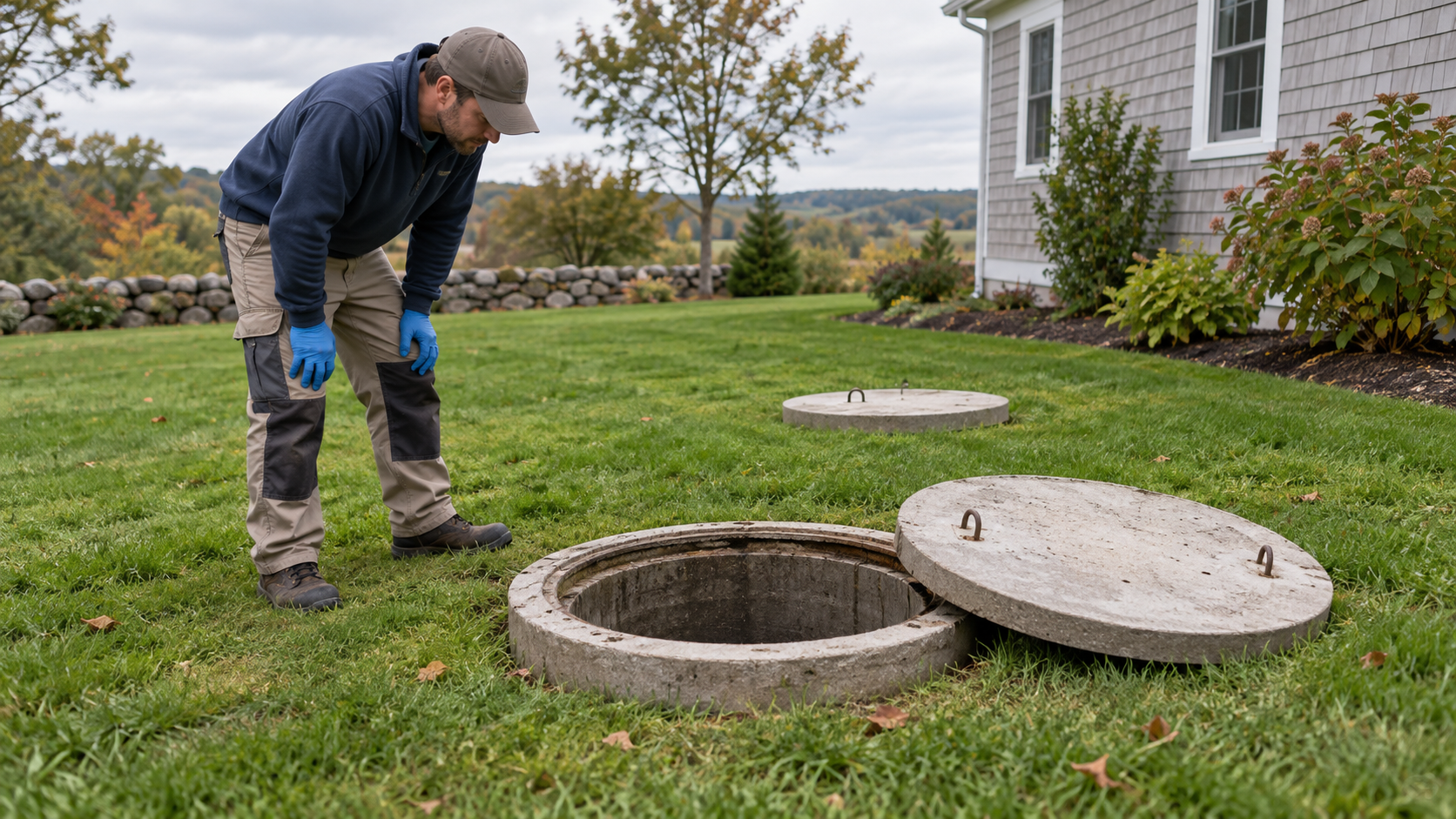
What goes down the drain also matters. Wipes, diapers, cooking grease, paint, solvents, medications, and harsh chemical quantities can clog components, contaminate soil, or disrupt treatment. Normal household cleaners used as directed are different from dumping concentrated chemicals. Additives marketed as substitutes for pumping generally cannot remove the inert solids that accumulate. The tank may be biologically active, but it is still a settling vessel with finite storage, and its buried openings can present serious fall and toxic-gas hazards.
Warning signs include sewage odors, slow drains throughout the home, gurgling plumbing, surfacing wastewater, unusually lush wet areas, or a backup. These conditions require prompt professional evaluation and contact avoidance. Records of tank location, inspections, pumping, repairs, and permits make future service safer and more accurate. A septic system succeeds through separation in the tank and treatment in living soil; protecting both stages prevents expensive failures and reduces the chance that untreated wastewater reaches wells, streams, or people.
A septic tank settles sludge and floats scum, then sends the middle effluent layer to a drainfield where soil provides additional treatment. Key terms include tank, baffle, sludge, scum, effluent, distribution box, drainfield, and biomat.
No. The tank mainly separates solids and begins biological breakdown. Important treatment continues as effluent moves through oxygenated soil below the drainfield.
Microbes do not digest every solid. Sludge and scum accumulate until they reduce settling space or escape toward the drainfield, so measured layers must be removed periodically.
Explore more "Explainers"
Discover additional explainers across politics, science, business, technology, and other fields. Each explainer breaks down a complex idea into clear, everyday language—helping you better understand how major concepts, systems, and debates shape the world around us.