

Clothes Iron Wrinkle-Removal Explainer
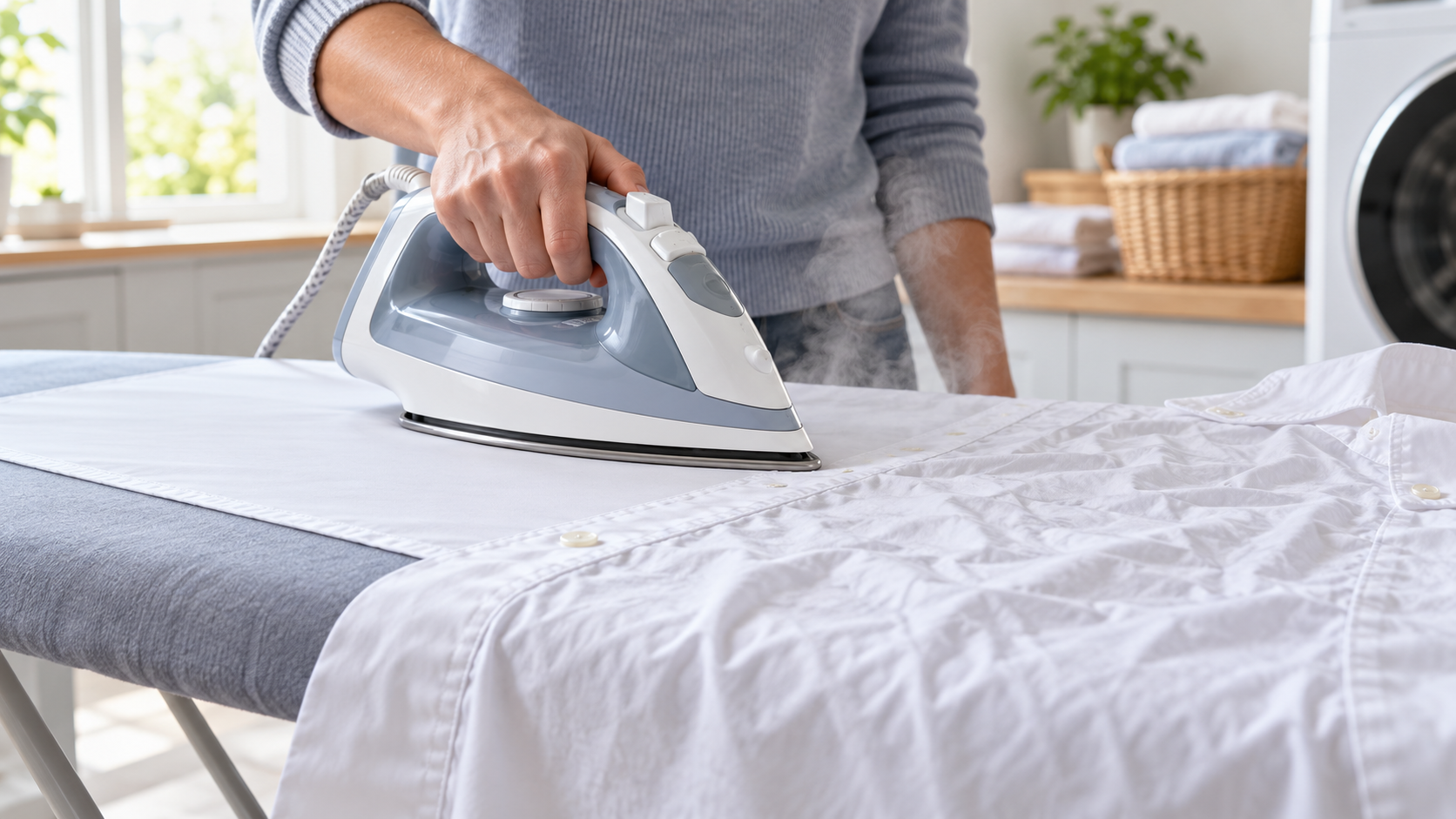
Fabric wrinkles when yarns and fibers are bent, compressed, or dried in irregular positions. At the molecular level, neighboring polymer chains are held partly by weak attractions such as hydrogen bonds. Heat gives those chains more mobility, and moisture penetrates many fibers and disrupts some temporary bonds. The iron’s flat soleplate then applies pressure that pushes the yarns into a smoother arrangement. As the fabric cools and dries, new temporary bonds form in that flatter position, allowing the pressed shape to remain.
An electric heating element is embedded above the soleplate. Current through its resistance wire produces heat, and a thermostat cycles power to keep the plate near the selected setting. Traditional mechanical irons use a bimetal switch that bends with temperature and opens or closes the circuit. Electronic models may use a temperature sensor and control board. The fabric dial does not identify every garment automatically; it selects a range that must still be compatible with the fiber, finish, color, and care label.
Steam adds both moisture and heat. Water in a small reservoir reaches a heated chamber, flashes into vapor, and exits through holes in the soleplate. The vapor condenses within cooler fabric and helps fibers relax before the plate smooths them. A burst-of-steam function releases a larger amount for a short interval, while vertical steam can relax hanging fabric with less pressure. Too much moisture can spot some materials, and steam can cause severe burns before it looks dangerous.
Different fibers respond differently. Cotton and linen tolerate relatively high heat and benefit from moisture, while wool is shaped best with steam, gentle pressure, and a pressing cloth. Many synthetics soften or melt at temperatures far below those for cotton, and acetate or decorative coatings can be especially vulnerable. Starting with lower-temperature garments prevents a very hot iron from damaging them. Testing a hidden area is prudent when the label is missing or a finish is uncertain.
Movement prevents the soleplate from overheating one spot. Pressing differs from ironing: pressing lifts and sets the iron in sections, useful for seams and shaped garments, while ironing slides it across a broad area. A clean smooth soleplate reduces drag and transferred residue. Mineral buildup can block steam holes, so water type and descaling follow the instructions. The cord, plug, temperature control, and automatic shutoff are safety components, not merely conveniences.
Wrinkle removal is a reversible reshaping process. Heat and water temporarily loosen interactions, pressure establishes a new geometry, and cooling fixes it until wear, washing, or humidity rearranges the fibers again. An iron cannot repair damaged yarns, scorching, or permanent shrinkage. Its effectiveness comes from matching energy to material: enough temperature and moisture to make fibers mobile, enough pressure to align them, and enough restraint to avoid changing the fabric irreversibly.
Heat and moisture increase fiber mobility and loosen temporary molecular bonds; the soleplate presses fibers flat, and cooling lets bonds reform. Key terms include polymer, hydrogen bond, soleplate, resistance heater, thermostat, steam chamber, pressing, and care label.
Moisture penetrates many fibers and helps disrupt temporary bonds, while condensed steam adds heat. The relaxed material reshapes more easily under the soleplate.
Fiber polymers and finishes soften, scorch, or melt at different temperatures. A setting suitable for cotton can permanently damage a synthetic or coated fabric.
Explore more "Explainers"
Discover additional explainers across politics, science, business, technology, and other fields. Each explainer breaks down a complex idea into clear, everyday language—helping you better understand how major concepts, systems, and debates shape the world around us.