

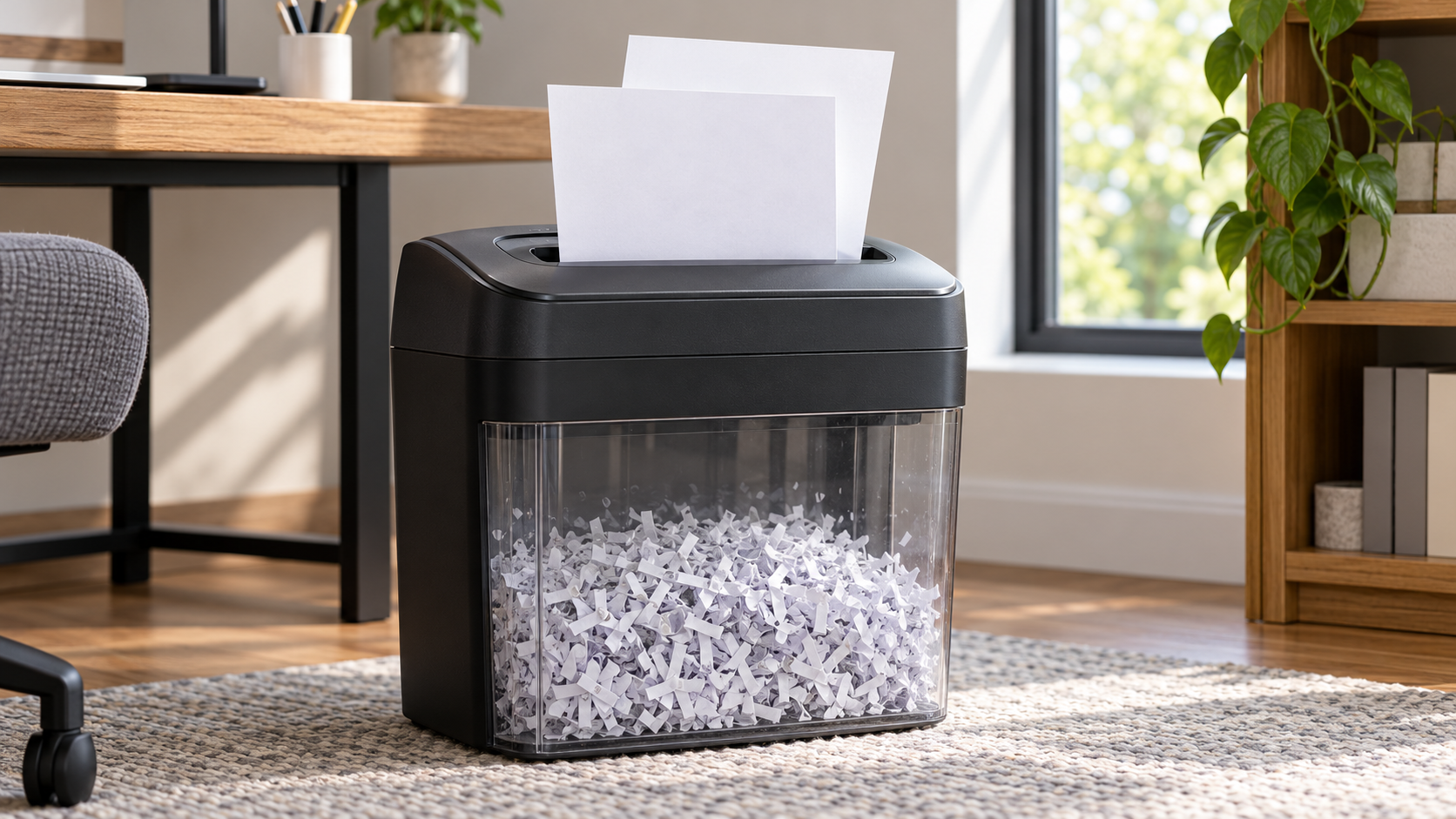
Cross-Cut Paper Shredder Explainer
A cross-cut shredder has two parallel shafts carrying rows of sharp-edged cutter disks. A motor and reduction gears rotate the shafts in opposite directions. When paper reaches the narrow feed slot, the intermeshing disks grip it and pull it downward. Their overlapping edges make lengthwise cuts, while teeth and offsets divide the strips across their width. The resulting short particles fall through spaces between the cutters into the waste bin.
Reduction gearing lets a relatively fast electric motor produce the high torque needed to shear several sheets. Small spacers separate the disks and scraper fingers keep cut paper from wrapping around the shafts. An optical or mechanical sensor at the slot starts the motor when paper is inserted and stops it after the path clears. The rated sheet capacity assumes ordinary paper; folded stacks, envelopes, labels, cards, and heavy stock impose different loads.
If the cutters cannot turn, motor current and temperature rise. Overload protection interrupts power before sustained heat damages the windings or starts a fire. A reverse control changes shaft direction so the user can back material out of the entry. Reverse is not guaranteed to clear staples, adhesive labels, plastic film, or a heavily compacted jam. The machine should be unplugged before any cleaning allowed by the instructions, with hands kept away from the cutter opening.
Particle size depends on cutter geometry. Strip-cut models make long ribbons; cross-cut machines make shorter pieces; micro-cut designs create even smaller particles. Smaller output provides greater information destruction but often reduces sheet capacity and speed. Security standards classify the resulting particle dimensions, yet no office shredder can guarantee secrecy if the wrong material bypasses it or confidential pages remain elsewhere. Disposal policy must match the sensitivity of the records.
Paper dust and compacted particles can increase friction. Some shredders need approved lubricant sheets or oil applied by a specified method; general-purpose sprays can be flammable or damage plastic. The bin should be emptied before waste presses back into the cutter head. Continuous-run time and cooling pauses matter because many home machines use intermittent-duty motors. Ignoring a thermal shutdown by repeatedly cycling power only extends the overload.
The feed slot is intentionally narrow, but it can still catch fingers, hair, jewelry, neckties, and children’s clothing. The shredder belongs in a supervised location, unplugged when not in use, and away from young children and pets. Its essential action is straightforward: opposed rollers create an inward pull, hardened edges apply concentrated shear, and a geared motor supplies force. Safe use respects that the same grip that destroys paper cannot distinguish it from anything else entering the slot.
A geared motor counter-rotates two shafts of intermeshing cutter disks, pulling paper inward and shearing it into short particles. Key terms include feed sensor, cutter disk, shaft, reduction gear, scraper, cross-cut, reverse, and overload protector.
An intermittent-duty motor may reach its thermal limit, or the load may exceed capacity. The protection circuit stops power until safe conditions return.
Reverse can back paper out, but hands and tools must stay away from cutters. Unplug the machine and follow its specific clearing instructions.
Explore more "Explainers"
Discover additional explainers across politics, science, business, technology, and other fields. Each explainer breaks down a complex idea into clear, everyday language—helping you better understand how major concepts, systems, and debates shape the world around us.