

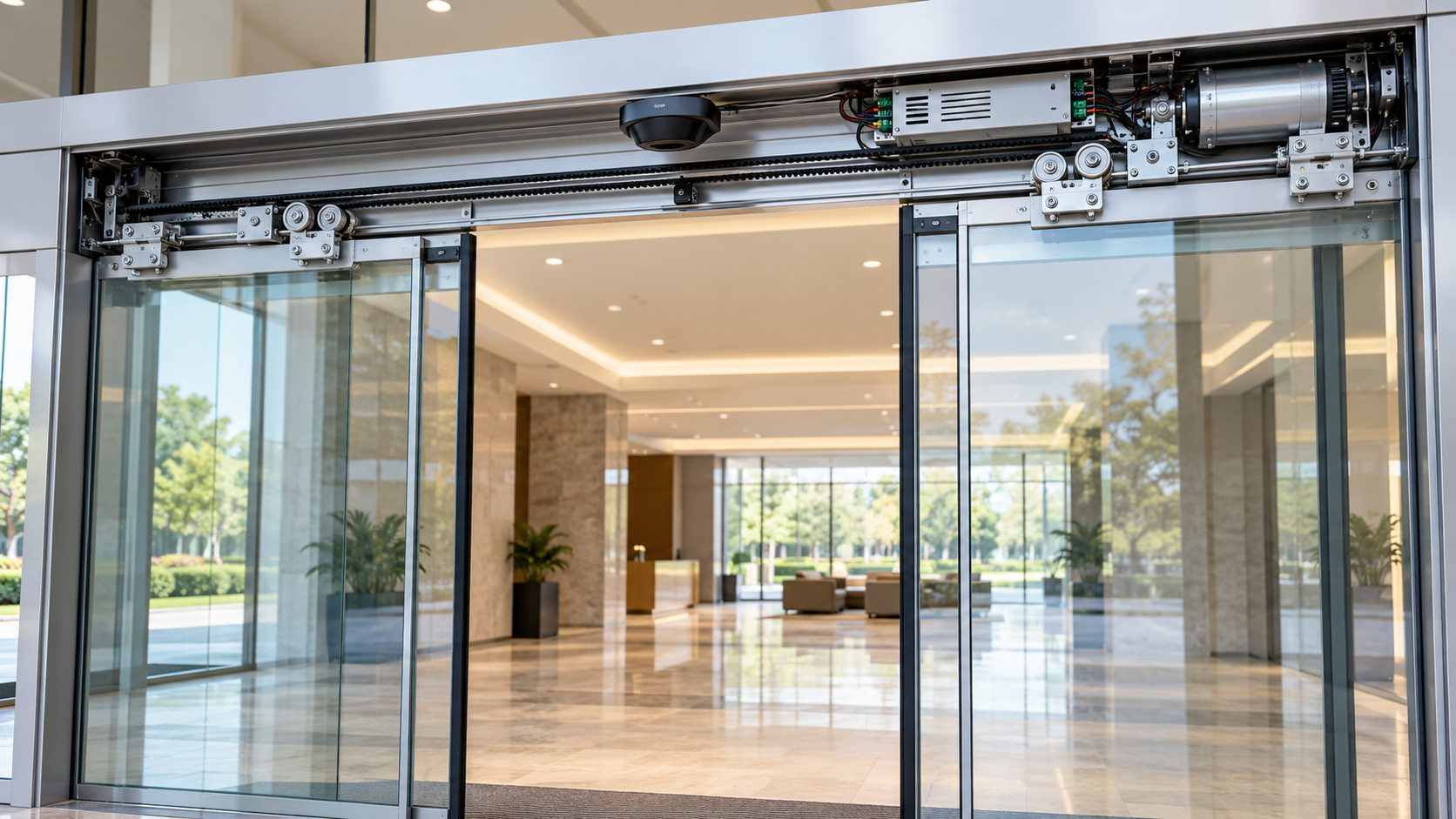
Automatic Sliding Door Sensor Explainer
An automatic sliding entrance begins with an activation sensor watching the approach area. Depending on the system, microwave radar detects motion, active infrared sensing detects changes in reflected light, or a push plate and access-control signal requests opening. The sensor sends an electrical command to the door controller. The controller checks operating mode and safety inputs, then powers a motor that moves one or two panels along a horizontal track.
The motor usually turns a toothed belt or similar transmission attached to the door hangers. Rollers carry the panel weight on the header track, while a floor guide prevents sideways swing. Position feedback from an encoder or motor current lets the controller shape acceleration, travel speed, slowing, and final stop. With two panels, belt attachments on opposite runs move them apart together. At the open limit, a timer may hold the doorway before a controlled closing cycle begins.
Activation and safety sensing perform different jobs. An approach sensor requests access, while presence sensors monitor the threshold and panel travel area so a person is not struck or trapped. Focused infrared curtains, monitored beams, or mats can cover spaces that ordinary motion radar might miss when someone stands still. The controller continuously checks required safety devices and can prevent or reverse closing if an occupied zone or fault is detected.
Traffic direction, wind, rain, reflections, carts, and nearby moving objects affect sensor setup. A field that reaches too far can trigger the door for passersby who never intend to enter; one that is too narrow may respond late. Technicians adjust coverage, sensitivity, timing, opening width, and force within the applicable standard and manufacturer limits. Breakout hardware may allow panels to swing for emergency egress, and fire or security systems can command special modes.
Users should not rely on a closing door to sense every object. Children, pets, mobility devices, and trailing bags need time to clear the full opening. A door that hesitates, closes rapidly, strikes objects, makes unusual noise, or shows a fault should be taken out of normal service and inspected. Daily safety checks follow the installed system’s instructions, while adjustment and repair belong to trained automatic-door technicians because control settings directly affect injury risk.
The door “knows” to open only because several systems agree: an activation device detects intent or approach, logic confirms that operation is allowed, and the drive converts the command into smooth panel travel. Independent presence sensing watches the hazardous space through the cycle. Rollers and guides manage the physical load, feedback manages position, and programmed limits manage timing. Reliable convenience comes from that coordination, not from a single motion detector over the doorway.
An activation sensor requests opening, a controller drives the motor and belt, and separate presence sensors monitor the threshold and closing path. Key terms include radar, active infrared, controller, encoder, hanger, belt drive, presence zone, and reversal.
One may detect approaching traffic while others protect the threshold and panel path, including people who stop moving after entering the doorway.
A monitored system should detect required faults and enter a safe response defined by its design, such as preventing automatic closing or removing the door from service.
Explore more "Explainers"
Discover additional explainers across politics, science, business, technology, and other fields. Each explainer breaks down a complex idea into clear, everyday language—helping you better understand how major concepts, systems, and debates shape the world around us.