

Spring Cord Lock Explainer
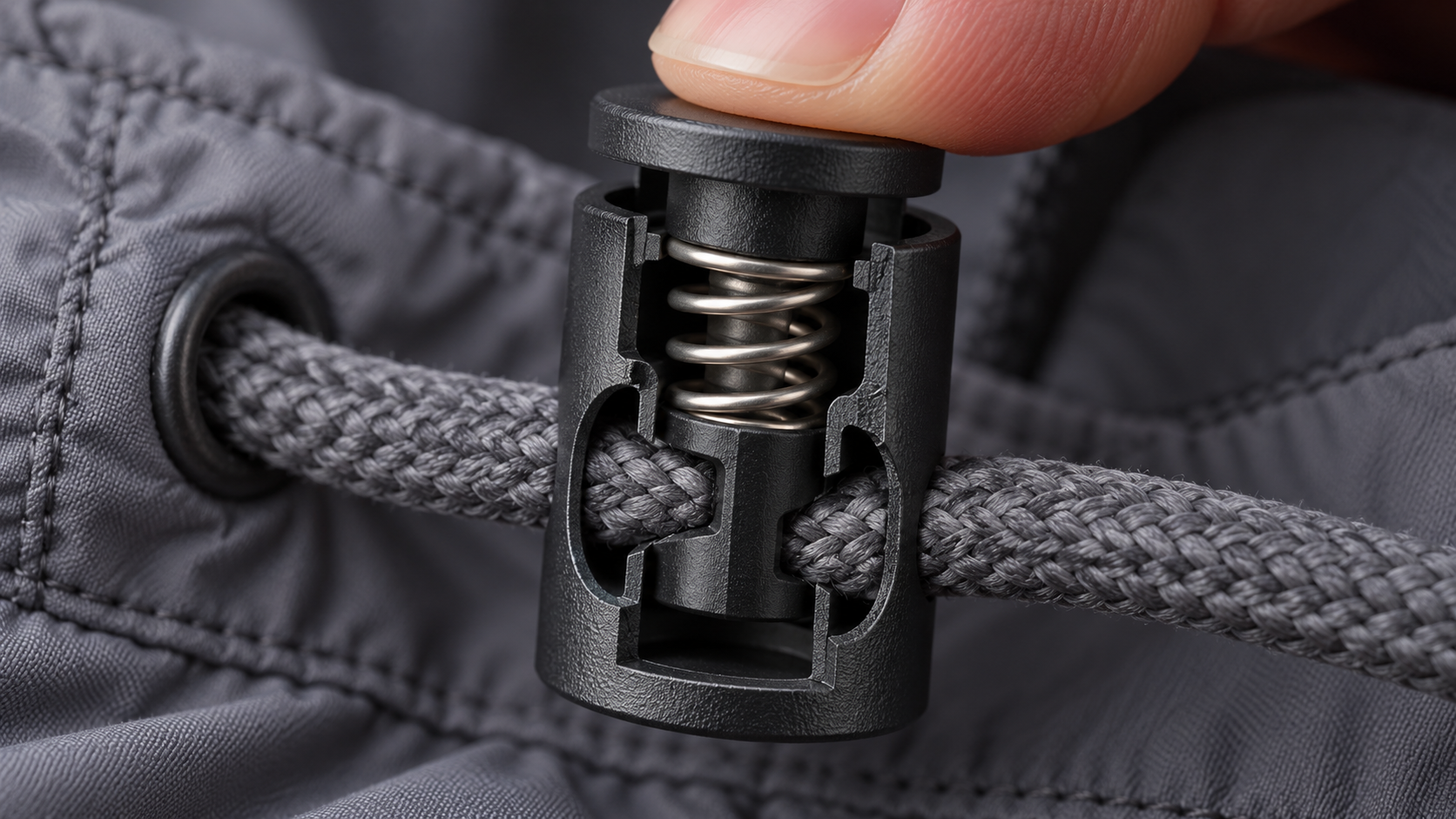
A common barrel cord lock contains an outer body and a sliding button or plunger, each with a hole through it. A compression spring pushes the plunger outward. In that resting position, the two holes are offset, so the cord is forced into a bent path and pinched between their edges. Friction created by the pinch resists the cord sliding back through the lock. Pressing the button compresses the spring and lines up the openings, creating a clearer passage for adjustment.
The lock does not normally clamp the cord with sharp teeth. Its holding force comes from normal pressure, bending, and friction at several contact points. Pulling on the cord can increase how firmly it bears against the offset edges. Cord diameter, roundness, surface texture, elasticity, and the size of the passage all matter. A very thin slick cord may creep, while an oversized or fuzzy cord may jam even with the button pressed.
Some locks accept one cord through a single tunnel; others have two holes or a larger passage for doubled drawstrings. The shell keeps the plunger aligned and captures the spring so it cannot escape during ordinary travel. Stops limit how far the button extends. Tapered entry edges help thread the cord without cutting fibers. Specialty locks may add a wheel, cam, or side release, but the familiar push-button version relies on spring-created hole misalignment.
To adjust it, tension on the cord is relaxed, the button is pressed fully, and the lock is slid to the new position. Releasing the button restores the pinch. Trying to drag a loaded lock without pressing can abrade the cord and wear the hole edges. Knots or end caps prevent the lock from sliding off. On garments, the lock position should not create a loop that catches on equipment, doors, playground structures, or moving machinery.
Cord locks can be an entanglement or ingestion hazard, especially for young children. Garment and product safety rules may restrict drawstrings near the neck, hood, or waist. A cracked body, weak spring, sharp edge, or lock that slips under light load should be replaced with a suitable part. The device is intended for clothing, bags, tents, and similar adjustment—not for climbing, fall protection, animal restraint, or any load where failure could cause injury.
The mechanism turns spring force into a reversible friction brake. At rest, the spring separates the hole centers and makes the cord follow a tight, pressed path. A fingertip temporarily removes that offset, allowing free sliding. Because the cord itself remains flexible, one tiny plastic housing can hold many positions without knots. Its reliability depends on matching cord and passage size, keeping the spring healthy, and using the lock only for the modest loads it was designed to manage.
A spring pushes the plunger so its hole shifts away from the body hole, bending and pinching the cord. Key terms include body, plunger, compression spring, offset, normal force, friction, passage, and end stop.
It compresses the spring and aligns the holes in the plunger and body, removing most of the bend and pinch that create holding friction.
No. Diameter, shape, stiffness, and surface texture must match the passage. A mismatched cord can slip, jam, or be damaged.
Explore more "Explainers"
Discover additional explainers across politics, science, business, technology, and other fields. Each explainer breaks down a complex idea into clear, everyday language—helping you better understand how major concepts, systems, and debates shape the world around us.