

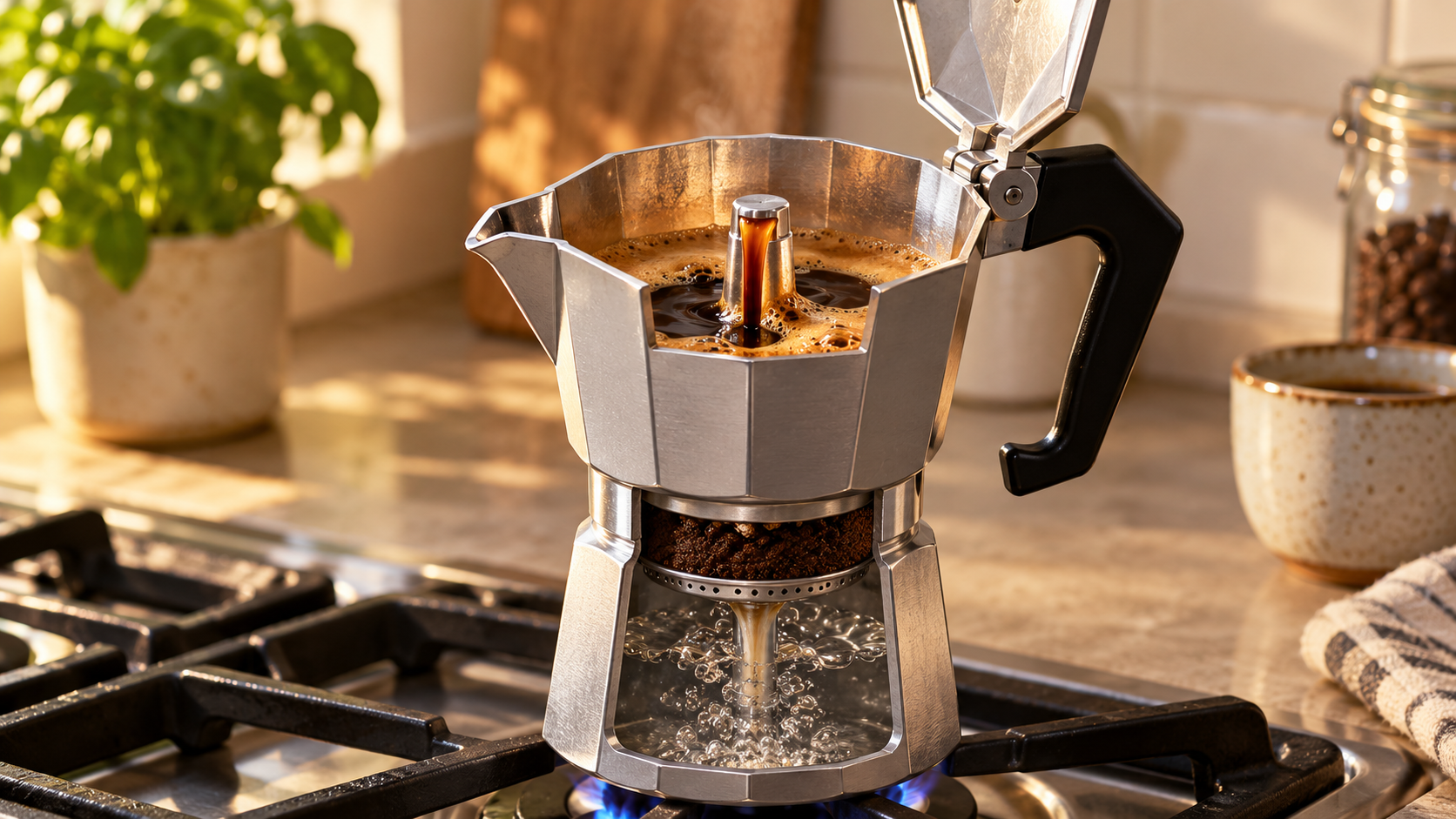
Stovetop Moka Pot Pressure Explainer
A moka pot brews with three connected sections. Water sits in a lower boiler, ground coffee fills a funnel-shaped filter above it, and an upper chamber collects the drink. Heating the base warms both water and trapped air. As vapor forms and the gas expands, pressure in the lower chamber rises above atmospheric pressure and begins pushing liquid up the funnel tube.
The water travels through the coffee bed, dissolving soluble flavor compounds and carrying suspended oils and fine particles. It then passes a metal filter and flows through a central chimney into the upper chamber. The process is driven by the pressure difference between the heated boiler and the open collector, not by boiling water simply jumping upward. Typical pressure is modest compared with an espresso machine.
Grind size and packing set resistance. Grounds finer than appropriate or compressed into a dense puck can restrict flow, causing slower extraction and higher pressure. Very coarse coffee offers little resistance and may brew weakly. The basket should be filled and leveled according to the pot maker without tamping unless specifically directed. Water is normally kept below the safety valve so that valve remains exposed to the gas space.
Near the end, less liquid covers the funnel inlet and steam enters the rising flow. This creates the recognizable sputter. Removing or reducing heat before prolonged sputtering limits overheating and harsh extraction. Starting-water temperature changes how long the grounds are exposed to rising heat, but safe handling and the manufacturer’s procedure take priority over brewing preferences.
The safety valve is a backup pressure-release device, not a fill marker to cover or a control for normal brewing. Its opening must remain clean. The gasket and filter form seals between sections; worn rubber, damaged threads, or coffee debris can leak pressure and hot liquid. The pot should cool before opening, and the boiler must never be heated empty or left unattended.
The moka pot is a heat-powered displacement device. Thermal expansion and water vapor raise boiler pressure, that pressure drives liquid through a controlled bed of coffee, and the chimney delivers the extract above the original water level. The brewer needs no pump because the sealed lower chamber converts heat into the pressure difference that performs the lifting and percolation.
Heating a sealed lower chamber raises vapor pressure, which pushes hot water up a funnel, through coffee grounds, and into the upper chamber. Key terms include boiler, vapor pressure, funnel filter, coffee bed, chimney, gasket, safety valve, and extraction.
No. Both use pressure, but a moka pot normally operates at much lower pressure and produces a different extraction, concentration, and texture.
Compacting the bed can create excessive flow resistance, slowing brewing and raising pressure beyond the behavior intended for the pot.
Explore more "Explainers"
Discover additional explainers across politics, science, business, technology, and other fields. Each explainer breaks down a complex idea into clear, everyday language—helping you better understand how major concepts, systems, and debates shape the world around us.