

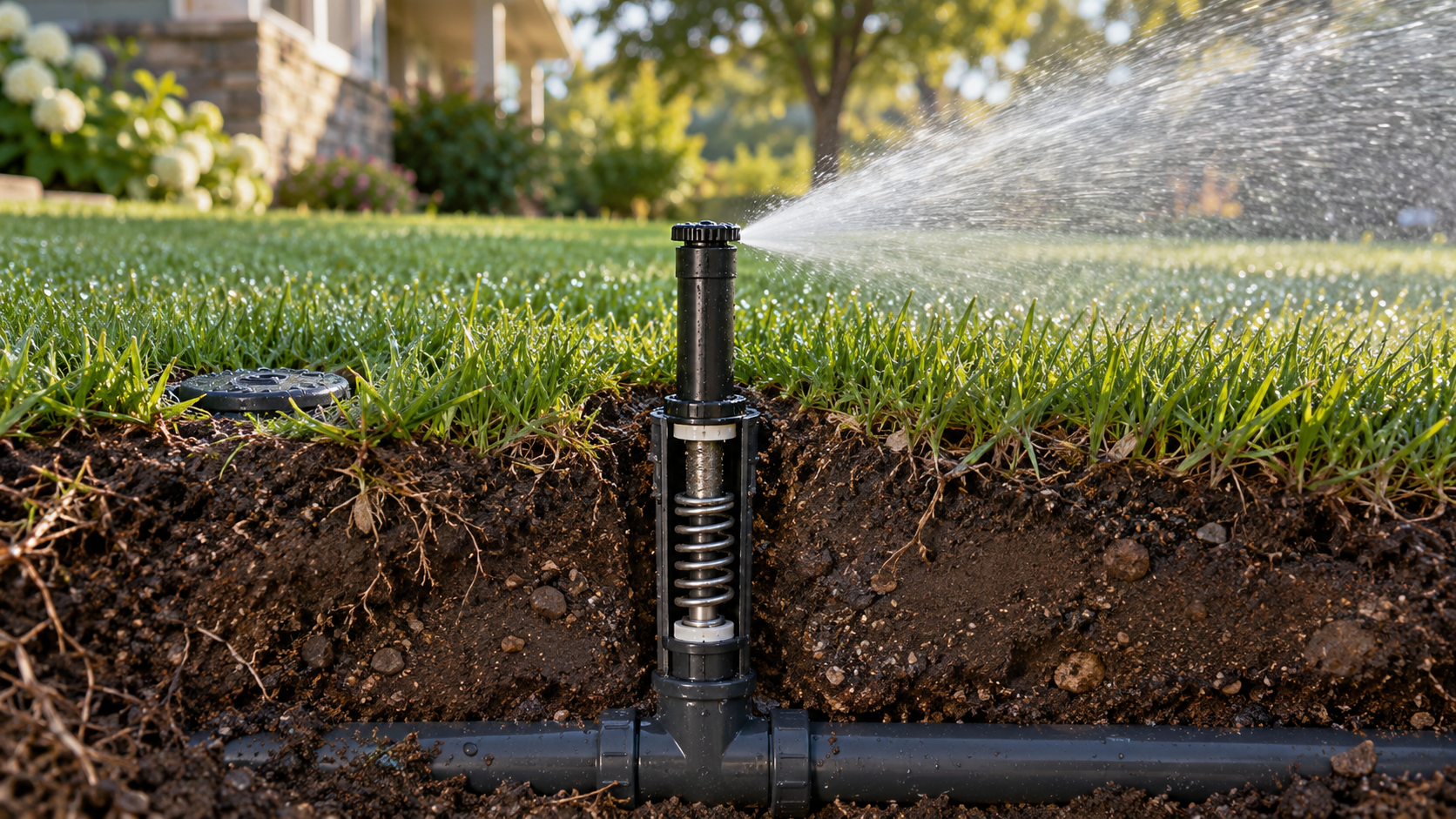
Pop-Up Lawn Sprinkler Explainer
A pop-up lawn sprinkler hides its nozzle below the grass until an irrigation zone sends pressurized water into the buried body. The water acts on the lower area of a movable riser, producing an upward force. When that force exceeds the downward force from the return spring and friction at the seal, the riser climbs through the cap. Its nozzle then sits high enough to distribute water above nearby turf.
A compression spring surrounds or follows the riser inside the body. During operation, the rising stem compresses that spring and stores energy. When the control valve closes, supply pressure falls and water drains or settles through the system. The spring then expands and pulls the stem down. A strong positive return matters because a head left above grade can be damaged by feet, wheels, or a lawn mower.
The wiper seal performs two jobs. It limits leakage around the moving stem while pressure is high, and it helps scrape away sand or grass particles during movement. Many heads briefly flush around the stem as they start or stop, which can carry grit away from the seal. The top nozzle meters the flow and creates a fixed arc, adjustable spray, or rotating stream, depending on the head design.
Some bodies include a pressure regulator because the pattern depends on pressure as well as nozzle geometry. Too little pressure may leave stems partly raised and shorten the throw. Too much pressure can turn useful droplets into fine mist that drifts or evaporates. Multiple heads share a zone, so pipe size, nozzle flow, elevation, and the water source determine whether every riser receives enough pressure at the same time.
A slow or stuck riser can result from grit, damaged seals, compacted soil around the cap, a weak spring, or inadequate zone pressure. The head should sit level with the finished grade and remain clear of roots and debris. Service begins with the irrigation supply off. Broken heads, leaking fittings, and mismatched nozzles waste water, while aiming spray at pavement creates runoff without helping plants.
The sprinkler is therefore a pressure-operated actuator as well as a water outlet. Hydraulic force raises the stem, the spring stores the energy needed to hide it again, and the seal permits repeated movement while containing most of the flow. The nozzle then turns controlled pressure into a useful pattern. Reliable operation depends on balancing those forces and keeping the moving surfaces clean enough to slide without binding.
Water pressure pushes a riser upward against a compression spring. When pressure disappears, the spring retracts the riser. Key terms include riser, spring, wiper seal, nozzle, hydraulic force, pressure regulator, arc, and flow.
A brief flush can help clear grit as the riser moves and the wiper seal seats. Continuous heavy leakage can indicate wear, debris, or inadequate pressure.
Shared flow may leave insufficient pressure at that head, or its riser may be binding because of dirt, seal damage, or surrounding soil.
Explore more "Explainers"
Discover additional explainers across politics, science, business, technology, and other fields. Each explainer breaks down a complex idea into clear, everyday language—helping you better understand how major concepts, systems, and debates shape the world around us.