

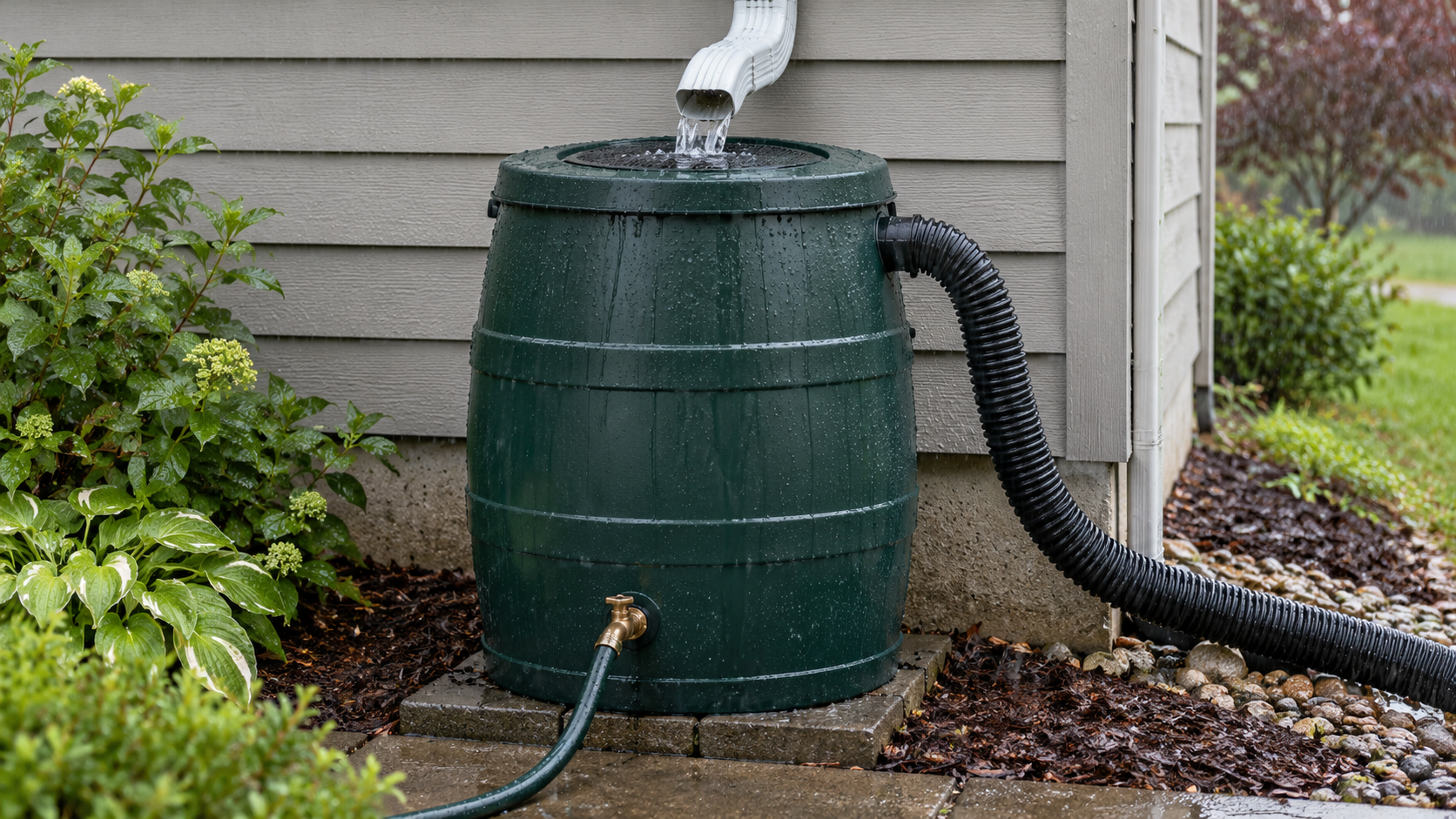
Rain Barrel Collection System Explainer
A rain barrel collects water that a roof and gutter already concentrate. Rain runs down the roof, enters the gutter, and moves through a downspout into a covered storage container. A screen at the inlet blocks leaves and helps exclude insects and small animals. The barrel does not create pressure like a pump; it simply holds runoff at a higher elevation so gravity can move the water through a lower spigot or hose.
The stored volume fills from the bottom upward. Pressure at the spigot depends on the vertical depth of water above it, often called head. A fuller or more elevated barrel can provide a stronger gravity flow, but the pressure remains modest compared with household plumbing. Raising the barrel on a stable, level base also creates clearance for a watering can. The support must safely carry the large weight of water.
An overflow is essential because the roof can deliver more water than the barrel holds during a storm. A large outlet near the top routes excess water through a hose or pipe to a safe discharge area. Without it, water can spill beside the foundation or erode the base. Some downspout diverters return overflow to the original drain once the barrel is full, while direct-entry systems use a separate overflow connection.
Water quality reflects the roof, gutter, air, and storage conditions. Dust, bird droppings, roofing particles, and organic debris may enter the runoff, so typical household barrels are used for suitable outdoor purposes rather than assumed safe for drinking. A first-flush device can divert the dirtiest initial runoff. Opaque walls and a tight cover reduce light, algae growth, and mosquito access, while screens and fittings need periodic cleaning.
Placement and local rules matter. The overflow should drain away from buildings without creating a nuisance on neighboring property. The barrel should be disconnected or managed before freezing where expanding ice could damage it. Children cannot be allowed to climb on the container or stand. Collected water is used between storms so storage capacity is available for the next rainfall, and plant needs should guide irrigation rather than convenience alone.
A rain barrel is therefore a small gravity-fed stormwater system. The roof supplies a catchment, gutters provide conveyance, the screen protects the inlet, and the vessel creates temporary storage. Gravity releases water through the spigot, while the overflow safely preserves the original drainage function after capacity is reached. Its value comes from managing both ordinary drawdown and the much larger flows that can arrive during heavy rain.
Roof runoff enters through a screened downspout connection, fills a covered barrel, and leaves by a low spigot or a high overflow. Key terms include catchment, gutter, inlet screen, storage volume, head pressure, spigot, diverter, and overflow.
A roof can supply more water than the container holds. The overflow routes that excess away from the foundation instead of letting it spill uncontrolled.
Usually not. Its flow comes from gravity and depends on water depth and elevation, so it is much lower than typical household plumbing pressure.
Explore more "Explainers"
Discover additional explainers across politics, science, business, technology, and other fields. Each explainer breaks down a complex idea into clear, everyday language—helping you better understand how major concepts, systems, and debates shape the world around us.