

Sleeping Bag Insulation Explainer
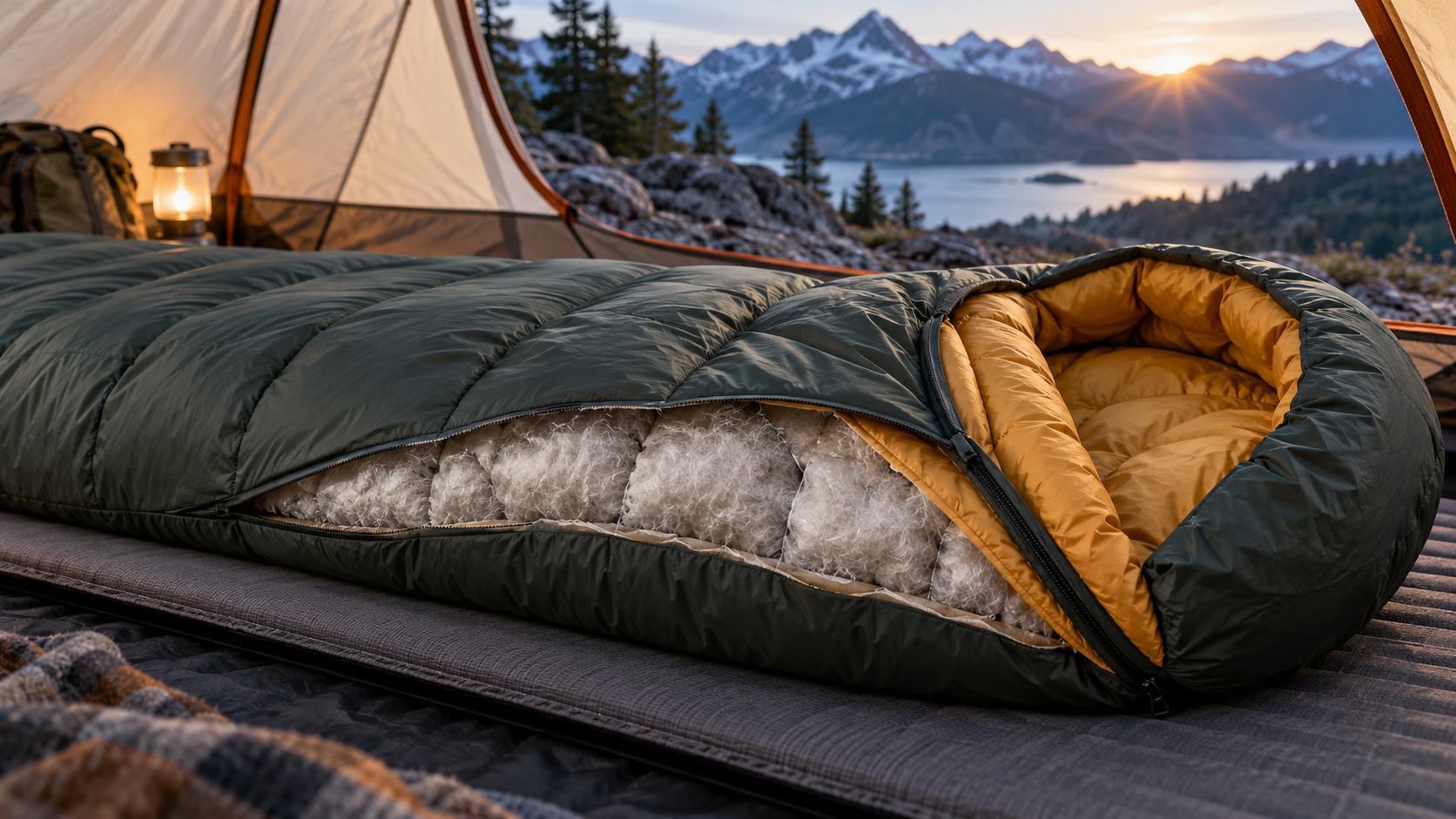
A sleeping bag keeps a person warm by slowing heat loss, not by generating heat of its own. Down clusters or synthetic fibers create loft, a thick network of tiny spaces that holds relatively still air. Still air conducts heat poorly, and preventing large-scale air movement limits convection. The warmer the body makes the air inside, the more important it becomes to keep that air from being replaced rapidly by cold air outside.
The insulation must remain expanded. Baffles divide the shell into chambers so down does not all slide to one area, while synthetic sheets or clusters are stabilized by stitching and bonding. Stitch lines can create thin spots, so construction methods balance weight, cost, and cold-weather performance. A hood reduces heat loss around the head, a shaped footbox protects loft around the feet, and a draft collar limits pumping of warm air near the opening.
The zipper is a necessary gap in the insulation. A lofted draft tube placed behind it blocks a direct cold path, while a well-fitted slider and shell reduce air leakage. A bag that is too roomy contains more air for the body to warm and may allow convection; one that is too tight compresses insulation at shoulders or feet. Clothing inside should remain dry and should not squeeze loft flat against the shell.
The insulation under a sleeper is compressed by body weight and loses much of its loft. A ground pad is therefore a separate, essential part of the sleeping system. Its resistance to heat flow is commonly expressed as an R-value. A warm bag on an inadequate pad can still feel cold because heat conducts into the ground. Wind protection, shelter ventilation, clothing, metabolism, and the surface beneath the pad also influence comfort.
Moisture reduces performance. Wet down can clump and lose loft, while synthetic insulation usually retains more structure but still becomes less comfortable and heavier. Breath creates water vapor inside the system, so drying and ventilation matter over repeated nights. Temperature ratings come from standardized testing under defined conditions, yet individual comfort varies with fatigue, food, health, body size, clothing, pad insulation, humidity, and exposure.
The bag works because loft turns lightweight fibers into a deep air-trapping layer. The shell contains that layer, baffles distribute it, shaped features close common draft paths, and the pad replaces the insulation compressed beneath the body. Warmth depends on the entire system remaining dry, appropriately sized, and matched to conditions. The bag conserves metabolic heat by lengthening the paths through which that heat can conduct, convect, and radiate away.
Lofted fibers hold still air that slows conduction and convection, while a hood, draft collar, and zipper tube limit warm-air leakage. Key terms include loft, down, synthetic fill, baffle, draft tube, footbox, ground pad, and R-value.
Body weight compresses the bag underneath, removing loft. The pad supplies the main insulating resistance between the sleeper and the cold ground.
Tight contact can compress insulation and reduce its air-trapping thickness, especially around the shoulders, knees, and feet.
Explore more "Explainers"
Discover additional explainers across politics, science, business, technology, and other fields. Each explainer breaks down a complex idea into clear, everyday language—helping you better understand how major concepts, systems, and debates shape the world around us.