

String Trimmer Cutting-Line Explainer
A string trimmer rotates a spool at high speed near the ground. One or more lengths of flexible nylon line extend from the head. Rotation pulls each line outward because its mass resists the continuous change in direction, creating tension along the line. The fast-moving tip repeatedly strikes grass and thin weeds, concentrating force in a small area and severing stems. Flexible line can reach edges where a rigid mower deck cannot fit.
The line is not a rigid blade. It bends when it hits harder objects and gradually wears from abrasion, heat, and repeated impacts. Cutting happens most effectively near the outer tip, where linear speed is greatest. Excessively long line increases aerodynamic drag and motor load, so the guard often carries a fixed cutter that trims newly fed line to the designed radius. Using the specified diameter preserves the intended speed, load, and feeding behavior.
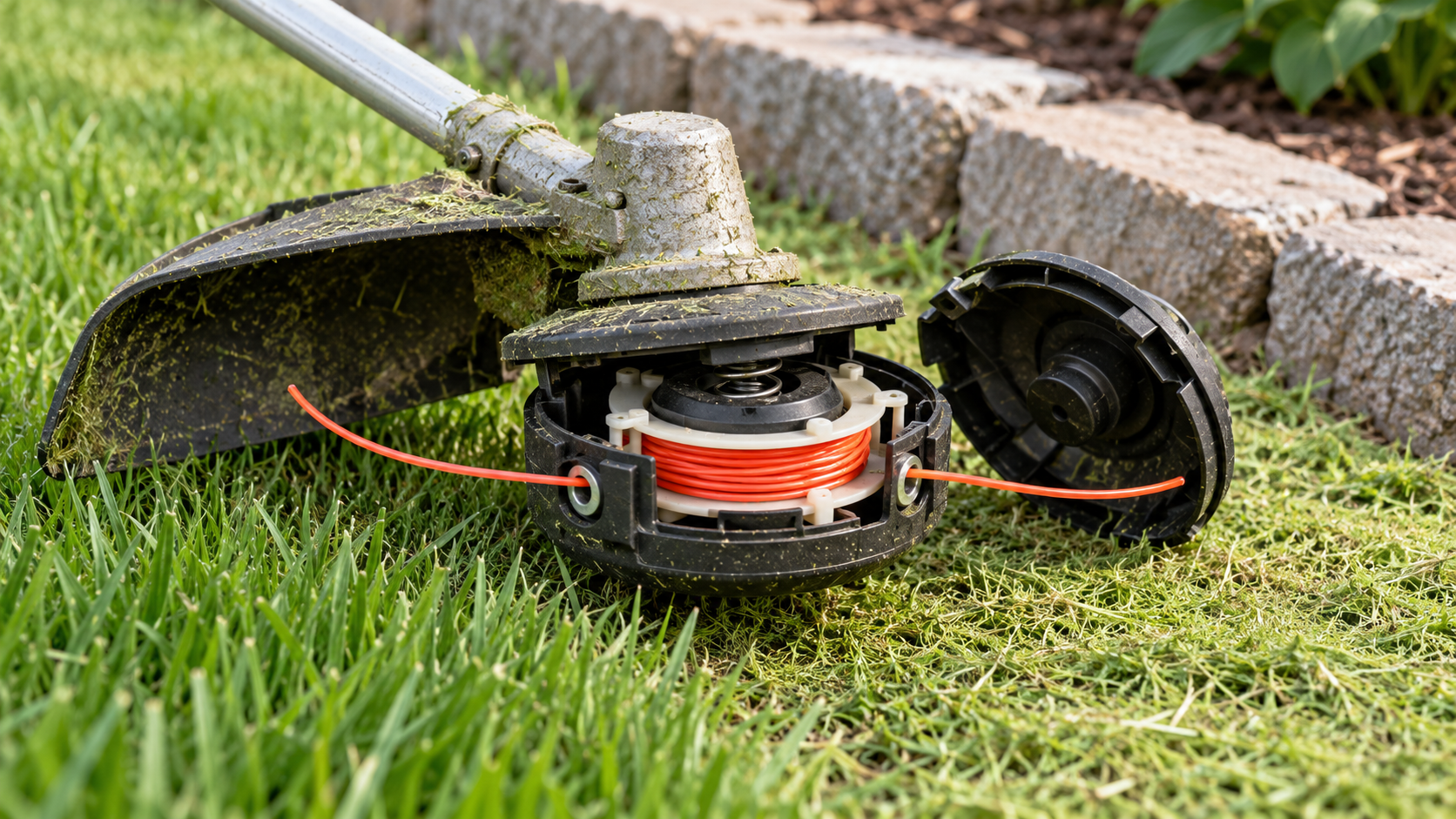
A bump-feed head stores extra line on an internal spool. Briefly tapping the rotating head against the ground releases a latch, and centrifugal pull advances a measured length before the latch reengages. Automatic heads sense speed or line length through other mechanisms, while fixed-line heads use short replaceable pieces. Correct winding direction and even layers matter because crossed or tightly melted line can bind instead of feeding.
The guard blocks part of the cutting circle and helps deflect some debris, but it cannot contain every object. Line striking stones, glass, wire, or hard soil can eject fragments. The operator clears the work area, keeps bystanders away, wears eye and leg protection, and holds the head at the angle described by the maker. Spinning line can cut skin and damage bark, siding, irrigation tubing, and vehicle finishes even though it is flexible.
Power is disconnected before opening the head, removing wrapped vegetation, or changing line. A bent shaft, cracked spool, damaged guard, or unusual vibration requires attention because high-speed imbalance increases stress. The trimmer is used only with compatible line or blades expressly approved for that model; substituting wire, chain, or other improvised material can create a severe projectile and entanglement hazard.
The trimmer converts rotation into a fast circular cutting path using a lightweight consumable line. Centrifugal tension extends the line, the outer tip supplies useful impact speed, and the spool replaces material lost through wear. Flexibility makes the tool adaptable around edges but does not make the moving line harmless. Efficient trimming depends on correct line length and diameter, sound feeding parts, an intact guard, safe distance, and a debris-free work zone.
A high-speed spool pulls nylon line outward under tension, and the rapidly moving tips sever grass through repeated impacts. Key terms include spool, nylon line, centrifugal tension, tip speed, bump feed, latch, guard, and line cutter.
It trims freshly advanced line to the radius the motor, head, and guard were designed to use, preventing excess drag and unsafe reach.
Improvised wire may not flex, feed, or fail safely and can break into dangerous high-speed projectiles while overloading the tool.
Explore more "Explainers"
Discover additional explainers across politics, science, business, technology, and other fields. Each explainer breaks down a complex idea into clear, everyday language—helping you better understand how major concepts, systems, and debates shape the world around us.