

Live Two-Way Explainer
A live two-way is a real-time conversation between a studio presenter and a reporter or correspondent at another location. Viewers usually see the anchor ask a question, then the broadcast switches to the reporter for an answer. The field location may be connected by fiber, microwave, satellite, cellular bonding, or an internet-based return. Whatever the path, the goal is a stable exchange that adds timely reporting and firsthand context.
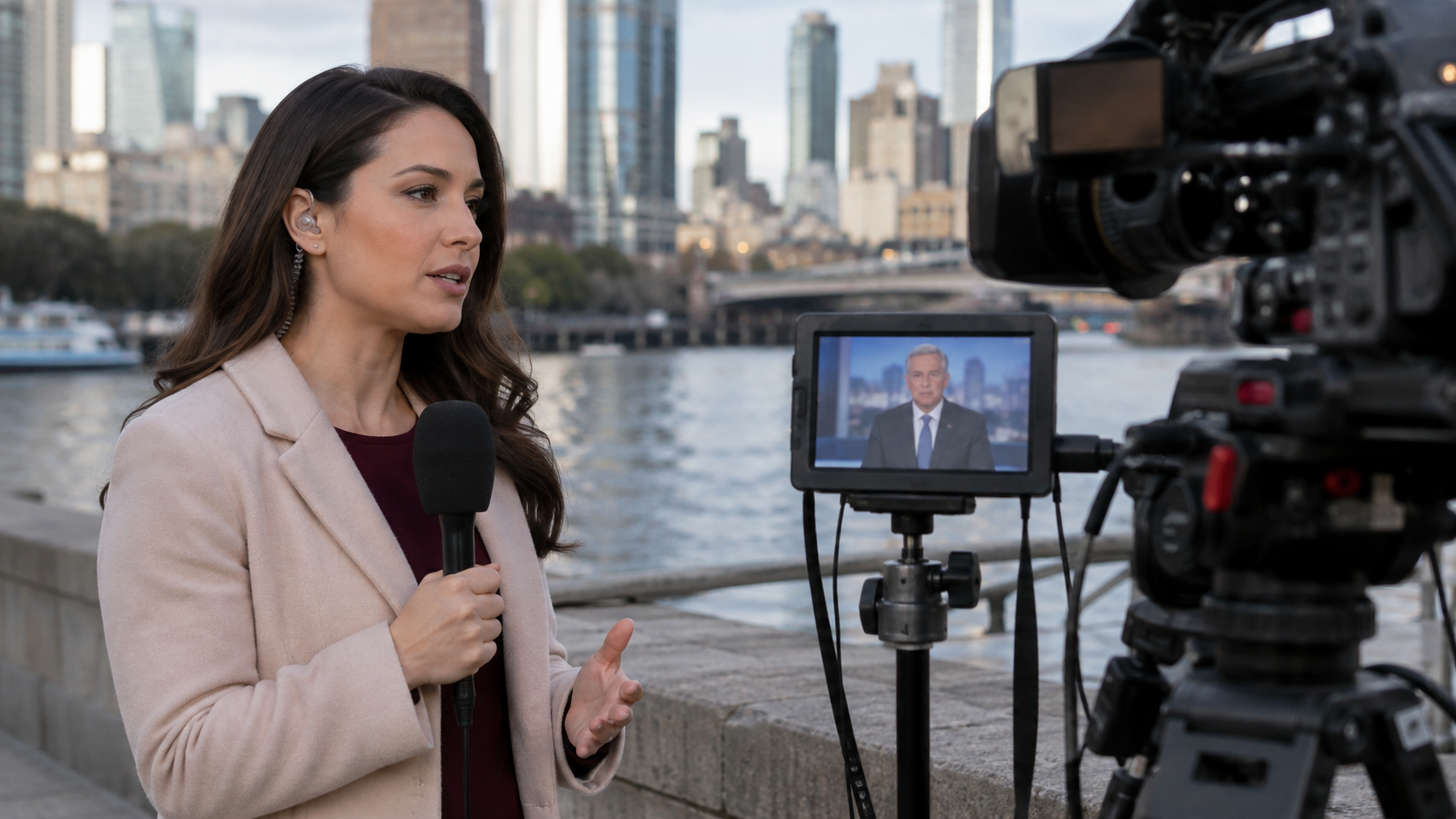
The conversation is planned even though it sounds spontaneous. Producers agree on the likely questions, the central facts, the available pictures, and the time allowed. The reporter listens to the program through an IFB earpiece and may receive cues from the control room. A camera operator frames the live shot while engineers monitor video, audio, delay, and transmission quality. Backup phone or audio routes are prepared when the story is important.
Delay changes the rhythm of a two-way. Satellite and some internet links create a noticeable pause, so the anchor must finish a question and wait before speaking again. The reporter should avoid guessing when the return audio drops and should tell the studio if a question was not heard. Directors use clear cues and avoid rapid interruptions that can make both speakers talk at once.
Being live does not reduce the duty to verify. The reporter distinguishes confirmed facts from observations, attributes developing claims, and explains what remains unknown. Producers update both participants when information changes. The camera should not expose victims, private details, tactical police positions, or graphic scenes simply because the location is active. A live image is still an editorial choice with legal and ethical consequences.
A strong live two-way offers something the recorded story cannot: immediate explanation, a knowledgeable person at the scene, or a chance for the anchor to clarify an important point. It should not be used only to create urgency. When the connection, timing, and reporting are well prepared, the exchange feels natural while giving viewers accurate context about what is happening and why it matters.
Because information travels both directions: the studio anchor speaks to the field reporter, who hears and responds live.
The reporter usually listens through an IFB earpiece connected to the program and control room.
Newsrooms prepare backups such as a phone line, audio-only link, recorded material, or an anchor summary.
Explore more "Explainers"
Discover additional explainers across politics, science, business, technology, and other fields. Each explainer breaks down a complex idea into clear, everyday language—helping you better understand how major concepts, systems, and debates shape the world around us.