

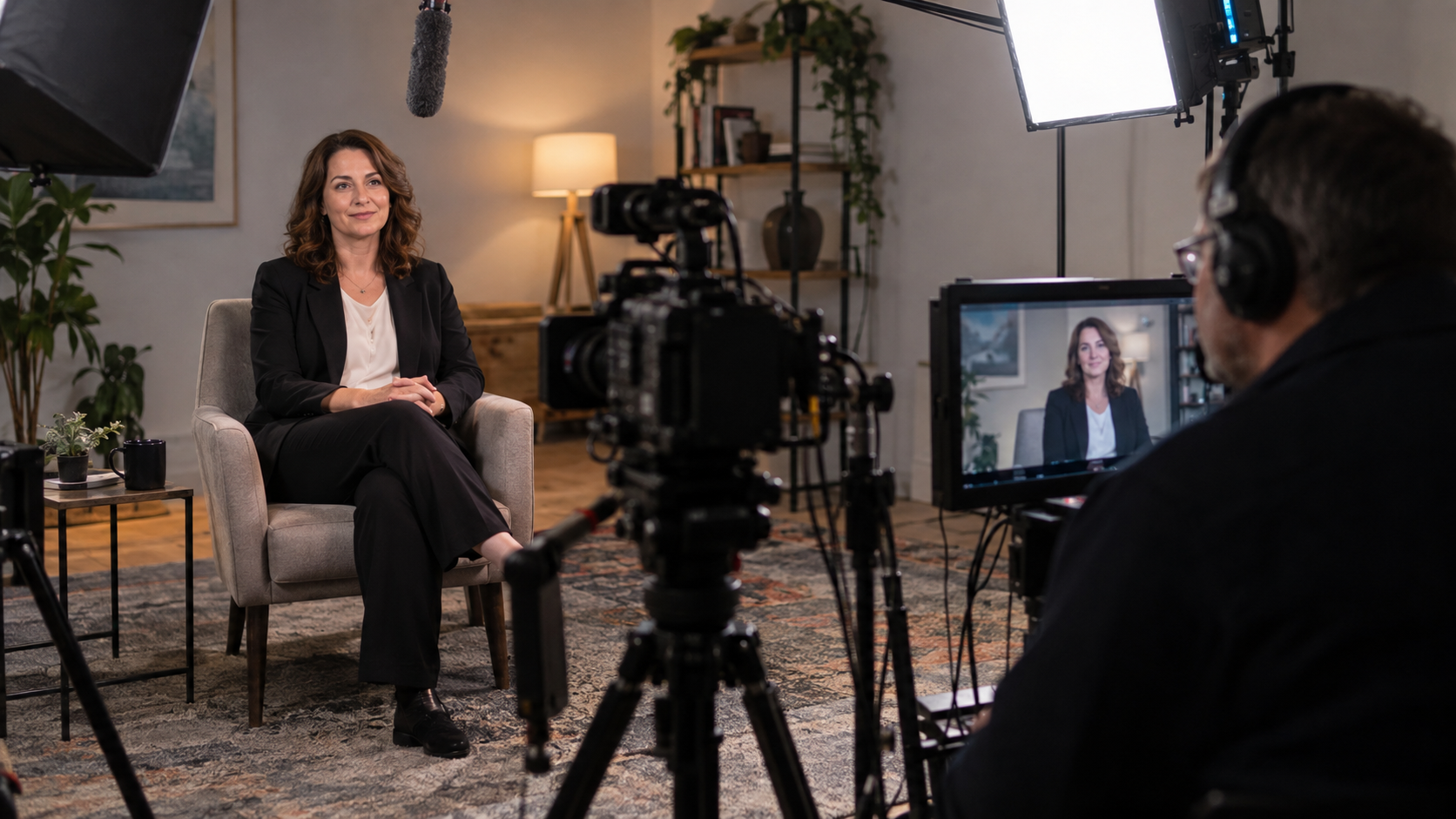
Remote Television Interview Explainer
A remote television interview connects a guest who is outside the main studio to an anchor or reporter. The guest may sit in another broadcast facility, a home office, a newsroom booth, or a location set. The connection can travel through satellite, fiber, dedicated transmission services, or secure internet platforms. The audience sees a conversation, but several separate video, audio, return, and cue paths make it possible.
Before airtime, a producer confirms the guest’s identity, role, and availability. A technician checks framing, lighting, microphone placement, bandwidth, and the return feed the guest will hear. The guest may wear an IFB earpiece or listen through a computer connection. Producers explain whether the segment is live or recorded, how long it will run, and what to do if audio or video disappears.
Delay is a central challenge. The interviewer should finish each question cleanly and allow the remote guest time to respond. Both people avoid filling a brief silence, which can produce overlapping speech. A remote guest should look toward the camera rather than a nearby monitor when addressing viewers, and the shot should use a stable background that does not distract or reveal private information.
Editorial standards remain the same as for an in-person interview. The newsroom verifies the guest’s credentials, prepares evidence-based questions, and corrects false or unsupported claims when needed. Producers should not allow a polished remote setup to imply expertise the person does not have. If the connection quality makes an answer unclear, the anchor can restate what was heard or pause rather than guessing.
Good remote interviews also have backups. The team may keep a phone line open, record the guest locally, or prepare a still image and summary if the video fails. The director coordinates split screens, name graphics, microphones, and the return to the studio. With careful technical testing and strong interviewing, remote links broaden access to witnesses and experts without weakening accuracy or clarity.
No. They may be live, recorded in real time, or recorded locally and edited for later use.
Transmission delay means the question may reach them slightly later, and their answer also needs time to return.
A reliable audio path, often a phone line, can keep the conversation usable if the video connection fails.
Explore more "Explainers"
Discover additional explainers across politics, science, business, technology, and other fields. Each explainer breaks down a complex idea into clear, everyday language—helping you better understand how major concepts, systems, and debates shape the world around us.