

Broadcast Backtiming Explainer
Backtiming is the practice of calculating a program from its required ending time backward. A television newscast may have to leave the air at an exact second for network programming, advertising, or another scheduled feed. Producers compare the remaining material with that fixed endpoint, then determine when each late segment must begin. The method turns the end of the show into a firm reference instead of an estimate.
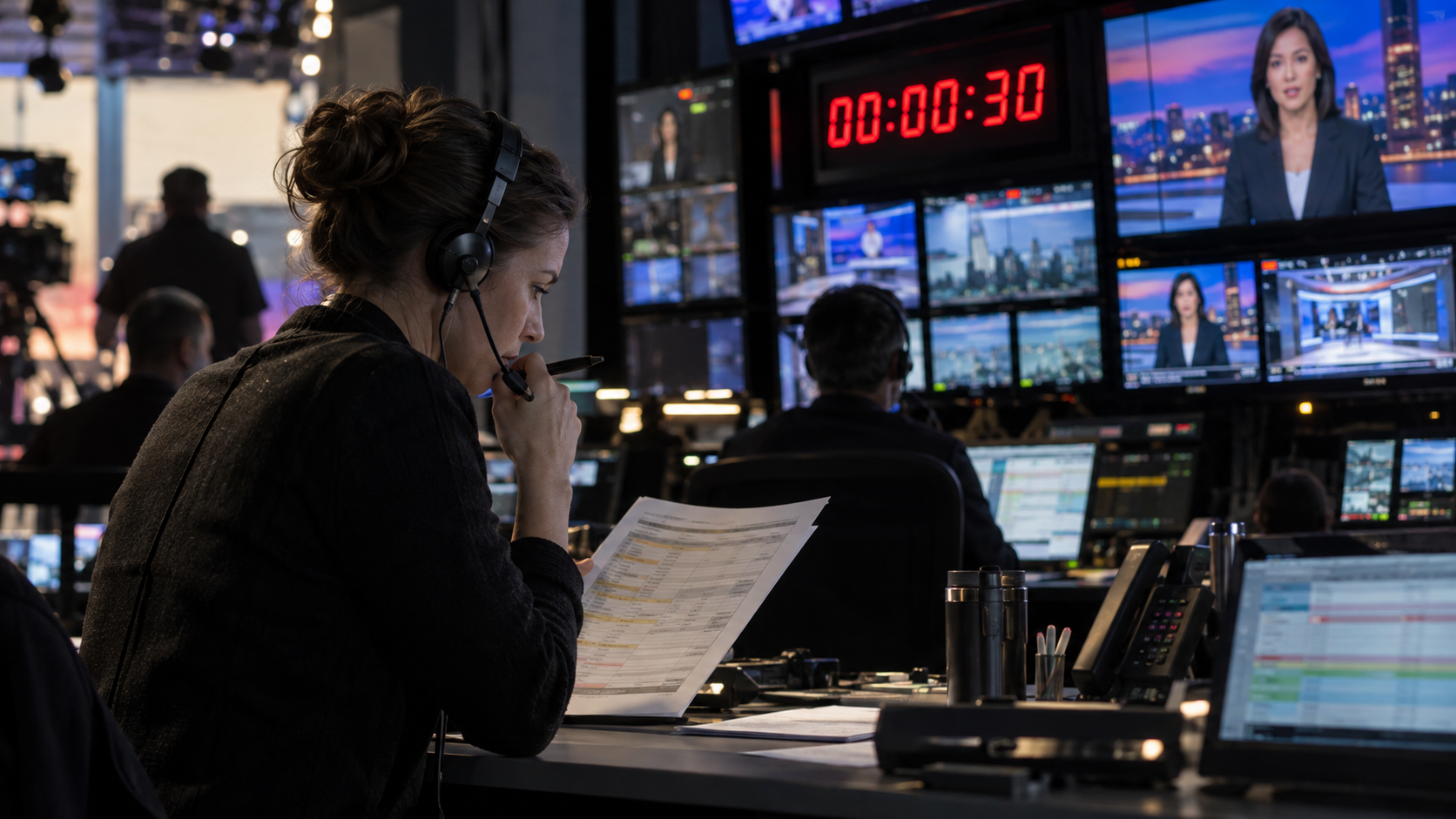
The producer watches the rundown, on-air clock, and actual duration of completed stories. If an interview runs long or breaking news is added, the remaining blocks must be adjusted. The team may shorten anchor copy, drop a lower-priority item, trim a weather segment, or move a feature to another newscast. Protected elements such as legal station identification, required breaks, or a hard network join limit what can change.
Backtiming is communicated throughout the control room. The director, anchors, audio operator, graphics team, playback operator, and floor crew need the same target. Producers call out how much time remains and warn when a segment must wrap. Reporters in live shots receive concise cues through their earpieces. Clear language matters because a misunderstood number can create silence, cut off a source, or force the program past its scheduled out.
Timing pressure never excuses factual shortcuts. Editors should not remove qualifying language, attribution, or a necessary correction just to save seconds. A story that cannot be shortened safely may need to be dropped or moved online. Producers also distinguish estimates from confirmed durations; live conversations and developing events can change quickly, so the rundown must remain flexible.
Successful backtiming is almost invisible to viewers. The newscast reaches its final story, closing line, and transition without a frantic rush or an empty gap. Achieving that smooth ending requires accurate clocks, realistic script estimates, decisive editorial priorities, and constant communication. It is both a technical calculation and a newsroom judgment about what the audience most needs before time runs out.
Because the program often has a fixed end, so crews calculate when the remaining elements must start.
They may trim wording or remove lower-priority elements, but must preserve accuracy, attribution, and required content.
It is most visible in live programs, but the same backward planning can help any production meet a fixed duration.
Explore more "Explainers"
Discover additional explainers across politics, science, business, technology, and other fields. Each explainer breaks down a complex idea into clear, everyday language—helping you better understand how major concepts, systems, and debates shape the world around us.