

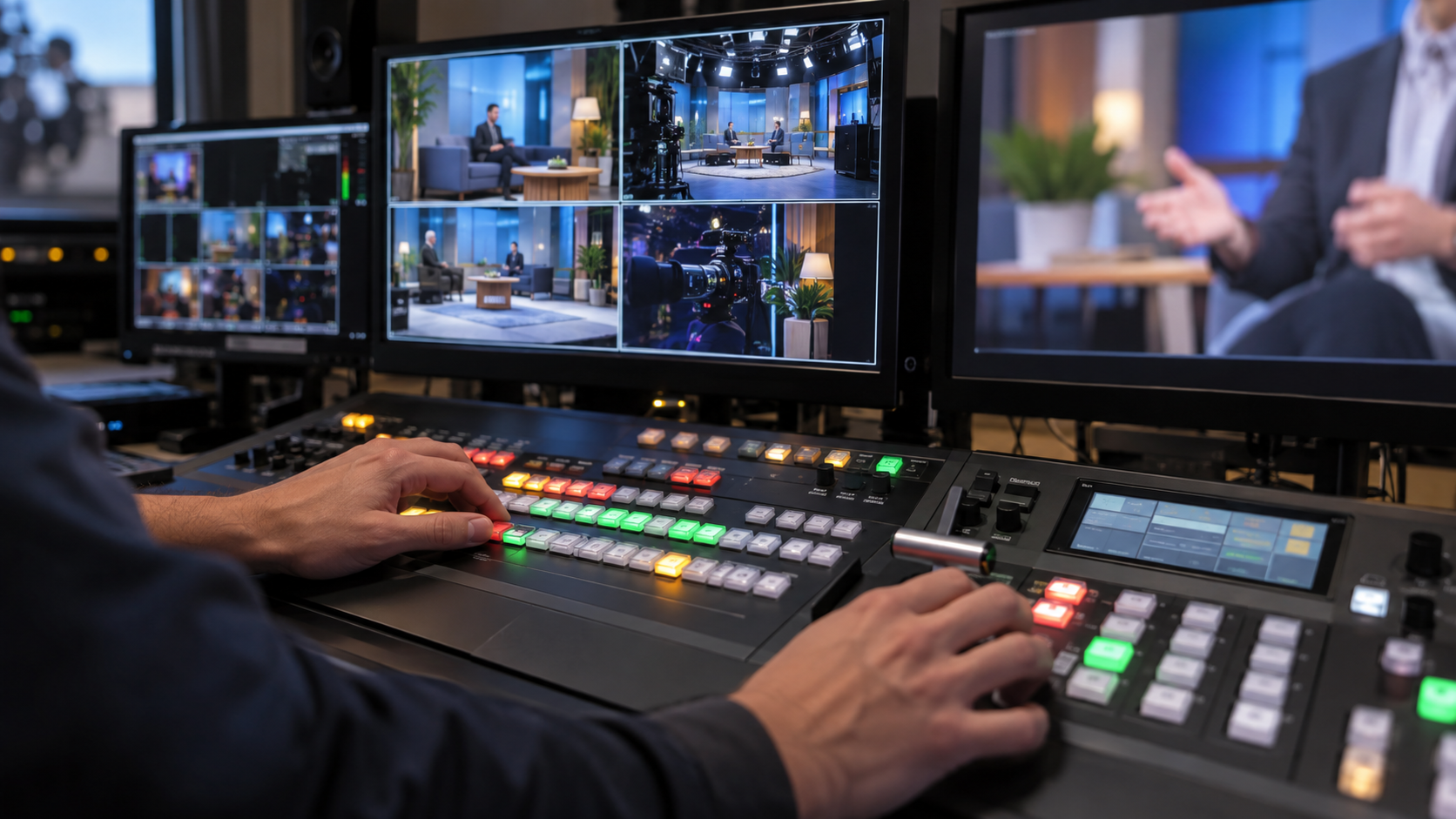
Video Switcher Explainer
A video switcher is the control system used to select which visual source becomes part of a television program. Cameras, recorded clips, graphics, remote feeds, and other inputs are connected to it. The operator can cut instantly between sources or use transitions such as dissolves and wipes. In a live newscast, the switcher turns many simultaneous pictures into the single sequence viewers see.
The technical director usually operates the switcher while following the director’s calls. A preview bus lets the crew inspect the next source before it is taken, while the program bus represents the output going to air or recording. Multiview monitors show the available inputs, their labels, and which ones are active. Clear numbering and rehearsal reduce the risk of selecting the wrong camera or an unready feed.
Modern switchers do more than simple cuts. They can place graphics over video, create split screens, resize sources, key backgrounds, store still images, and recall programmed effects. Automation may connect these actions to the newsroom rundown. Even so, the crew verifies every source, because a saved sequence can repeat an old mistake just as quickly as it repeats a correct setup.
Switching is both technical and editorial. Choosing when to leave an emotional interview close-up, show a wide scene, or display evidence changes what viewers notice. The director and technical director avoid shots that reveal private information, graphic material, or a person who has not consented to appear. They also confirm that graphics and video match the words being spoken.
A well-operated switcher should be almost invisible. Cuts feel purposeful, graphics appear at the right moment, and backup sources are ready if a camera or feed fails. The equipment provides speed and flexibility, but it depends on disciplined labeling, communication, and judgment. Each illuminated button represents a possible picture; the crew’s responsibility is to choose the accurate one at the right time.
Preview is the source prepared for the next transition; program is the source currently sent to air or recording.
A technical director commonly operates it while following the director’s camera and source calls.
Yes. Many production switchers can key graphics, create split screens, resize sources, and recall effects.
Explore more "Explainers"
Discover additional explainers across politics, science, business, technology, and other fields. Each explainer breaks down a complex idea into clear, everyday language—helping you better understand how major concepts, systems, and debates shape the world around us.