

Voice Votes and Recorded Votes Explainer
Legislatures can make decisions without using the same voting method every time. In a voice vote, the presiding officer asks members supporting and opposing a question to respond aloud, then announces which side prevailed. A recorded vote identifies individual members and their positions. Both are ways to resolve a question before the chamber, but they leave different public records. Understanding the distinction helps explain why a measure can pass without a published list of everyone who supported it.
Voice voting is useful when the outcome appears clear or members do not insist on an individual count. The chair judges the collective response rather than producing a numerical roll call for each participant. That makes it relatively quick, but it gives the public less information about individual choices. An announcement that a proposal passed by voice vote therefore establishes a chamber decision; it does not establish that every member agreed or that no opposition was expressed.
Recorded voting provides a different kind of accountability. The United States House commonly uses an electronic voting system, while the Senate uses roll calls conducted by its clerk. The resulting record can show who voted for or against a proposal and who did not vote. Rules determine when members can demand a recorded vote and how requests are recognized. The technology differs between institutions, so a voting method familiar from one chamber should not be assumed to operate identically elsewhere.
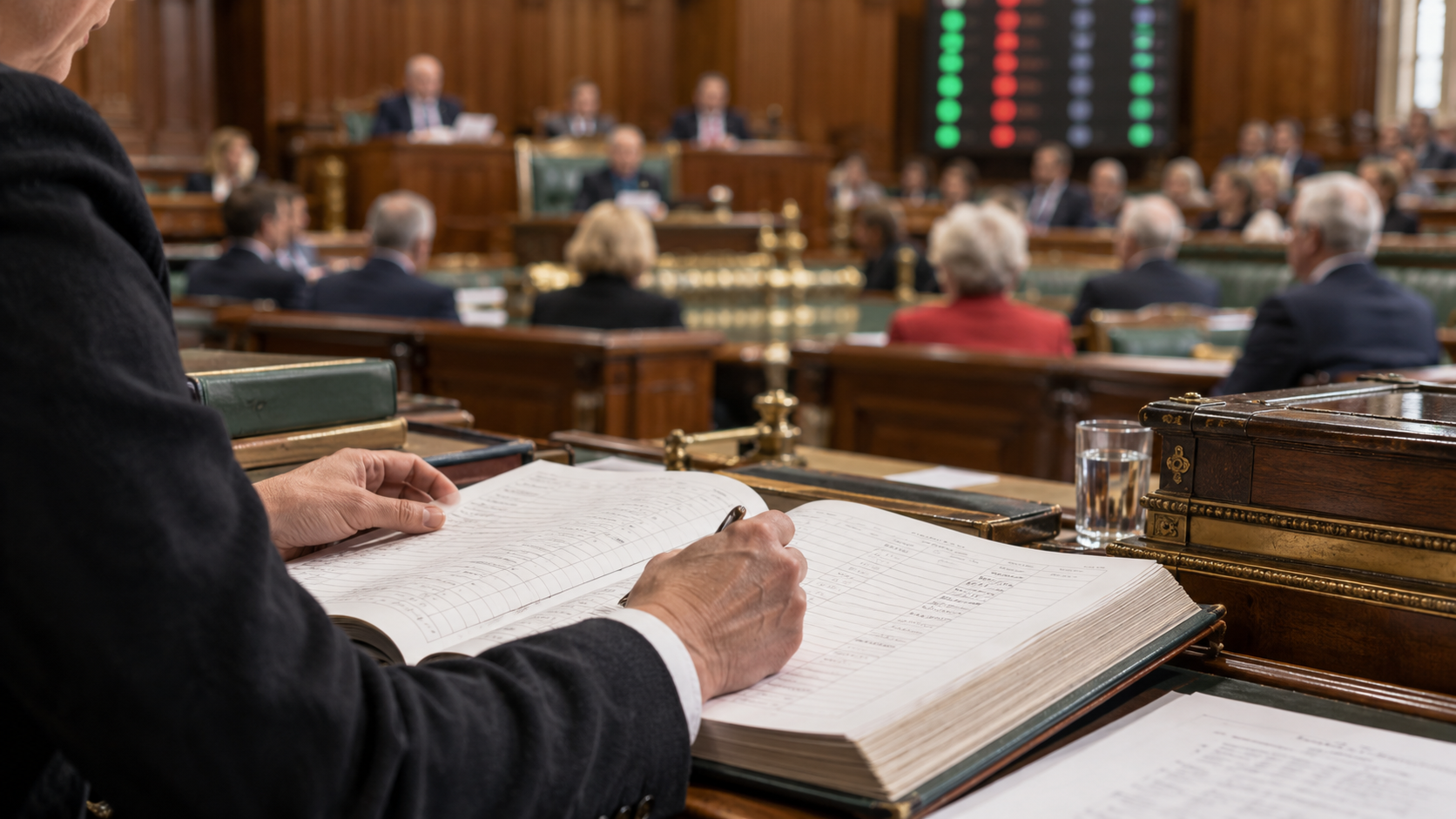
Imagine lawmakers deciding whether to adopt an uncontroversial procedural motion. A voice vote might settle it quickly. If members seek a formal record on a disputed policy amendment, the chamber may conduct a recorded vote instead under its rules. For readers, the practical question is what evidence the chosen method supplies. Check the actual question voted on, the method, and any available individual record. A recorded vote on an amendment is not necessarily a vote on final passage, and a voice vote cannot supply individual positions that were never recorded.
A voice vote measures the chamber's spoken response and the chair's judgment of which side prevailed.
A voice vote does not create an individual yes-or-no voting list.
House electronic voting and Senate roll calls can produce individual voting records through different mechanisms.
Members' rights to request a recorded vote depend on the chamber's procedures.
Passing by voice vote does not necessarily mean unanimous support.
Always identify the precise motion: an amendment vote and final passage answer different questions.
Explore more "Explainers"
Discover additional explainers across politics, science, business, technology, and other fields. Each explainer breaks down a complex idea into clear, everyday language—helping you better understand how major concepts, systems, and debates shape the world around us.