

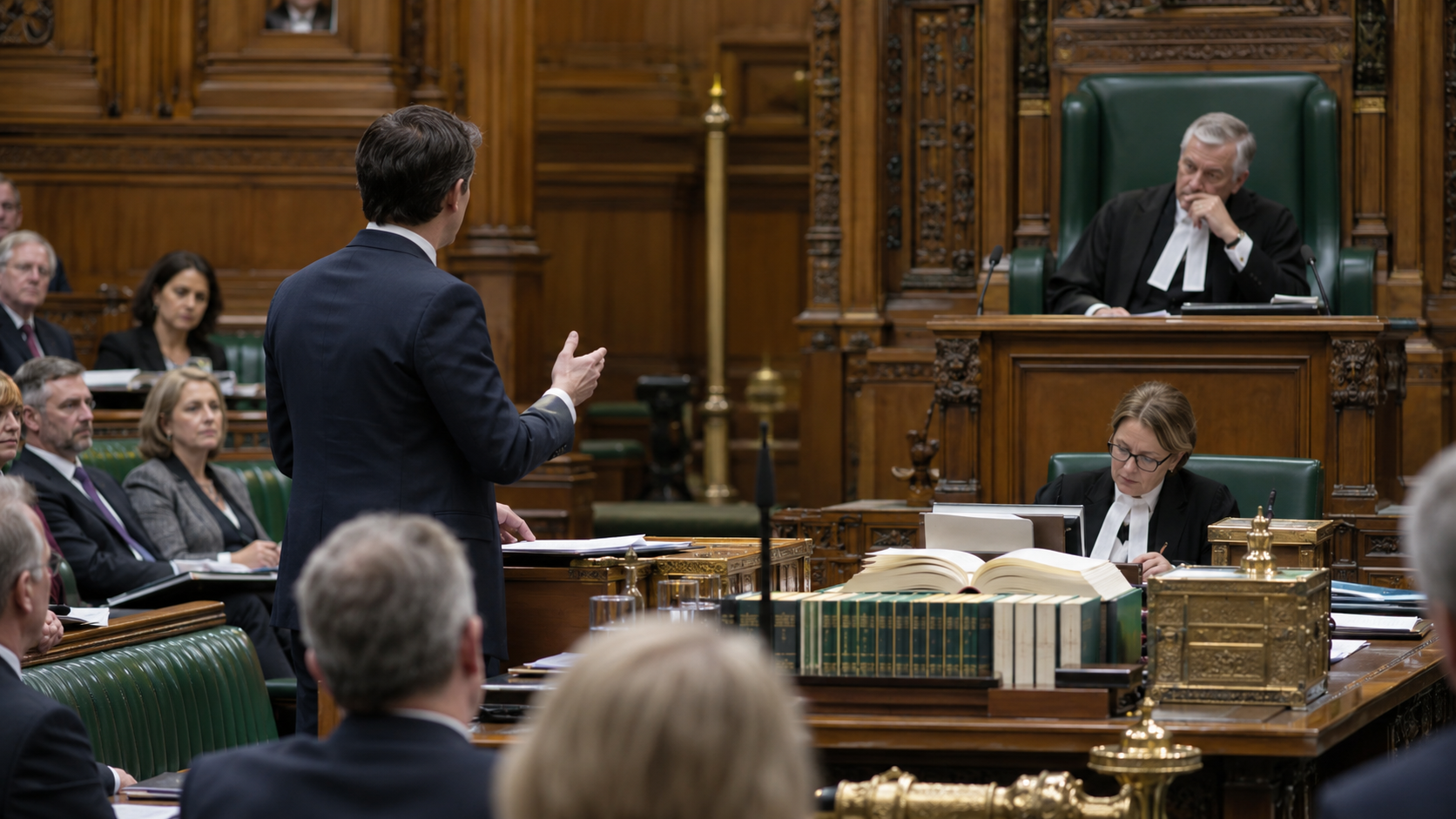
Points of Order Explainer
A point of order is a formal objection that a legislature's proceedings violate an applicable procedural rule. Rather than arguing that a proposal is bad policy, a member argues that the chamber cannot take the proposed step in the way it is being attempted. The issue might concern an amendment, the order of business, or another procedural requirement. In the United States House, the member identifies the rule at issue and the presiding officer determines how it applies.
This distinction matters because legislatures operate through rules as well as political majorities. A member who supports a policy might still object to the process used to consider it. A member who opposes a bill might use a valid procedural objection to challenge a particular amendment without resolving the entire debate. The question before the chair is the procedural claim, not simply whether the objecting member likes the legislation. Rules, precedents, and any special arrangements governing consideration supply the relevant framework.
Suppose a chamber is considering a bill and a member offers an amendment that another member believes violates a governing restriction. The second member can raise a point of order, explain the alleged defect, and seek a ruling. If the objection is sustained, the procedural consequence depends on the rule and situation. The amendment might be excluded, for example, while consideration of the bill continues. If the objection is rejected, debate can proceed under the chair's ruling, subject to any available appeal.
A point of order is therefore neither a general protest nor an automatic veto over the chamber's work. Timing, the specific rule, and the available remedy all matter. Some procedural protections can be waived through authorized mechanisms, and appeal procedures differ across legislatures. When reporting mentions a successful point of order, ask what action was ruled out of order and what happened next. A narrow procedural ruling may have major political effects, but it should not be described as deciding every policy or legal question associated with the legislation.
The objection concerns compliance with a legislative rule, rather than a member's general disagreement with policy.
An effective explanation identifies the procedural requirement and the action alleged to violate it.
The presiding officer applies relevant rules and precedents when deciding the objection.
A ruling may remove an amendment or alter proceedings without defeating the whole bill.
Some rulings can be appealed under the chamber's procedures; the route is institution specific.
Procedural protections may be affected by waivers or special rules governing consideration.
Explore more "Explainers"
Discover additional explainers across politics, science, business, technology, and other fields. Each explainer breaks down a complex idea into clear, everyday language—helping you better understand how major concepts, systems, and debates shape the world around us.