

Question Time Explainer
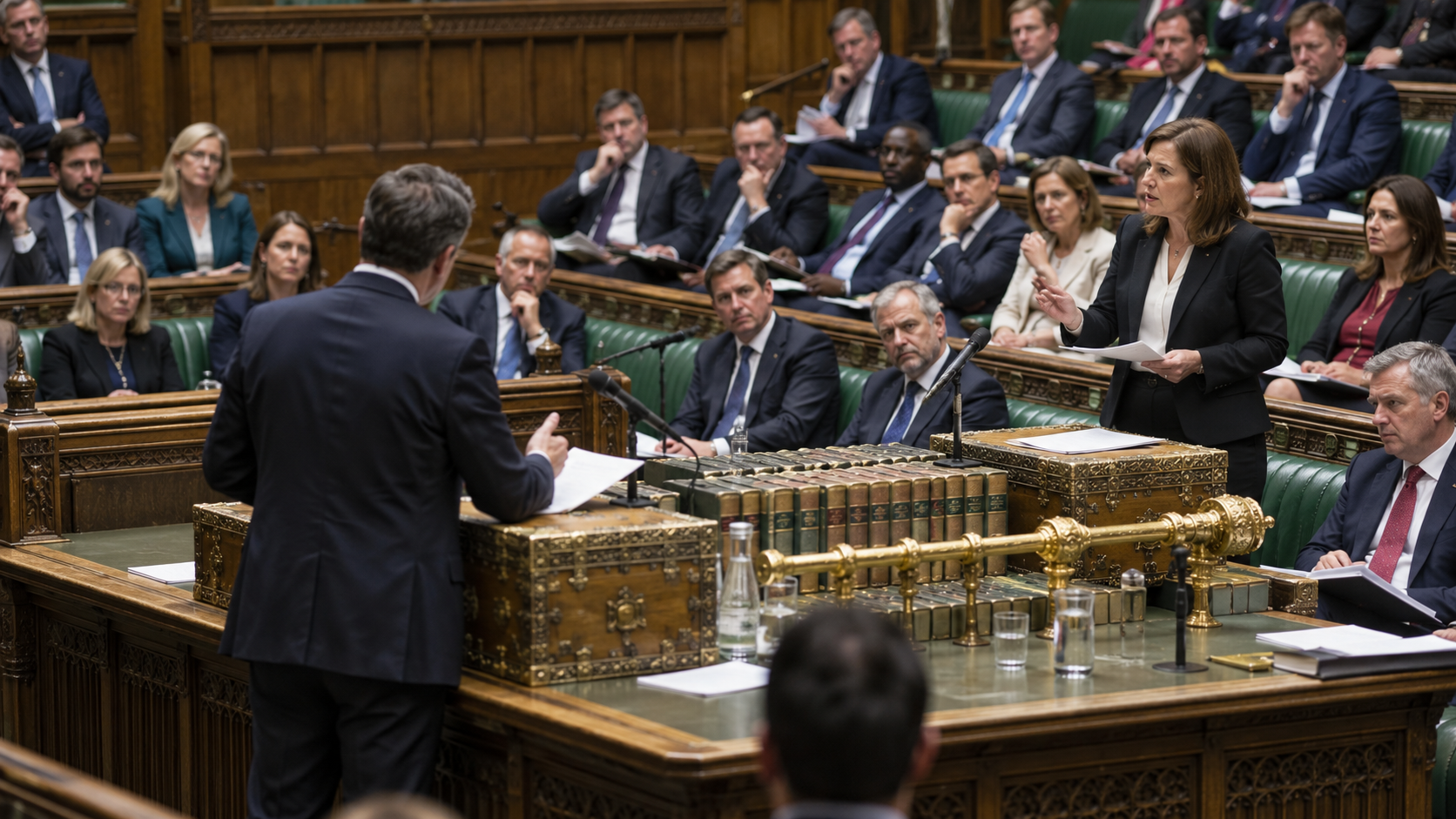
Question time is a parliamentary opportunity for members to ask ministers about the government's work. In the United Kingdom, oral questions in the House of Commons are organized around departmental responsibilities, with separate arrangements for questions to the prime minister. The exchanges make ministers explain decisions, provide information, and respond to criticism in public. They are part of parliamentary scrutiny, even when no legislation is being amended and no final vote on government policy takes place during the discussion.
The procedure mixes preparation with some unpredictability. Members submit substantive oral questions in advance, and selected questions appear on the Order Paper. Supplementary questions allow members to follow up on a minister's answer, provided they relate to the original subject. Departmental sessions can also include topical questions. Those different formats matter: a carefully prepared initial answer may be tested by a more immediate follow-up about an omitted detail, a local consequence, or a tension between the government's explanation and its stated priorities.
Consider a hypothetical transport question about delays to a public project. A member might begin by asking what assessment the department has made of progress. The minister responds, and a supplementary question can press for an explanation of the delays or ask how affected communities will be treated. Other members may raise related concerns when recognized. This creates a public sequence of question, answer, and challenge. The usefulness of that sequence depends on the information provided, the specificity of the questions, and the opportunity for scrutiny.
Question time can attract attention for sharp exchanges, but its institutional purpose extends beyond memorable clips. An answer enters the parliamentary record and can be compared with later decisions, written information, or committee evidence. A promise made during questioning is not automatically a new law, and an evasive answer does not itself establish wrongdoing. To interpret an exchange, identify the responsible department, the original question, and the minister's actual response. That fuller context helps separate a substantive explanation from political theater and shows what remains unanswered.
Oral questions allow members to scrutinize government work within ministers' areas of responsibility.
Departmental question sessions and prime minister's questions have different arrangements.
Selected advance questions appear on the Order Paper, providing a starting point for the exchange.
Supplementary questions can test or develop an answer while remaining connected to its subject.
Questioning can create a public record of explanations and commitments without changing the law.
A short video clip may omit the original question, earlier answer, or relevant departmental context.
Explore more "Explainers"
Discover additional explainers across politics, science, business, technology, and other fields. Each explainer breaks down a complex idea into clear, everyday language—helping you better understand how major concepts, systems, and debates shape the world around us.