

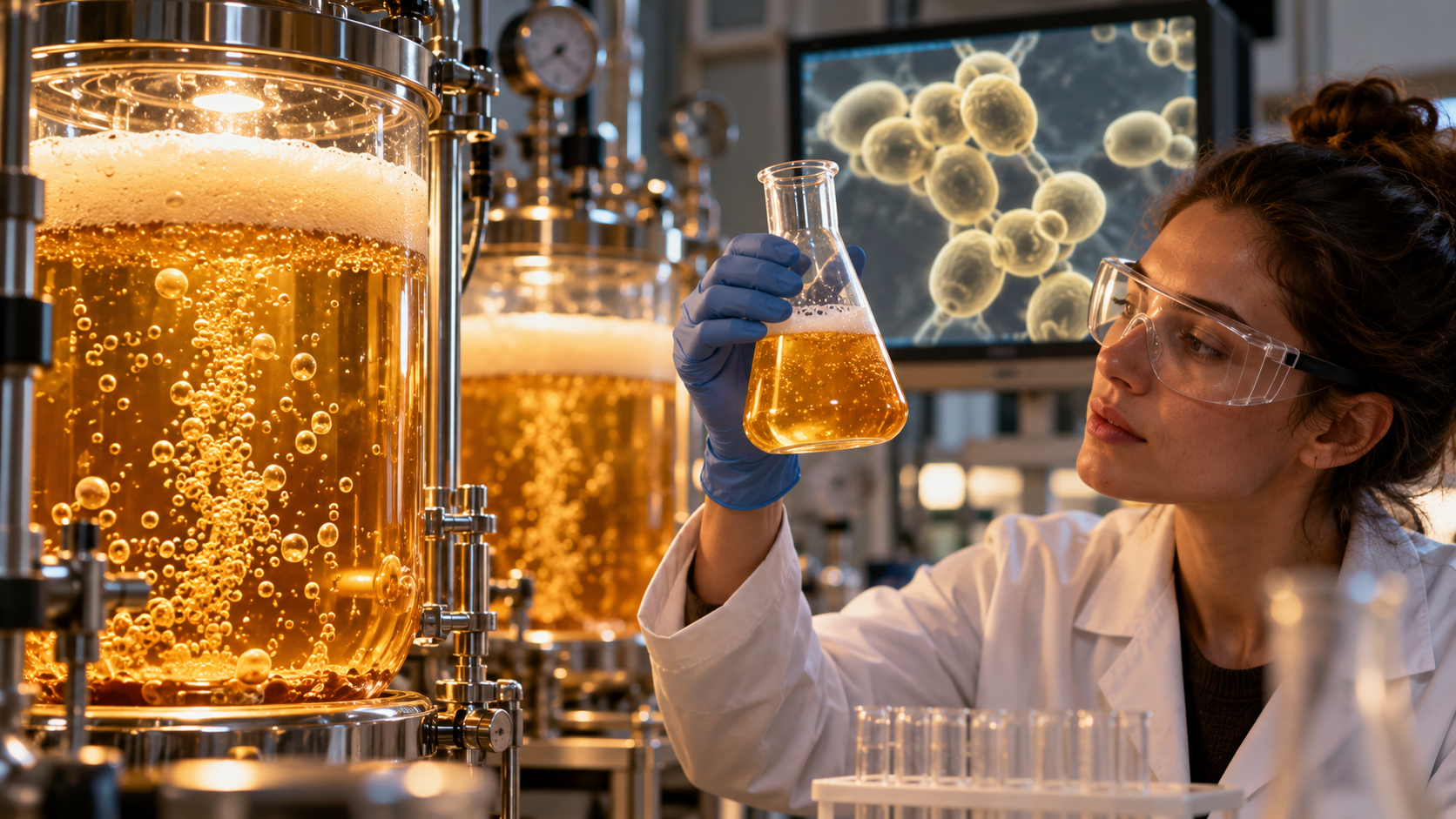
How Fermentation Releases Energy Explainer
Cells need a continuous supply of the oxidized carrier NAD+ to extract energy from glucose through glycolysis. Glycolysis splits glucose into pyruvate, produces a small amount of ATP, and reduces NAD+ to NADH. When respiration cannot reoxidize NADH fast enough, fermentation provides another route. It transfers electrons to an organic molecule and regenerates NAD+.
In lactic acid fermentation, pyruvate accepts electrons from NADH and becomes lactate. This pathway occurs in many bacteria and can support muscle cells temporarily when energy demand exceeds the rate of oxygen-supported metabolism. Lactate is not simply a waste poison; it can be transported and used as fuel or converted into other compounds.
Yeasts commonly perform alcoholic fermentation. Pyruvate first loses carbon dioxide and becomes acetaldehyde. Acetaldehyde then accepts electrons from NADH and becomes ethanol, restoring NAD+. Carbon dioxide helps bread dough rise, while ethanol and many secondary metabolites shape fermented beverages. Other microbes produce acids, gases, solvents, or mixed products through different fermentation pathways.
Fermentation yields much less ATP per glucose than aerobic respiration because most chemical energy remains in lactate, ethanol, or other end products. Its advantage is speed and independence from an external electron acceptor such as oxygen. The ATP comes from glycolysis through substrate-level phosphorylation; fermentation itself chiefly restores the redox balance that allows glycolysis to continue.
People use controlled microbial communities to make yogurt, cheese, bread, kimchi, cocoa, coffee, and many other foods. Temperature, acidity, salt, oxygen exposure, nutrients, and starter culture select which organisms dominate. The same principles support industrial production of fuels, pharmaceuticals, enzymes, organic acids, and specialty chemicals.
Not every process called fermentation in industry is strictly anaerobic, and different organisms redirect carbon in different ways. Monitoring contamination and end products is essential. The unifying biological idea is electron bookkeeping: by regenerating NAD+, a cell keeps a core energy pathway operating when respiratory options are limited or deliberately bypassed.
Glycolysis makes ATP and NADH but needs regenerated NAD+ to continue processing glucose.
Fermentation transfers electrons from NADH to an organic acceptor, restoring NAD+ without a respiratory chain.
Lactic acid fermentation reduces pyruvate to lactate, while alcoholic fermentation produces ethanol and carbon dioxide.
The process yields little ATP compared with respiration because much energy remains in the products.
Temperature, salt, acidity, nutrients, and starter cultures shape food and industrial fermentations.
Fermentation is fundamentally a redox solution that keeps glycolysis running under constrained conditions.
Explore more "Explainers"
Discover additional explainers across politics, science, business, technology, and other fields. Each explainer breaks down a complex idea into clear, everyday language—helping you better understand how major concepts, systems, and debates shape the world around us.