

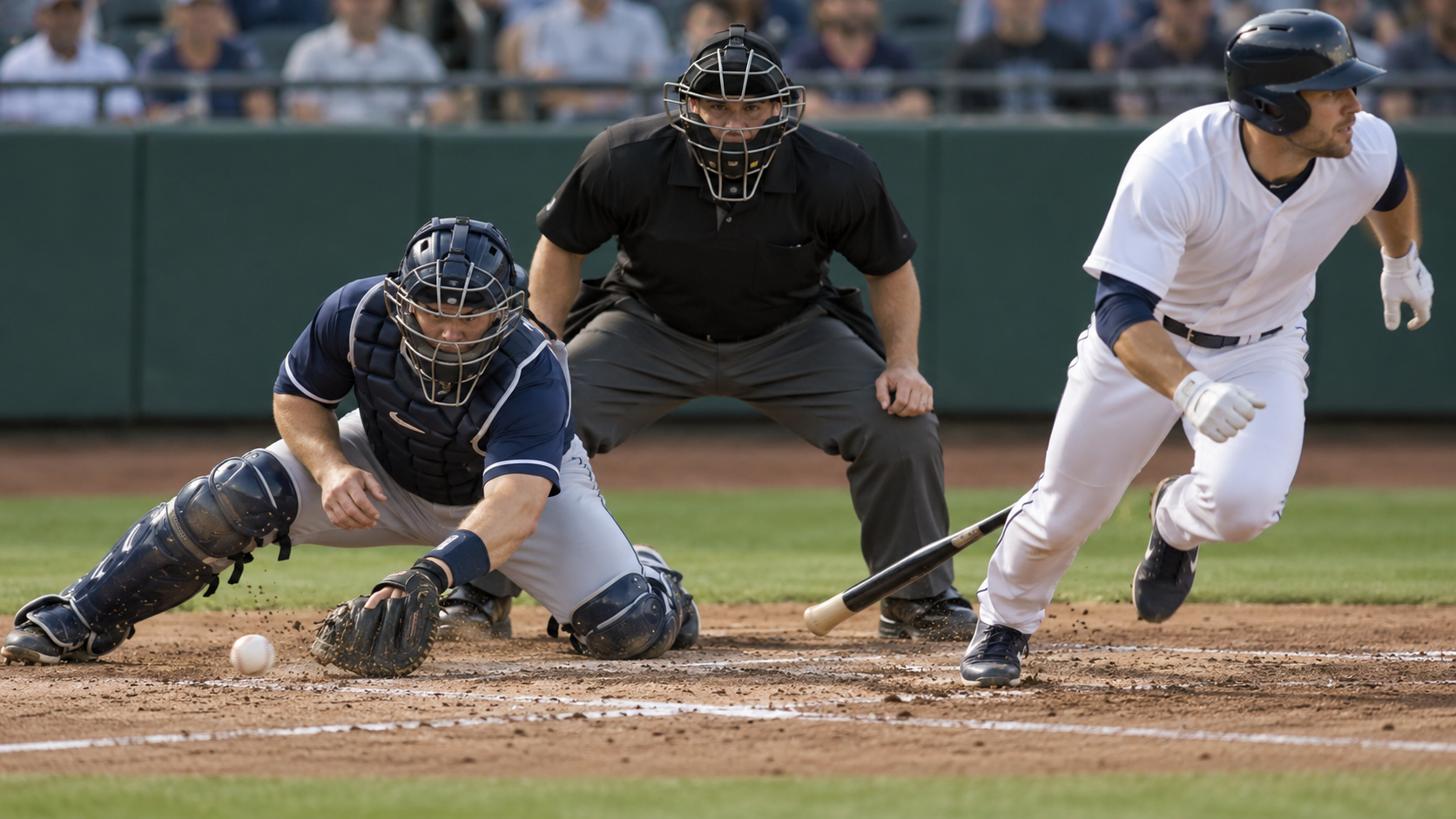
How Baseball's Dropped Third Strike Works Explainer
On an uncaught third strike, the batter may attempt to reach first base when first is unoccupied or when there are two outs. The pitch can be a called or swinging strike; the key is that the catcher did not securely catch it before it touched the ground.
The batter is not automatically safe. The defense must tag the batter or throw to first before the runner arrives. The strikeout is still charged to the pitcher and batter even when the batter reaches, which is why an inning can contain more than three strikeouts.
With fewer than two outs and first base occupied, the batter is out immediately. That restriction prevents the catcher from deliberately dropping the ball to create an easy force play. With two outs, the force concerns no longer create the same advantage, so the batter may run.
Runners may advance because the ball remains live. On two outs with the bases loaded, the catcher can step on home for a force out or throw elsewhere. Watch the catcher's glove and the batter's reaction rather than assuming the inning ended on strike three.
When first base is unoccupied or whenever there are two outs.
Yes. A strikeout is recorded even if the batter reaches first safely.
By tagging the batter-runner or throwing to first before the runner arrives.
Explore more "Explainers"
Discover additional explainers across politics, science, business, technology, and other fields. Each explainer breaks down a complex idea into clear, everyday language—helping you better understand how major concepts, systems, and debates shape the world around us.